Search the Community
Showing results for tags 'blender'.
Found 17 results
-
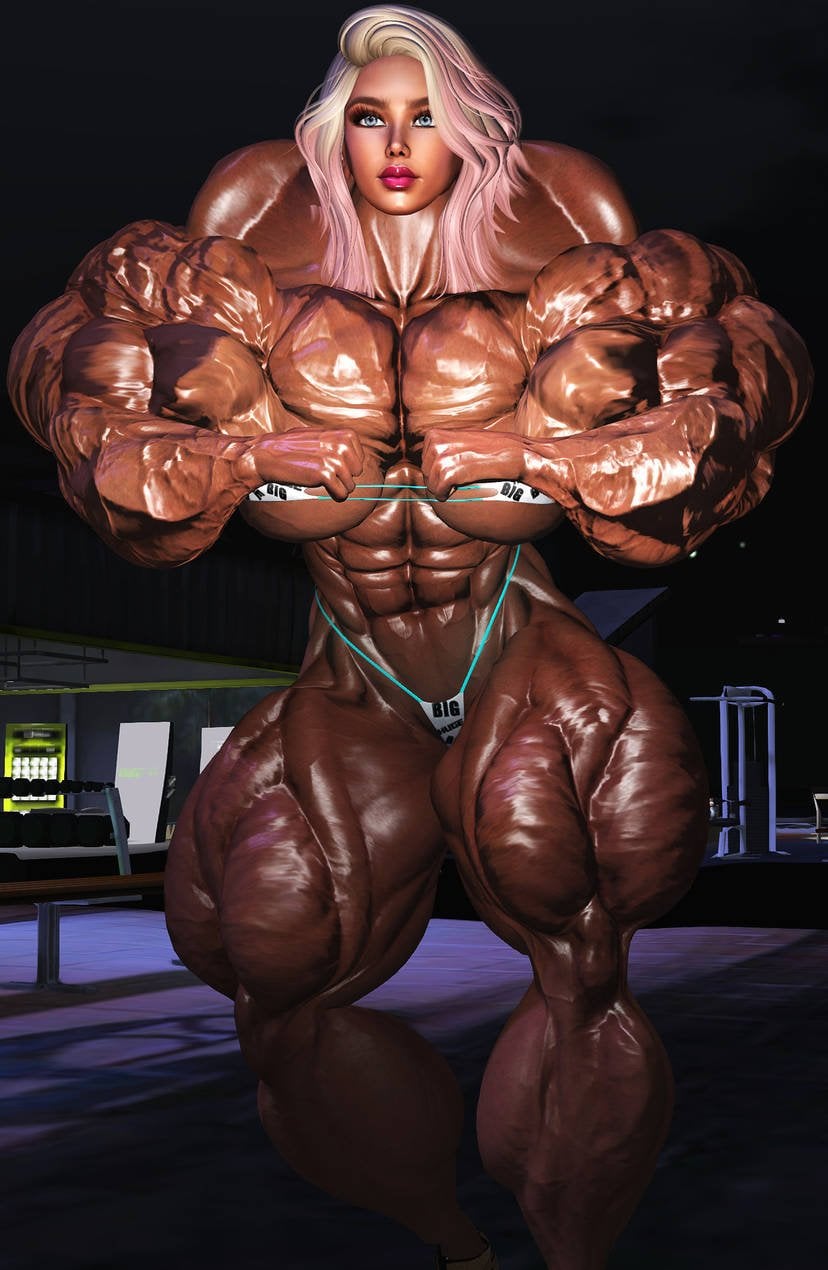
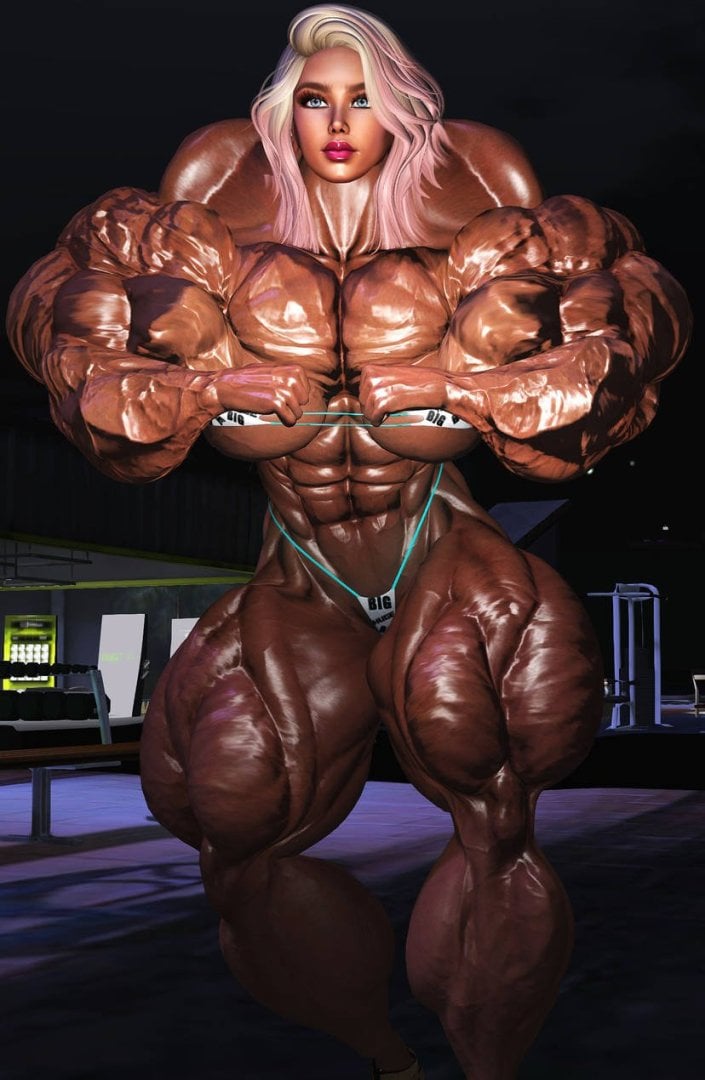
Hi just wondering if there's anyone who can make hyper muscular female bodies for The Sims 4 similar to what they have in Second Life? Or willing to take commissions?
-
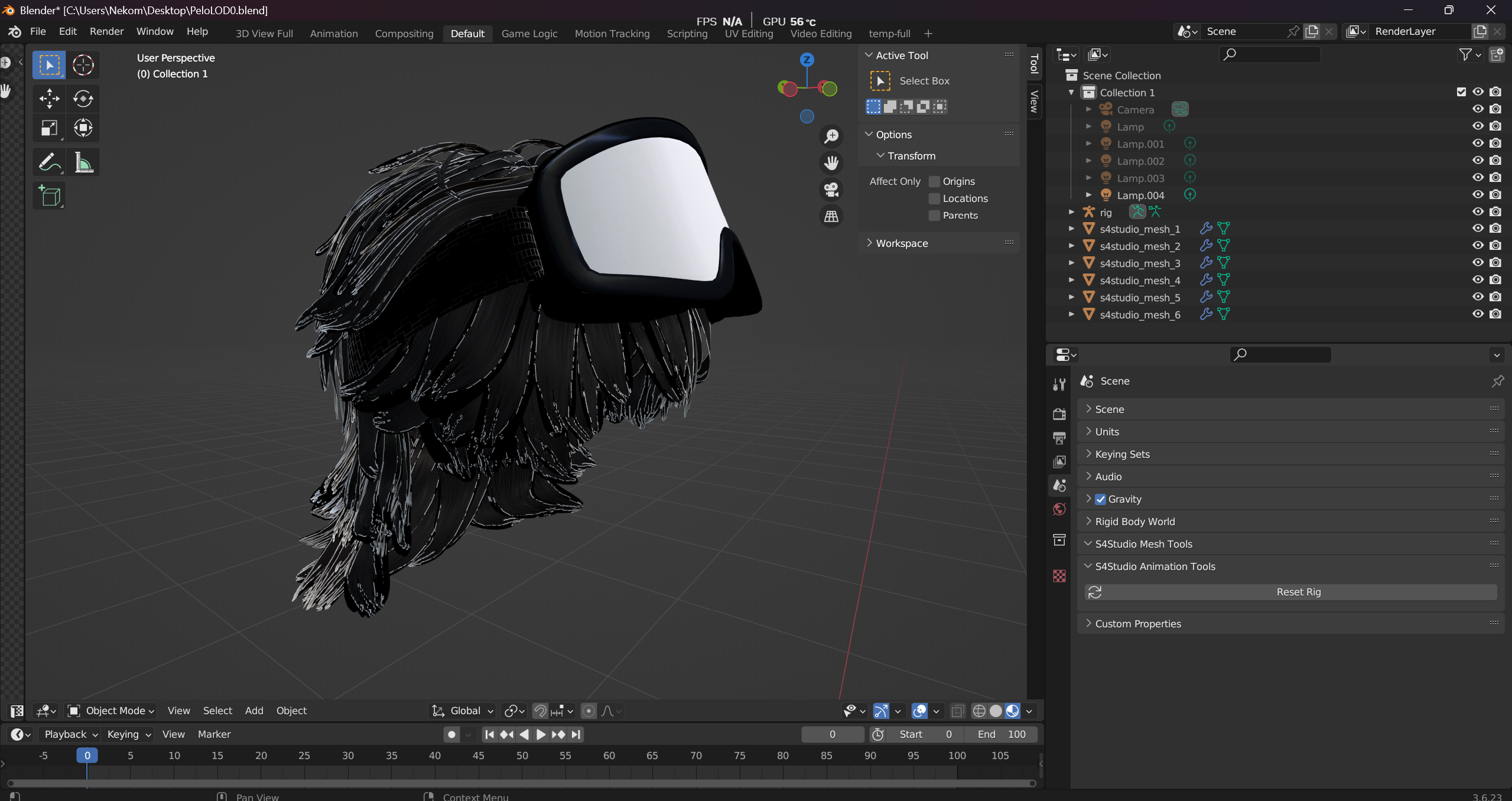
 Hello there, I've been practicing a few animation using furniture, but I'm wondering if we can also use CAS accessories, since we need a GUID for WickedWhims. Is this possible to do that ? Thanks per advance I apologize if this has been already answered, I didn't find any answer about this topic on the wiki.
 -
Carpa 5558 cerrara la historia de Angustias de la soledad Martinez Ribera. En un principio habia pensado editar un numero reducido como especial de verano, pero, al final, se presentara como uno mas de los numeroa de la serie. Como siempre, es mejor que Analia nos introduzca en este Carpa 5558. Intro: El trabajo previo para los volúmenes dedicados a la historia de la fotografía y el segundo dedicado a “Nene” nos ha ocupado todo este ultimo año. Nuestra actividad editorial quedo bajo mínimos y solo publicamos pequeños trabajos complementarios a números de Carpa ya presentados: 1812,1943 y 3388. Dada la proximidad de las vacaciones veraniegas decidí cerrar el año y posponer la publicación de los dos números comentados para el primer y segundo otoño simultaneando así su aparición con los trabajos del resto de redacciones y mandatos. La edición el año anterior de Carpa 3088 y el revuelo causado por la investigación de Petia impidió que todo el equipo disfrutara de unas merecidas vacaciones que repararía ahora con la larga pausa prevista y que abarcaría, prácticamente, los tres veranos. Nuestras lectoras comprobaran que nada de esto ha sucedido y en sus pantallas disfrutan de este nuevo Carpa, Carpa 5558, dedicado a cerrar nuestras investigaciones sobre el destino final de Angustias de la soledad Martinez Ribera y Casimira Vivar Garreta tras su exilio al segundo continente. En el momento de cerrar esa edición, Petia y todas nosotras, prometíamos retomar la investigación cuando fuera posible, pero desgraciadamente el retraso en la apertura de nuestra historia de la fotografía impediría, junto a muchos otros motivos, que pudiéramos centrarnos en ella hasta pasados, quizás, un par de años. Doña Estrella, tal y como se comentaba en Carpa 3088, una vez cerrada la edición, se dedico a rastrear y adquirir todo el material relacionado con la artista destacado por Petia durante sus pesquisas archiveras y si algunas veces fracaso, logro descubrir algunas muestras del trabajo de la artista inéditas o que se consideraban perdidas para siempre. Tras el resultado final de su gira mundial, comenzó a cribar el segundo continente obteniendo los resultados que motivaron su segunda visita por sorpresa a esta redacción. Acompañada por Fina, bonito sin duda es el amor verdadero, compartió con nosotras esos resultados, innecesario acicate, para que en lugar de disfrutar de nuestras merecidas vacaciones pusiéramos en marcha este volumen final dedicado a Doña Angustias añadiendo, como goloso remate, unas vacaciones pagadas en Mira verde para realizar desde allí todo nuestro trabajo. El resultado por todas nuestras seguidoras puede ser imaginado sin dificultad, Mira verde es el veraniego destino soñado por muchas de nuestras ciudadanas y cualquier plan vacacional palidece ante ella. Antes de la marcha de la pareja, Tini había resuelto todo conflicto previo y se cerraron con rapidez permisos y autorizaciones de nuestro mandato. Doña Estrella y Fina no podrían acompañarnos durante la investigación y redacción de este nuevo Carpa, la pareja había sido reclamada por la octava de la sabias para liderar la expedición a un lejano sistema estelar en el que uno de sus planetas mostraba signos de haber alcanzado un nivel evolutivo comparable al nuestro, pero por motivos desconocidos, había sido arrasado tras un largo conflicto bélico. Se transferirían todos los archivos y documentos a Petia para que a partir de esos nuevos datos retomara la prometida investigación. El material ofrecido por Doña Estrella no incluía ninguna revelación definitiva, es cierto, pero prometía extraordinarios resultados. Nuestra autoridad autorizo sin reservas la publicación de este numero especial como una deferencia especial para nuestra Estrellita, afirmación de la propia venerable y ya se ha comentado como Doña Genoveva Dorcas de Aguirre Puertas se ha rendido a la xenobiologa y concede cualesquiera de sus peticiones. En esta ocasión, por eso, acepto el trabajo externo aunque negó la colaboración oficial del tercer mandato. Todos los gastos y recursos necesarios serian proporcionados por Doña Estrella, sigo en mis trece y nuestra redacción seria la encargada de subirla a los servidores habituales, pero no se publicaría la habitual edición física para nuestras suscriptoras, el volumen pasaría a ser considerado uno de esos especiales de verano que el mandato accede a publicar de tanto en tanto. Una agradable sorpresa para las lectoras sin duda son estos especiales y siempre muy bien recibidos, por las amantes del arte fotográfico antiguo, desde la aparición de un primer numero publicado por esta redacción y costumbre adoptada por el resto de redacciones y, finalmente, por el tercer mandato. Dado el carácter festivo con el que fue concebido este Carpa 5558, he decidido permitir que mis redactoras lo adapten a las tres estivales y se empapen del distendido tono otorgado a cualquier periodo vacacional y se incluirán, para las intro a las secciones y cortes, referencias visuales relacionadas con estas especiales vacaciones. Como siempre, Dorita, será la encargada del diseño del volumen y, en esta ocasión, continuara con la linea estética iniciada en Carpa 1288. Un perfecto reflejo de la época a tratar y base ideal para desarrollar la investigación de Petia, convertida junto a Tini en directoras efectivas de la edición pues solo ellas, dadas sus características especiales, pueden compaginar esos días de sol y playa con el mas riguroso trabajo academico. Se ha comentado que no aparecerá ninguna nueva revelación extraordinaria, la vida de nuestras protagonistas discurrirá hasta el día de su muerte sin grandes sobresaltos, liberadas de la tiranía trabajaran en sus proyectos con total libertad y sin ninguna preocupación financiera las dos lo harán en lo que, realmente, les apetezca hacer. Se abandonara el genero pornografico y aunque al hacerlo pierden parte de su genio, alcanzan una serenidad y madurez creativa realmente impresionante que si bien no influirá en el desarrollo del arte de posguerra, si que lo hará indirectamente por su relación con algunas de las grandes figuras de las nuevas generaciones tal y como anuncia el óleo sobre cartón artístico seleccionada para la portada de este numero. Una obra descubierta por Doña Estrella al azar durante la visita de cortesía a una de las grandes comerciantes de antigüedades del segundo continente. Un óleo almacenado desde hacia tiempo y que dada su firma, Paulina Antúnez Davila, se consideraba una simple imitación, verdaderamente de cierto mérito, del trabajo de Angustias de la soledad Martinez Ribera. Si la anticuaria hubiera sido lectora de nuestras publicaciones hubiera evitado que Doña Estrella adquiriera la obra a un ridiculo precio y se hubiera ahorrado la desesperación al serle revelada la identidad real de la autora del óleo. Una pequeña maldad de Doña Estrella para reparar ciertas desavenencias comerciales del pasado entre la anticuaria y la xenobiologa. El óleo fue descubierto por Doña Estrella al poco de iniciar su búsqueda y jugo a su favor el retraso, producido por la investigación de Petia, del monográfico dedicado a Doña Angustias. El relato de su compra protagonizo la habitual sesión musical para cerrar su visita relámpago y, como hizo en el pasado, nos desvela ciertas practicas comerciales desconocidas para cualquiera de nosotras y tanto nos sorprendieron durante la realización de Carpa 3088. Durante todo su viaje contó con la imprescindible colaboración de Fina y Paola que intervendría en esta compra de forma directa. Una relación entre agente y coleccionista que va mucho mas de lo estrictamente comercial, que arranca desde la juventud de ambas mujeres y, por el momento, Doña Estrella prefiere no comentar. A la par que Doña Estrella y Fina viajaban por todo el planeta, el personal de Paola se centro, sobre todo, en la búsqueda de cualquier documentación relacionada con la estancia de nuestras protagonistas en el segundo continente y serian las responsables del descubrimiento de esa actividad fotográfica de Paulina ignorada por todas nosotras. Una actividad artística centrada mas que nada en la enseñanza, utilizando para ello una educativa combinación de métodos tradicionales con las cargas automáticas del pasado. Como Petia comentaba de su obra pictórica conservada en Boca negra, volvemos a encontrarnos con unas aspiraciones mucho mas académicas y controladas, alejadas de cualquier experimentación vanguardista. La discreción comentada anteriormente vuelve a ser patente en las fotografías adquiridas por las agentes de Paola y que, por lo que parece, nunca fueron expuestas en publico. Utilizadas como demostración de sus enseñanzas fueron puestas a la venta cuando se liquido la propiedad insular, un destino compartido, sin duda, por la obra de la portada y gran parte del archivo que no fue incluido en su legado posterior. Doña Estrella narro el descubrimiento de la obra en el almacén de la anticuaria, la fingida indiferencia con la que fue recibida su aparición, cordial despedida de la comerciante e inmediata comunicación con Paola: Necesito un gancho para el segundo continente: alta, pelirroja y con grandes tetas como le gustan a esa babosa. Adquirirá una serie de obras, incluyo listado, pero te adjunto la foto del verdadero interés. Tonta turista con dinero dispuesta a ser engañada, te concreto mañana todos los detalles. Ya tiene razón Petia cuando afirma que el regalo de la diosa roza con sus dedos la eternidad cuando se comporta como una perra sin alma. Analía Castro Bermudez. Google translator: Carpa 5558 will conclude the story of Angustias de la Soledad Martínez Ribera. Initially, I had planned to publish a shortened issue as a summer special, but in the end, it will be presented as a regular issue in the series. As always, it's best if Analía introduces us to Carpa 5558. Introduction: The preparatory work for the volumes dedicated to the history of photography and the second one dedicated to "Nene" has occupied us throughout this past year. Our editorial activity was reduced to a minimum, and we only published small supplementary pieces to previously released Carpa issues: 1812, 1943, and 3388. Given the approaching summer holidays, I decided to close out the year and postpone the publication of the two aforementioned issues until the first and second autumn, thus coordinating their release with the work of the other editorial teams and committees. The previous year's edition of Carpa 3088 and the stir caused by Petia's investigation prevented the entire team from enjoying a well-deserved vacation, which they would now make up for with the long hiatus planned, practically spanning three summers. Our readers will find that none of this has happened, and they are enjoying this new Carpa, Carpa 5558, dedicated to concluding our investigations into the final fate of Angustias de la Soledad Martinez Ribera and Casimira Vivar Garreta after their exile to the second continent. When we finalized that edition, Petia and all of us promised to resume the investigation as soon as possible, but unfortunately, the delay in launching our history of photography, along with many other factors, prevented us from focusing on it for perhaps a couple of years. Doña Estrella, as mentioned in Carpa 3088, once the edition was finalized, dedicated herself to tracking down and acquiring all the material related to the artist highlighted by Petia during her archival research. Although she sometimes failed, she managed to uncover some previously unpublished examples of the artist's work, or pieces that were considered lost forever. After the final results of her world tour, she began sifting through the second continent, obtaining the results that prompted her second surprise visit to our offices. Accompanied by Fina—true love is indeed beautiful—she shared these results with us, an unnecessary incentive, so that instead of enjoying our well-deserved vacations, we would launch this final volume dedicated to Doña Angustias, adding, as a sweet bonus, a paid vacation in Mira Verde to carry out all our work from there. The result, as all our followers can easily imagine, is that Mira Verde is the dream summer destination for many of our citizens, and any other vacation plan pales in comparison. Before the couple's departure, Tini had resolved all previous conflicts, and the necessary permits and authorizations for our mandate were swiftly finalized. Doña Estrella and Fina would not be able to accompany us during the research and writing of this new Carpa; the couple had been summoned by the eighth of the wise women to lead an expedition to a distant star system where one of its planets showed signs of having reached an evolutionary level comparable to our own, but for unknown reasons, it had been devastated after a long war. All the files and documents would be transferred to Petia so that she could resume the promised research based on this new data. The material offered by Doña Estrella did not include any definitive revelations, it is true, but it promised extraordinary results. Our authority unreservedly authorized the publication of this special issue as a special gesture of respect for our beloved Estrellita, a statement made by the venerable Doña Genoveva Dorcas de Aguirre Puertas herself. It has already been noted how Doña Genoveva Dorcas de Aguirre Puertas has yielded to the xenobiologist and grants any of her requests. Therefore, on this occasion, I accept the external work, although I deny official collaboration to the third administration. All necessary expenses and resources will be provided by Doña Estrella—I remain firm in my position—and our editorial team will be responsible for uploading it to the usual servers. However, the usual physical edition for our subscribers will not be published; the volume will be considered one of those summer specials that the administration agrees to publish from time to time. These specials are undoubtedly a pleasant surprise for readers and are always very well received by lovers of vintage photography, ever since the first issue was published by this editorial team, a practice adopted by the other editorial teams and, finally, by the third administration. Given the festive spirit in which this issue of Carpa 5558 was conceived, I've decided to allow my editors to adapt it to the three summers and immerse themselves in the relaxed tone of any holiday period. Visual references related to these special holidays will be included in the introductions to the sections and breaks. As always, Dorita will be in charge of the volume's design, and on this occasion, she will continue with the aesthetic style begun in Carpa 1288. It's a perfect reflection of the season and an ideal foundation for Petia's research. She and Tini have become the effective editors of this edition, as only they, given their unique circumstances, can combine those days of sun and sand with the most rigorous academic work. It has been said that no extraordinary new revelations will appear; the lives of our protagonists will unfold until their deaths without major upheavals. Freed from tyranny, they will work on their projects with complete freedom and without any financial worries. Both will do what they truly want to do. They will abandon the pornographic genre, and although in doing so they lose some of their genius, they achieve a truly impressive serenity and creative maturity. While this will not influence the development of postwar art, it will do so indirectly through their relationship with some of the great figures of the new generations, as evidenced by the oil on art cardboard selected for the cover of this issue. This work was discovered by Doña Estrella by chance during a courtesy visit to one of the great antique dealers of the second continent. The oil painting had been stored for some time and, given its signature, Paulina Antúnez Davila, was considered a mere imitation—albeit one of some merit—of the work of Angustias de la Soledad Martinez Ribera. Had the antique dealer been a reader of our publications, she would have prevented Doña Estrella from acquiring the painting at a ridiculously low price and would have spared herself the despair of discovering the true identity of the artist. A petty act of malice on Doña Estrella's part to settle certain past business disputes between the antique dealer and the xenobiologist. The oil painting was discovered by Doña Estrella shortly after beginning her search and the delay, caused by Petia's research, of the monograph dedicated to Doña Angustias played in her favor. The story of his purchase starred in the usual musical session to close his lightning visit and, as he did in the past, he reveals to us certain commercial practices unknown to any of us and which surprised us so much during the making of Carpa 3088. Throughout his trip he had the essential collaboration of Fina and Paola who would intervene directly in this purchase. A relationship between agent and collector that goes much further than the strictly commercial, which starts from the youth of both women and, for the moment, Doña Estrella prefers not to comment. At the same time that Doña Estrella and Fina traveled around the planet, Paola's staff focused, above all, on the search for any documentation related to the stay of our protagonists on the second continent and would be responsible for the discovery of that photographic activity of Paulina that was ignored by all of us. An artistic activity focused more than anything on teaching, using an educational combination of traditional methods with the automatic loads of the past. As Petia commented about his pictorial work preserved in Boca Negra, we once again find ourselves with much more academic and controlled aspirations, far from any avant-garde experimentation. The discretion mentioned above is once again evident in the photographs acquired by Paola's agents and which, apparently, were never exhibited in public. Used as a demonstration of his teachings, they were put up for sale when the island property was liquidated, a fate shared, without a doubt, by the work on the cover and a large part of the archive that was not included in his later legacy. Doña Estrella narrated the discovery of the work in the antique store's warehouse, the feigned indifference with which its appearance was received, a cordial farewell to the merchant and immediate communication with Paola: I need a hook for the second continent: tall, redhead and with big tits the way that slug likes them. You will acquire a series of works, I include a list, but I attach the photo of the real interest. Silly tourist with money willing to be deceived, I will specify all the details tomorrow. Petia is already right when she claims that the goddess's gift touches eternity with her fingers when she behaves like a soulless bitch. Analía Castro Bermudez. Algunas imagenes: Some images:
-
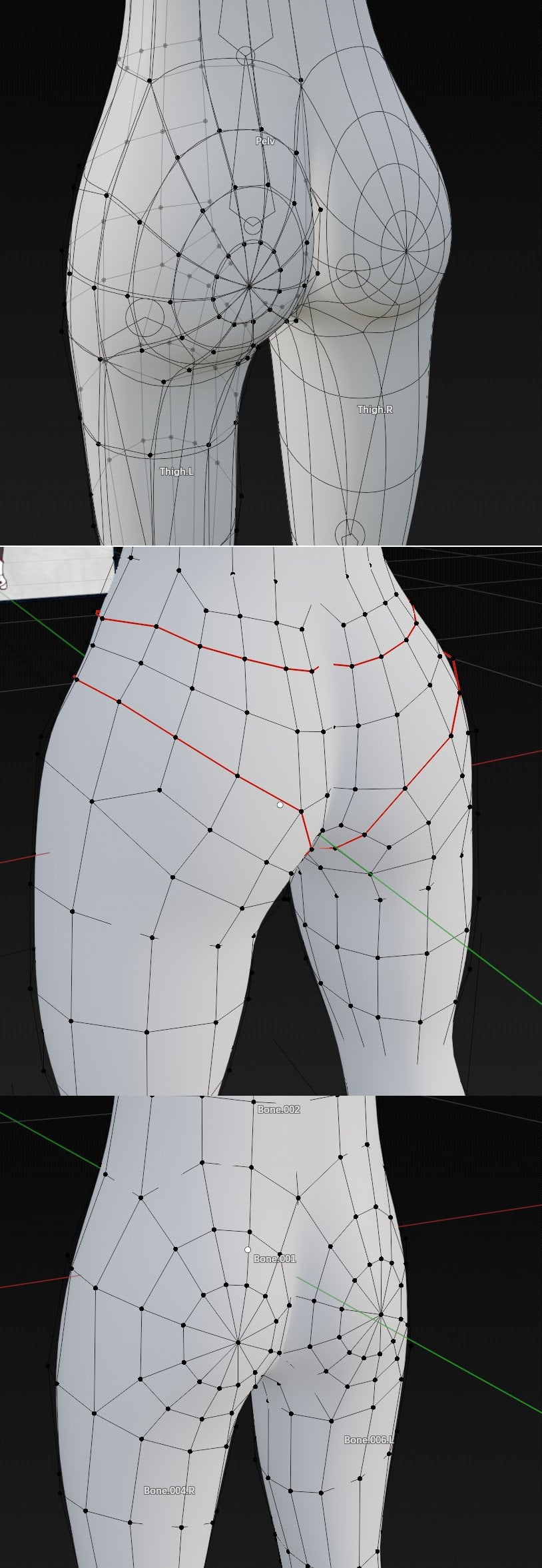
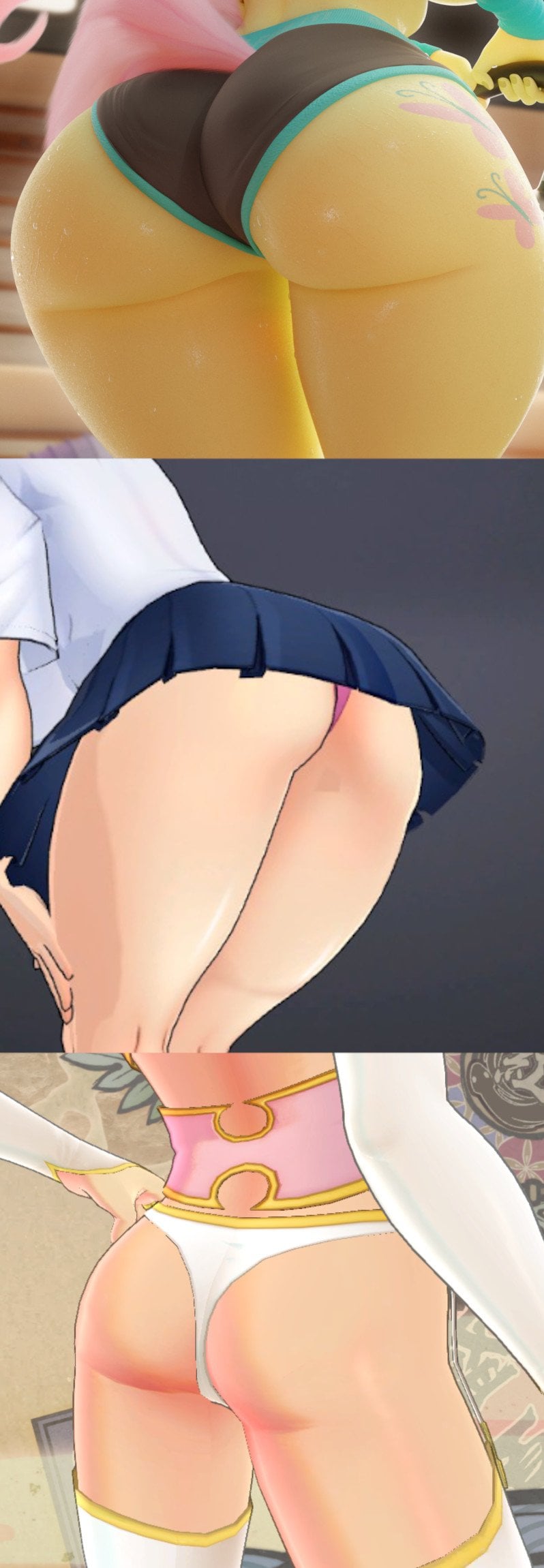
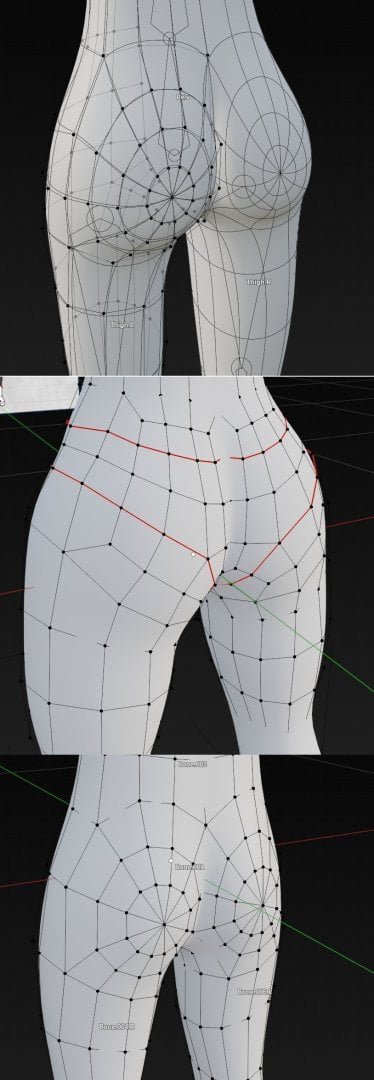
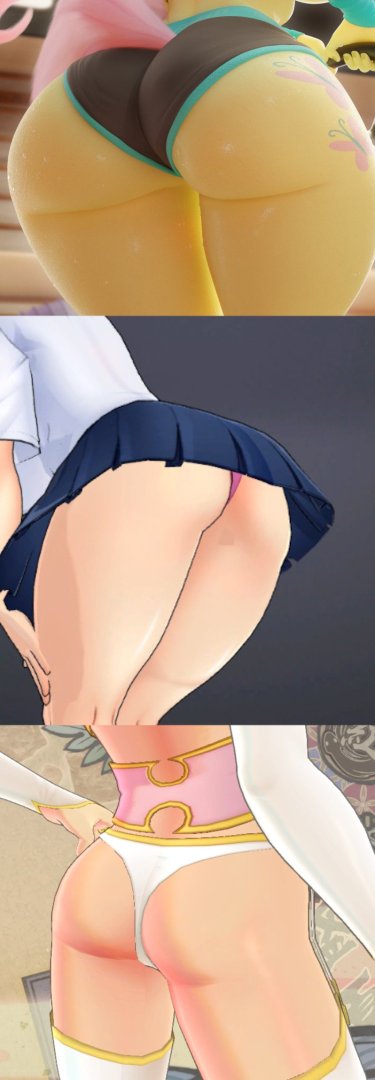
I've been trying it more and more lately, but I can't seem to get my booty to look as good as some other modelers seem to, even before the rigging stage (which is also a struggle for me, but one thing at a time.) here's some of what I've made lately. I'd like to know a way to actually get the asscheeks to protrude outwards while still having a defined crack, something that looks like it has some weight to it, like hooves art, taimanin squad, or senran kagura. these butts are a good reference of what effect I'm after. those three models which I've made all did have references, so the scale is correct, it's just the topology and stuff that I'm still struggling with, I do have the ability to rip senran kagura models, and I have some rips of taimanin models which other people have made, however both of these are from games and thusly are triangulated and cut up into separated pieces, so it's a little hard to reverse engineer that way. I'll keep trying, but I thought I should ask around here too!
-
Carpa 3088 download Este fin de semana he concluido las ultimas correcciones y ya esta disponible para su descarga Carpa 3088. Un numero de caracter monografico dedicado a la figura de Angustias de la soledad Martinez Ribera. Como es habitual, he aqui un fragmento de su introduccion. Intro: La aparición de este numero especial, Carpa 3088, al improviso, habrá sorprendido, sin duda alguna, a las seguidoras de las publicaciones de nuestro tercer mandato editorial y de las ediciones de la redacción de fotografía antigua del mismo. De una forma somera, en Carpa 1288, se comento, un tanto de pasada, la necesidad de dedicar un volumen extraordinario a la figura de Angustias de la Soledad Martinez Ribera y su magistral obra artística, apareciendo en ese numero como una de las desconocidas influencias de Condenacion Torres Mesa y como, muy por encima, nos detuvimos en sus historias gráficas y desdichada biografía. Cuando se cerro la edición del volumen anterior, todo estaba dispuesto para concluir los monográficos dedicados a la figura de “Nene” e iniciar el trabajo en el gran proyecto editorial centrado en la historia de la fotografía planetaria tal y como anunciaba en la despedida de nuestro 1288. Todo se precipito cuando a las pocas horas de abrirse sus servidores y distribuir las ediciones físicas, fui citada por la autoridad principal de este mandato: Genoveva Dorcas de Aguirre Puertas, a requerimiento de la octava división del conocimiento. El hecho de ser convocada directamente por nuestra autoridad ya es de por si un hecho extraordinario, pero aun lo era mas que “La octava de la sabias”, como familiarmente se conoce a la división de xenobiologia, fuera quien, realmente, convocara la reunión. Llegue al piso 43 de nuestra torre acompañada por Petia y Tini por cuestiones de respaldo técnico y datos pues nuestra linea editorial no tiene y, posiblemente, nunca tendrá relación con los temas de estudio de las arzodoctas de los laboratorios de investigación extra planetaria. Poco puedo contar sobre la entrevista con Doña Genoveva, nada confidencial hubo en ella, con su encantadora amabilidad y presencia, nuestra autoridad ordeno que la redacción se preparara para recibir, en tres días, la visita de Doña Estrella del Castillo de Valdivia y Orozco arzodocta principal de la división y figura legendaria de la exploración espacial por sus investigaciones y descubrimientos sobre las distintas formas de vida extra planetarias. Ella misma nos comunicaría el porque de su visita aunque nos aseguro que sus motivos eran de carácter estrictamente privado y nada tenían que ver con lo publicado hasta entonces por la redacción Prácticamente, toda la reunión fue acaparada por Petia y, en menor medida, por Tini, Doña Genoveva, como otras tantas venerables antes de ella, estaba fascinada por nuestra redactora y sobre todo, en su caso, por su producción novelera y folletinera. Petia correspondió a dicha admiración como merecía nuestra autoridad y uno tras otro interpreto lo mas granado de su composición melódica y obsequio a Doña Genoveva con los archivos de tres producciones inéditas creadas junto a Tini y la pentarquia, para despedirse con la promesa de una bienvenida musical a la visitante que nunca podría olvidar. Al salir, animadas las tres aunque algo intrigadas, por la urgencia de la reunión y visita, decidimos que la única actitud posible seria el no poético gesto de: “Pongame a mi otras dos”, al tomar asiento donde siempre. La visita de Doña Estrella a nuestra redacción, en solitario, sin comitiva, se desarrollo sin incidentes: Se intereso por nuestro trabajo, disfruto del espectáculo musical de la pentarquia, lloro con sus folletines y merendó con nosotras como una redactora mas, pero, antes de despedirse, nos sorprendió a todas al confesar el motivo de su petición a la autoridad del mandato. La arzodocta, décadas atrás, había iniciado una colección de arte privado en la que Angustias de la Soledad Martinez Ribera era su absoluta protagonista. Una colección mantenida en secreto por, en su momento, una infantil cuestión de prestigio academico dada la temática principal de su obra, y que Carpa 1288 le había llevado a romper, hacer publica su existencia y decidido a solicitar al mandato editorial el permiso, sin problemas concedido, para que nuestra redacción realizara el monográfico que presento en este previo aunque antes quería entrevistarse con nosotras, para diseñar y dirigir su proyecto editorial, sin necesidad de recurrir a los ruegos u ordenes de nuestras superioras. Doña Estrella fue criada por su tia Enriqueta tras fallecer sus madres en un trágico accidente aeroespacial, Doña Enriqueta Dalando Urquijo era una de las pocas académicas especializada en los antiguos “linelines” o en cualquiera de sus variantes planetarias por lo que la futura xenobiologa creció con ellos y, llegada su primera juventud, quedo fascinada por la obra de Angustias de quien, una vez obtenido el reconocimiento como investigadora y la asociada estabilidad económica necesaria, inicio esa colección que comentaba un poco mas arriba. Un afán coleccionista que le llevo a descubrir desconocidas facetas de la artista y que gustosamente mostraría a esta redacción una vez iniciado el trabajo previo en este 3088 junto a todos los archivos documentales que, pacientemente, había reunido a lo largo de los años. No tuve que convocar ninguna reunión a posteriori para dar una respuesta, los ojos brillantes de mis compañeras suplicaban que aceptara el ruego de la académica. Se rompieron las ordenes de la superioridad e inmediatamente se acordó pasar una semana en la residencia de Doña Estrella del Castillo para visitar la colección y organizar los previos al inicio del real para este volumen especial. Básicamente, se decidió que toda la redacción se instalaría en la vivienda y desde allí se realizaría este Carpa 3088, que nuestras lectoras disfrutaran como hemos hecho nosotras. Como única condición dispuse que la propia Doña Estrella participaría activamente en la elaboración de la revista, como una redactora mas, dado el conocimiento sobre el personaje y, naturalmente, su posición nos abriría el acceso, sin burocráticos retrasos a según que fondos o archivos imperiales y privados. Doña Estrella del Castillo de Valdivia y Orozco, académica ilustre, al cerrar la velada y mientras Sagrario, entre lagrimas, desgranaba “ Un regalo envenenado” de Lucinda Roy, se convirtió en Doña Estrellita para Petia al aceptar un pequeño papel en una breve improvisación con la que pensaba abrir nuestras jornadas de trabajo. Google translator: This weekend I finished the final corrections and Carpa 3088 is now available for download. This special issue is dedicated to the figure of Angustias de la Soledad Martínez Ribera. As usual, here is an excerpt from its introduction. Intro: The unexpected appearance of this special issue, Carpa 3088, will undoubtedly have surprised those who follow the publications of our third editorial term and the editions from our vintage photography department. In Carpa 1288, we briefly mentioned, somewhat in passing, the need to dedicate an extraordinary volume to the figure of Angustias de la Soledad Martínez Ribera and her masterful artistic work, mentioning her in that issue as one of the unknown influences on Condenación Torres Mesa, and briefly touching upon her graphic stories and tragic biography. When the previous volume was finalized, everything was ready to complete the monographs dedicated to the figure of "Nene" and begin work on the major publishing project focused on the history of planetary photography, as announced in the closing remarks of our 1288th issue. Everything changed drastically when, just hours after launching the servers and distributing the physical copies, I was summoned by the principal authority of this administration: Genoveva Dorcas de Aguirre Puertas, at the request of the Eighth Division of Knowledge. The fact that I was summoned directly by our authority is extraordinary in itself, but it was even more so that "The Eighth of the Wise," as the xenobiology division is familiarly known, was the one who actually convened the meeting. I arrived on the 43rd floor of our tower accompanied by Petia and Tini for technical support and data, since our editorial focus has no connection, and possibly never will, with the areas of study of the archdaught scholars of the extraterrestrial research laboratories. I can say little about the interview with Doña Genoveva; there was nothing confidential about it. With her charming kindness and presence, our authority instructed the editorial staff to prepare to receive, in three days, the visit of Doña Estrella del Castillo de Valdivia y Orozco, principal archduke of the division and a legendary figure in space exploration for her research and discoveries regarding various forms of extraterrestrial life. She herself would inform us of the reason for her visit, although she assured us that her motives were strictly private and had nothing to do with what the editorial staff had published up to that point. Practically the entire meeting was dominated by Petia and, to a lesser extent, by Tini. Doña Genoveva, like so many other venerable women before her, was fascinated by our editor and, above all, in her case, by her novels and serialized novels. Petia reciprocated this admiration as befitted our authority, and one after another, she performed the finest pieces of her melodic compositions. She then presented Doña Genoveva with the recordings of three unreleased productions created with Tini and the Pentarquia, bidding farewell with the promise of a musical welcome for the visitor that she would never forget. As we left, the three of us, though somewhat intrigued by the urgency of the meeting and visit, decided that the only possible response would be the decidedly unpoetic gesture of: “Give me two more,” as we took our usual seats. Doña Estrella's visit to our newsroom, alone and without an entourage, went off without a hitch. She showed interest in our work, enjoyed the musical performance of the Pentarchy, wept over her pamphlets, and shared a snack with us like any other editor. But before leaving, she surprised us all by revealing the reason for her request to the editorial board. Decades earlier, the learned archbishop had begun a private art collection in which Angustias de la Soledad Martínez Ribera was the central figure. This collection had been kept secret, at the time due to a childish concern for academic prestige given the main theme of her work. Carpa 1288 had prompted her to break this silence, make its existence public, and request permission from the editorial board—granted without hesitation—for our editorial team to produce the special issue I am presenting here. However, she first wanted to meet with us to discuss designing and directing her editorial project, without having to resort to the pleas or orders of our superiors. Doña Estrella was raised by her aunt Enriqueta after her mothers died in a tragic aerospace accident. Doña Enriqueta Dalando Urquijo was one of the few academics specializing in the ancient "linears" or any of their planetary variations, so the future xenobiologist grew up surrounded by them. In her early adulthood, she became fascinated by the work of Angustias, and once she achieved recognition as a researcher and the necessary financial stability, she began the collection I mentioned earlier. This passion for collecting led her to discover unknown facets of the artist, which she would gladly share with this publication once she had begun the preliminary work on this issue, 3088, along with all the documentary archives she had patiently gathered over the years. I didn't have to call a meeting afterward to give an answer; the bright eyes of my colleagues begged me to accept the academic's request. The orders from our superiors were disregarded, and it was immediately agreed to spend a week at Doña Estrella del Castillo's residence to visit the collection and organize the preparations for the actual start of work on this special volume. Essentially, it was decided that the entire editorial team would be based at her house, and from there, this issue, Carpa 3088, would be produced, so that our readers could enjoy it as we have. My only condition was that Doña Estrella herself would actively participate in the magazine's production, as just another writer, given her knowledge of the subject and, naturally, her position would grant us access, without bureaucratic delays, to certain imperial and private collections and archives. Doña Estrella del Castillo de Valdivia y Orozco, an illustrious academic, as the evening drew to a close, and while Sagrario, in tears, recited Lucinda Roy's "A Poisoned Gift," became Doña Estrellita for Petia by accepting a small role in a brief improvisation with which she planned to open our work sessions. Algunas de sus paginas: Some images:
-
 Starfield Rig Collection V1.0 (Blender 4.3+) View File This is a quick upload of Starfield's Armatures for characters, all creature types, and robots. Taking advantage of Animation IO - the new animation and rig export tools recently released by Devaris45 for Blender 4.3+, I've extracted Starfield's vanilla armatures for the following characters, creatures and robots: Humans (All human characters share the same skeleton, the only difference is the female skeleton is scaled slightly smaller than the male skeleton.) - Male - Female Creatures - Biped - Critter - Floater - Flyer - Hexapod - Hopper - Larva - Manta - Mantid - Octopede - Parasite - QuadrapedA - QuadrapedB - QudrapedC - Starfish - Swimmer - Terromorph Robotics - BallisticTurret - LaserTurret - MiniBot - ModelA - ModelS - ModelT - SecurityCamera The goal of this resource is to provide a central file that has all of Starfield's vanilla armatures for the purposes of creating custom animations or even new types of armatures. This is purely a modder's resources, and is meant for Blender 4.5 and up. It can probably work in earlier versions as it just contains raw armatures. I just saved the .Blend while using 4.5, so there's a chance data can be lost if using a earlier version, but that is exceedingly rare. Do note that since the animation tools are in their infancy and have only just been released, the author has cautioned that rigs that have been exported back into Starfield have caused some crashes due to some possibly undecoded parts of the format. So with that being said, let me know how these work. Credits - Bethesda Softworks for Starfield itself - Blender for being Blender - Deveris256 for the Animation IO addon Starfield Rig Collection 1.0.rar Submitter Darkflip95 Submitted 03/29/26 Category Animation Requirements - Starfield - Blender 4.3+ - Animation IO addon by Devaris256 (https://www.nexusmods.com/starfield/mods/16184?tab=description)
 -
 hey can you help me rearranging a texture as its clearrly way beyond my level. if anyone has been on internet they have definetely seen wildeeer studio Lara Croft I want to use her tattoos as slavetats for my character He has luckily posted his model online I have extracted his tattoo texture BUT I have absolutely "0" "ZERO" experince in blender I am posting tattoo from wildeer studio please someone draw this on nif model please
-
 I use this one to make/edit human animations, but I can't find any creature rigs. Is there some place for me to download them or a tutorial on how to make my own?
 -
Version 1.0.0
153 downloads
This is a quick upload of Starfield's Armatures for characters, all creature types, and robots. Taking advantage of Animation IO - the new animation and rig export tools recently released by Devaris45 for Blender 4.3+, I've extracted Starfield's vanilla armatures for the following characters, creatures and robots: Humans (All human characters share the same skeleton, the only difference is the female skeleton is scaled slightly smaller than the male skeleton.) - Male - Female Creatures - Biped - Critter - Floater - Flyer - Hexapod - Hopper - Larva - Manta - Mantid - Octopede - Parasite - QuadrapedA - QuadrapedB - QudrapedC - Starfish - Swimmer - Terromorph Robotics - BallisticTurret - LaserTurret - MiniBot - ModelA - ModelS - ModelT - SecurityCamera The goal of this resource is to provide a central file that has all of Starfield's vanilla armatures for the purposes of creating custom animations or even new types of armatures. This is purely a modder's resources, and is meant for Blender 4.5 and up. It can probably work in earlier versions as it just contains raw armatures. I just saved the .Blend while using 4.5, so there's a chance data can be lost if using a earlier version, but that is exceedingly rare. Do note that since the animation tools are in their infancy and have only just been released, the author has cautioned that rigs that have been exported back into Starfield have caused some crashes due to some possibly undecoded parts of the format. So with that being said, let me know how these work. Requirements - Blender 4.3+ - Knowledge of how to animate in 3D software. - Animation IO addon by Deveris256 for importing Starfield's .Rig and .AF formats into Blender. .AFs are Starfield's native animation files. https://www.nexusmods.com/starfield/mods/16184?tab=description Credits - Bethesda Softworks for Starfield itself - Blender for being Blender - Deveris256 for the Animation IO addon Starfield Rig Collection 1.0.rar -
La aparición de este numero especial, Carpa 3088, al improviso, habrá sorprendido, sin duda alguna, a las seguidoras de las publicaciones de nuestro tercer mandato editorial y de las ediciones de la redacción de fotografía antigua del mismo. De una forma somera, en Carpa 1288, se comento, un tanto de pasada, la necesidad de dedicar un volumen extraordinario a la figura de Angustias de la Soledad Martinez Ribera y su magistral obra artística, apareciendo en ese numero como una de las desconocidas influencias de Condenacion Torres Mesa y como, muy por encima, nos detuvimos en sus historias gráficas y desdichada biografía. Cuando se cerro la edición del volumen anterior, todo estaba dispuesto para concluir los monográficos dedicados a la figura de “Nene” e iniciar el trabajo en el gran proyecto editorial centrado en la historia de la fotografía planetaria tal y como anunciaba en la despedida de nuestro 1288. Todo se precipito cuando a las pocas horas de abrirse sus servidores y distribuir las ediciones físicas, fui citada por la autoridad principal de este mandato: Genoveva Dorcas de Aguirre Puertas, a requerimiento de la octava división del conocimiento. El hecho de ser convocada directamente por nuestra autoridad ya es de por si un hecho extraordinario, pero aun lo era mas que “La octava de la sabias”, como familiarmente se conoce a la división de xenobiologia, fuera quien, realmente, convocara la reunión. Llegue al piso 43 de nuestra torre acompañada por Petia y Tini por cuestiones de respaldo técnico y datos pues nuestra linea editorial no tiene y, posiblemente, nunca tendrá relación con los temas de estudio de las arzodoctas de los laboratorios de investigación extra planetaria. Poco puedo contar sobre la entrevista con Doña Genoveva, nada confidencial hubo en ella, con su encantadora amabilidad y presencia, nuestra autoridad ordeno que la redacción se preparara para recibir, en tres días, la visita de Doña Estrella del Castillo de Valdivia y Orozco arzodocta principal de la división y figura legendaria de la exploración espacial por sus investigaciones y descubrimientos sobre las distintas formas de vida extra planetarias. Ella misma nos comunicaría el porque de su visita aunque nos aseguro que sus motivos eran de carácter estrictamente privado y nada tenían que ver con lo publicado hasta entonces por la redacción Prácticamente, toda la reunión fue acaparada por Petia y, en menor medida, por Tini, Doña Genoveva, como otras tantas venerables antes de ella, estaba fascinada por nuestra redactora y sobre todo, en su caso, por su producción novelera y folletinera. Petia correspondió a dicha admiración como merecía nuestra autoridad y uno tras otro interpreto lo mas granado de su composición melódica y obsequio a Doña Genoveva con los archivos de tres producciones inéditas creadas junto a Tini y la pentarquia, para despedirse con la promesa de una bienvenida musical a la visitante que nunca podría olvidar. Al salir, animadas las tres aunque algo intrigadas, por la urgencia de la reunión y visita, decidimos que la única actitud posible seria el no poético gesto de: “Pongame a mi otras dos” al tomar asiento donde siempre. Google translation: The unexpected appearance of this special issue, Carpa 3088, will undoubtedly have surprised those who follow the publications of our third editorial term and the editions from its vintage photography section. In Carpa 1288, we briefly mentioned, somewhat in passing, the need to dedicate an extraordinary volume to Angustias de la Soledad Martinez Ribera and her masterful artistic work, mentioning in that issue one of the unknown influences on Condenación Torres Mesa, and briefly touching upon her graphic stories and tragic biography. When the previous volume was finalized, everything was ready to complete the monographs dedicated to the figure of "Nene" and begin work on the major publishing project focused on the history of planetary photography, as announced in the closing remarks of our 1288th issue. Everything changed drastically when, just hours after launching the servers and distributing the physical copies, I was summoned by the principal authority of this administration: Genoveva Dorcas de Aguirre Puertas, at the request of the Eighth Division of Knowledge. The fact that I was summoned directly by our authority is extraordinary in itself, but it was even more so that "The Eighth of the Wise," as the xenobiology division is familiarly known, was the one who actually convened the meeting. I arrived on the 43rd floor of our tower accompanied by Petia and Tini for technical support and data, since our editorial focus has no connection, and possibly never will, with the areas of study of the archdaught scholars of the extraterrestrial research laboratories. I can say little about the interview with Doña Genoveva; there was nothing confidential about it. With her charming kindness and presence, our authority instructed the editorial staff to prepare to receive, in three days, the visit of Doña Estrella del Castillo de Valdivia y Orozco, principal archduke of the division and a legendary figure in space exploration for her research and discoveries regarding various forms of extraterrestrial life. She herself would inform us of the reason for her visit, although she assured us that her motives were strictly private and had nothing to do with what the editorial staff had published up to that point. Practically the entire meeting was dominated by Petia and, to a lesser extent, by Tini. Doña Genoveva, like so many other venerable women before her, was fascinated by our editor and, above all, in her case, by her novels and serialized novels. Petia reciprocated this admiration as befitted our authority, and one after another, she performed the finest pieces of her melodic compositions. She then presented Doña Genoveva with the recordings of three unreleased productions created with Tini and the Pentarquia, bidding farewell with the promise of a musical welcome for the visitor that she would never forget. As we left, the three of us, though somewhat intrigued by the urgency of the meeting and visit, decided that the only possible response would be the decidedly unpoetic gesture of: “Give me two more!” as we took our usual seats. La visita de Doña Estrella a nuestra redacción, en solitario, sin asistentes, se desarrollo sin incidentes: Se intereso por nuestro trabajo, disfruto del espectáculo musical de la pentarquia, lloro con sus folletines y merendó con nosotras como una redactora mas, pero, antes de despedirse, nos sorprendió a todas al confesar el motivo de su petición a la autoridad del mandato. La arzodocta, décadas atrás, había iniciado una colección de arte privado en la que Angustias de la Soledad Martinez Ribera era su absoluta protagonista. Una colección mantenida en secreto por, en su momento, una infantil cuestión de prestigio academico, dada la temática principal de su obra, y que Carpa 1288 le había llevado a romper, hacer publica su existencia y decidido a solicitar al mandato editorial el permiso, sin problemas concedido, para que nuestra redacción realizara el monográfico que presento en este previo aunque antes quería entrevistarse con nosotras para diseñar y dirigir su proyecto editorial sin necesidad de recurrir a los ruegos u ordenes de nuestras superioras. Doña Estrella fue criada por su tia Enriqueta tras fallecer sus madres en un trágico accidente aeroespacial, Doña Enriqueta Dalando Urquijo era una de las pocas académicas especializada en los antiguos “linelines” o en cualquiera de sus variantes planetarias por lo que la futura xenobiologa creció con ellos y, llegada su primera juventud, quedo fascinada por la obra de Angustias de quien, una vez obtenido el reconocimiento como investigadora y la asociada estabilidad económica necesaria, inicio esa colección que comentaba un poco mas arriba. Un afán coleccionista que le llevo a descubrir desconocidas facetas de la artista y que gustosamente mostraría a esta redacción una vez iniciado el trabajo previo en este 3088 junto a todos los archivos documentales que, pacientemente, había reunido a lo largo de los años. No tuve que convocar ninguna reunión a posteriori para dar una respuesta, los ojos brillantes de mis compañeras suplicaban que aceptara el ruego de la académica. Se rompieron las ordenes de la superioridad e inmediatamente se acordó pasar una semana en la residencia de Doña Estrella del Castillo para visitar la colección y organizar los previos al inicio del real para este volumen especial. Básicamente, se decidió que toda la redacción se instalaría en la vivienda y desde allí se realizaría este Carpa 3088 que nuestras lectoras disfrutaran como hemos hecho nosotras. Como única condición dispuse que la propia Doña Estrella participaría activamente en la elaboración de la revista, como una redactora mas, dado el conocimiento sobre el personaje y, naturalmente, su posición nos abriría el acceso, sin burocráticos retrasos a según que fondos o archivos imperiales o privados. Doña Estrella del Castillo de Valdivia y Orozco, académica ilustre, al cerrar la velada y mientras Sagrario, entre lagrimas, desgranaba “ Un regalo envenenado” de Lucinda Roy, se convirtió en Estrellita para Petia al aceptar un pequeño papel en una breve improvisación con la que pensaba abrir nuestras jornadas de trabajo. Google translation: Doña Estrella's visit to our newsroom, alone and without assistants, went off without a hitch. She showed interest in our work, enjoyed the musical performance of the Pentarchy, wept over her pamphlets, and shared a snack with us like any other editor. But before leaving, she surprised us all by revealing the reason for her request to the editorial board. Decades earlier, the learned archbishop had begun a private art collection in which Angustias de la Soledad Martínez Ribera was the central figure. This collection had been kept secret, at the time due to a childish concern for academic prestige, given the main theme of her work. Carpa 1288 had finally compelled her to break this silence, make its existence public, and request permission from the editorial board—granted without hesitation—for our editorial team to produce the special issue I am presenting in this preview. However, she first wanted to meet with us to discuss designing and directing her editorial project without having to resort to the pleas or orders of our superiors. Doña Estrella was raised by her aunt Enriqueta after her mothers died in a tragic aerospace accident. Doña Enriqueta Dalando Urquijo was one of the few academics specializing in the ancient "linears" or any of their planetary variations, so the future xenobiologist grew up surrounded by them. In her early adulthood, she became fascinated by the work of Angustias, and once she achieved recognition as a researcher and the necessary financial stability, she began the collection I mentioned earlier. This passion for collecting led her to discover unknown facets of the artist, which she would gladly share with this publication once she had begun the preliminary work on this issue, 3088, along with all the documentary archives she had patiently gathered over the years. I didn't have to call a meeting afterward to give an answer; the bright eyes of my colleagues begged me to accept the academic's request. The orders from our superiors were disregarded, and it was immediately agreed to spend a week at Doña Estrella del Castillo's residence to visit the collection and organize the preparations for the actual start of work on this special volume. Essentially, it was decided that the entire editorial team would be based at her house, and from there, this issue of Carpa 3088 would be produced, which our readers would enjoy as we have. My only condition was that Doña Estrella herself would actively participate in the magazine's production, as just another writer, given her knowledge of the subject and, naturally, her position would grant us access, without bureaucratic delays, to certain imperial or private collections and archives. Doña Estrella del Castillo de Valdivia y Orozco, an illustrious academic, as the evening drew to a close, and while Sagrario, in tears, recited Lucinda Roy's "A Poisoned Gift," became Estrellita for Petia by accepting a small role in a brief improvisation with which she planned to open our work sessions. Some images/ algunas imagenes
-
Carpa 1288 enlace para su descarga: Descargar Carpa 1288 download link: Download Carpa 1288 ya esta disponible para su descarga y como se comenta en su epilogo, cerrara la serie 1800 y los numeros de Carpa directamente relacionados con AMparo y sus compañeras. Tengo dos opciones abiertas para el siguiente Carpa, pero como tengo muchas dudas prefiero no comentar nada mas por el momento. Sera mejor que la propia redaccion nos intoduzca en este nuevo numero de Carpa: En la actualidad, resulta imposible trazar el mínimo perfil biográfico sobre el personaje. Conocemos la ubicación de la granja familiar y se conservan los habituales documentos burocráticos sobre su nacimiento o matriculación escolar básica, pero poco mas se sabe de la vida de la artista hasta el momento de su desaparición junto a las tres inseparables en el, diga lo que diga Petia (Carpa 708), desierto de Aguas calientes. Tras el fin de la guerra, Amparo, cumple con su promesa y libera a las madres de Condenacion, retorna la propiedad agrícola y, aunque, tras su desaparición, se inicia la pertinente investigación, su testimonio no aporta nada nuevo y su rastro se perderá sin remedio. A su muerte, la propiedad se subasta y años después desaparecerá bajo los nuevos planes urbanísticos de Toleta por lo que se borra cualquier recuerdo de la presencia de Condenacion y su familia. De su vida junto a Amparo solo se guarda el relato de la misma, Condenacion no escribe o comenta su obra, apenas encontraremos alguna nota manuscrita al dorso de sus obras, pero estas, en su mayoría, son meras indicaciones para trabajos o modificaciones posteriores. Afortunadamente, la capacidad de análisis de nuestras dos redactoras metálicas ha permitido identificar este auto de Condenacion, tomado ante un espejo con toda seguridad y ataviada con el chaquetón reglamentario de las oficiales superiores. Posiblemente, el arco temporal es limitado, fue realizado durante su etapa de aprendizaje como fotógrafa bajo la supervisión de su enamorada. Ya se ha comentado como Condenacion, antes de su encuentro con Amparo, solo había utilizado la camara fotográfica familiar para las consabidas sesiones de recuerdo. Quizás sea un tanto aventurado afirmarlo, pero creo que esta seria una de las primeras fotografías conscientes de la artista, adecuada introducción para este prologo a nuestro nuevo Carpa 1288. [...] En esa manipulación tipográfica que comentábamos, la artista, se adelanta de forma vertiginosa a los postulados de la llamada escuela Tolvanera, sus teorías sobre el diseño moderno marcan las actuales tendencias visuales y la propia Dorita las reconoce como propias. No caeremos en el error de exagerar la genialidad de la artista del pasado ni tampoco en el de ignorarla como fruto de la casualidad, pero si que queremos dejar constancia como la joven campesina alcanzo, con su esfuerzo y trabajo, las mismas conclusiones que las grandes teóricas de nuestro tiempo y, estoy segura, junto a Amparo acabaría desarrollándolas de una forma totalmente académica. Nuestra pagina acreditativa se basa en el indice incluido en ese numero de Cordel en la que la artista fragmenta y mutila la tipografía para convertirla en un elemento estético mas de la composición y obligar con ello, a la espectadora o lectora, a participar activamente en la construcción de su significado. Condenación utiliza la geometría del diseño para ocultar parte de la información transformando el nombre de la revista en una base arquitectónica y el número en una textura. A través de formas biomórficas, basadas en antiguos mitos sobre las “Divinas” que sugieren movimiento, y una gestión magistral del espacio negativo, la publicación se posiciona no solo como un archivo gráfico, sino como un manifiesto sobre la belleza de lo incompleto. Es, en definitiva, un ejercicio de precisión donde cada vacío y cada letra cortada tienen un propósito deliberado. [...] Google translator: Carpa 1288 is now available for download, and as mentioned in its epilogue, it will conclude the 1800 series and the Carpa issues directly related to Amparo and her companions. I have two options open for the next Carpa, but since I have many doubts, I prefer not to comment further for the moment. It would be best if the editorial team itself introduced us to this new issue of Carpa: Currently, it is impossible to draw even the most basic biographical profile of the character. We know the location of the family farm, and the usual bureaucratic documents regarding her birth and primary school enrollment have been preserved, but little else is known about the artist's life up until the moment of her disappearance, along with her three inseparable companions, in the Aguas Calientes desert, regardless of what Petia (Carpa 708) might say. After the war ended, Amparo kept her promise and freed Condenación's mothers, returning the farm property. Although an investigation was launched after her disappearance, her testimony yielded nothing new, and her trail was irretrievably lost. Upon her death, the property was auctioned off and years later disappeared under new urban development plans in Toleta, erasing any memory of Condenación and her family's presence. Only Amparo's own account of her life with Condenación remains; she didn't write or comment on her work. We find only a few handwritten notes on the backs of her pieces, and these are mostly mere indications for later work or modifications. Fortunately, the analytical skills of our two metal editors have allowed us to identify this photograph of Condenación, taken in front of a mirror, clearly wearing the regulation jacket of senior officers. The time frame is likely limited; it was probably taken during her apprenticeship as a photographer under the supervision of her lover. As has already been mentioned, Condenación, before her encounter with Amparo, had only used the family camera for the usual photo sessions. Perhaps it's a bit of a stretch to say so, but I believe this would be one of the artist's first conscious photographs, a fitting introduction to this prologue to our new Carpa 1288. [...] In that typographic manipulation we mentioned, the artist was remarkably ahead of her time in anticipating the tenets of the so-called Tolvanera school. Her theories on modern design shaped current visual trends, and Dorita herself acknowledged them as her own. We will not fall into the error of exaggerating the genius of this artist of the past, nor will we dismiss her as a mere coincidence. However, we do want to acknowledge how this young peasant woman, through her effort and work, reached the same conclusions as the great theorists of our time, and I am certain that, together with Amparo, she would eventually develop them in a fully academic manner. Our supporting documentation is based on the index included in that issue of Cordel, in which the artist fragments and mutilates typography to transform it into another aesthetic element of the composition, thereby compelling the viewer or reader to actively participate in constructing its meaning. Condemnation uses design geometry to conceal information, transforming the magazine's name into an architectural base and the issue number into a texture. Through biomorphic forms, based on ancient myths about the "Divines" that suggest movement, and a masterful use of negative space, the publication positions itself not only as a graphic archive but also as a manifesto on the beauty of incompleteness. Ultimately, it is an exercise in precision where every void and every cut-off letter has a deliberate purpose. [...] Algunas de sus paginas: Some images:
-
Mas que mediada, la edicion se encuentra en su recta final. Enfrascado en otros proyectos fui dejando atras la habitual entrada para cuando los numeros de la revista estan mediados. Para introducir la misma, utilizare la intro de una de las ultimas secciones. Google translator: More than halfway through, the edition is in its final stretch. Engrossed in other projects, I've been neglecting the usual introduction for when the magazine issues are halfway through. To introduce this one, I'll use the intro from one of the last sections. Intro: Para continuar con la cuenta regresiva de todo esta publicación, comenzaremos el análisis y presentación de la obra gráfica de Condenacion desde su trabajo para “Cordel”, la publicación en contenedor realizada junto a Amparo supone su ultimo trabajo gráfico autónomo. A partir de ese momento, y con la lógica etapa de transición, esos trabajos se realizaran y adaptaran a un objetivo determinado y se alejan de la pura experimentación que los caracterizaba. Aunque la información disponible sobre “Cordel” es escasa, damos por seguro que se trabaja en el primero de los cuatro volúmenes cuando la relación romántica es estable, madura y ha despertado en las dos la necesidad de trabajar en una obra conjunta que alcanzara su máxima expresión en los trabajos para “UNO”. El contenedor fue concebido, ante todo, como un gesto artístico, radicalmente no poético, nacido durante la etapa mas dura de la larga campaña y con unos objetivos sobre los que solo podemos especular. En el baúl, Amparo comenta, sobre todo, el ultimo de los cuatro: “Adiós a Cordel”. El contenedor cerraría la serie y solo fue conservado uno de los cuatro realizados y comentado, someramente, en Carpa 1508. Precisamente, este único ejemplar archivado, es el que permite analizar el resto de la serie de una forma harto teórica pues, en ningún momento, podemos abandonar el terreno de la especulación académica. La revista en contenedor y colectiva, un formato experimental empleado por grupos artísticos y de forma individual por distintas creadoras, comenzó a utilizarse en las llamadas redes de arte postal dos décadas antes del estallido de la guerra. El contenedor vacío se enviaba entre las integrantes de una determinada red artística y cada una de ellas añadía una obra o modificaba algún aspecto del contenedor hasta que retornaba a la creadora original. Al final de su viaje, dicho contenedor se exponía o servia como base para un catalogo o pequeño formato que incluía junto a las imágenes de las obras incorporadas algunos textos teóricos. Seguramente, Amparo, en su época de estudiante, participaría o crearía uno de estos contenedores. En el caso de “Cordel”, la novedad radica en su clasificación como revista o publicación periódica volumétrica y su corta tirada. Los cuatro ejemplares de cada numero se enviarían a distintos centros de arte o figuras individuales relacionados de una forma u otra con el mismo. No sabemos a quien se enviaron los 15 contenedores o cuando se hizo, en realidad, no estamos seguras de que llegara a hacerse pues, las autoras, no muestran ninguna preocupación por si han llegado a destino, su repercusión y mucho menos, documentar su edición. Todo indica que nos encontramos ante un puro gesto no poético en la mas primigenia de sus formas y dada la época de su realización, la ultima respuesta ante la barbarie. Tras la transición creada por Dorita, hemos abierto la sección con los dos formatos que podríamos considerar la acreditación y autoria de “Cordel”. Condenacion crea dos soberbios diseños para cada una de ellas en los que combina su peculiar y cromática propuesta con el torbellino no poético de su enamorada y fragmenta nombre y apellidos en un audaz disposición, aparentemente, aleatoria creando para las dos un espacio cuasi tipográfico nulo que sigue sorprendiendo en la actualidad. Ya comentamos en intros y prólogos como Condenacion es realmente una artista avanzada a su época, quizás demasiado para creerlo, y como tiene a muchas de nuestras académicas enmudecidas. Google translator: To continue the countdown for this entire publication, we will begin the analysis and presentation of Condenación's graphic work with her work for "Cordel," the container-sized publication created with Amparo, which represents her last independent graphic work. From that moment on, and with the logical transition period, her work would be created and adapted to a specific objective, moving away from the pure experimentation that characterized her earlier work. Although information about "Cordel" is scarce, we can be certain that she worked on the first of the four volumes when their romantic relationship was stable and mature, and had awakened in both of them the need to collaborate on a project that would reach its peak in the works for "UNO." The container was conceived, above all, as an artistic gesture, radically non-poetic, born during the most difficult stage of the long campaign, and with objectives about which we can only speculate. In the trunk, Amparo comments, above all, on the last of the four: "Goodbye to Cordel." The container would close the series, and only one of the four produced was preserved and briefly discussed in Carpa 1508. This single archived copy is precisely what allows us to analyze the rest of the series in a highly theoretical way, since we cannot leave the realm of academic speculation. The collective, container-based magazine, an experimental format used by artistic groups and individually by various creators, began to be used in the so-called mail art networks two decades before the outbreak of the war. The empty container was sent among the members of a particular artistic network, and each of them added a work or modified some aspect of the container until it returned to the original creator. At the end of its journey, the container was exhibited or served as the basis for a catalog or small-format publication that included, along with images of the incorporated works, some theoretical texts. Amparo, in her student days, surely participated in or created one of these containers. In the case of “Cordel,” the novelty lies in its classification as a magazine or volumetric periodical and its short print run. The four copies of each issue were to be sent to different art centers or individuals connected in one way or another to it. We don't know to whom the 15 containers were sent or when it was done; in fact, we're not even sure it was done at all, since the authors show no concern for whether they reached their destination, their impact, and much less for documenting their publication. Everything indicates that we are dealing with a purely non-poetic gesture in its most primal form and, given the era in which it was created, the last response to barbarity. Following the transition created by Dorita, we have opened the section with the two formats that we could consider the accreditation and authorship of “Cordel.” Condenacion created two superb designs for each of them, combining her unique and chromatic approach with the unpoetic whirlwind of her beloved, fragmenting names and surnames in a bold, seemingly random arrangement, creating for both of them a quasi-typographical void that continues to surprise even today. We already discussed in introductions and prologues how Condenacion is truly an artist ahead of her time, perhaps too far ahead of her time to believe, and how she has left many of our academics speechless. Suponemos que se respetaría un modelo de construcción base para todos los ejemplares del contenedor. En “Adiós a Cordel” se escoge una caja de cartón de las empleadas para guardar el papel utilizado por las mecanógrafas de nuestro ejercito. Esta caja de cartón se texturizaba con papel encolado y pintado al que se le añadía una ilustracion, fotografía o técnica mixta. En el numero conservado, ya comentado, se incluye una de las fantásticas ilustraciones de Condenacion y el titulo de la misma. En este caso se emplea una simple tipografía realizada con una plantilla de escritura y un marcador de tinta indeleble. Una elección sorprendente, por su simplicidad, para su asombroso contenido. En el interior se presentan dos cajitas rectangulares pintadas en negro e ilustradas con dos dibujos de Amparo como receptáculos de toda la obra presentada. En una de ellas se incluían esas dos ¿paginas? acreditativas junto a un sin fin de trabajos de las dos. Para completar el contenido del volumen se añaden dos esferas pintadas y que ha sido imposible descubrir su procedencia, pues ninguna de las dos autoras trabajan la materia o el volumen. Consuelo parece la mas acertada al considerarlas dos objetos encontrados que, sin modificación ninguna, pasan a ser considerados dos objetos no poéticos de lectura multiple y dada su esférica forma, adecuado epilogo a la serie. En este ultimo ejemplar no se advierte ninguna metodología o distribución del trabajo. Como contenedor que es, alberga un buen numero de obras relacionadas tan solo por la autoria de las dos artistas y que no desarrollaremos aqui. En su momento ya se detallo y analizo el contenido de la revista en nuestros servidores y en este monográfico solo nos detendremos en los trabajos realizados por Condenacion y considerados por esta redacción como la ultima evolución de lo iniciado en la residencia materna, apertura de nuestra publicación, y que, como anunciaba en el inicio de esta sección, realizaremos de forma regresiva. La obra gráfica de Condenacion solo puede ser estudiada desde su encuentro con Amparo, de todo lo anterior abundan las referencias en los escritos de Amparo, pero nunca se identifica con seguridad ninguna de estas obras anteriores. Puede suponerse que la artista llevaría consigo alguna carpeta, material artístico esta confirmado que añadió a su equipaje animada por la propia Amparo, pero dada la fabulación añadida por esta ultima a su relato, debemos mantener unas ciertas reservas al respecto. Procuraremos, a lo largo de las paginas siguientes, no especular demasiado sobre el tema, se que es un imposible dado nuestro particular método academico, pero será la mejor forma de presentar esta obra gráfica que tanto esta dando que hablar. Es cierto que, a nivel popular, la figura de Condenacion no ha provocado el mismo revuelo que su enamorada, pero en los distintos mandatos relacionados con el diseño, sea cual sea su categoría, levanta fuertes polémicas por su modernidad y anticipación. La propia Dorita esta asombrada de las conclusiones visuales alcanzadas por la artista 400 años atrás y que solo puede rebatirse con argumentos un tanto elitistas, procedentes de algunos círculos conservadores, que vienen a considerarla una suerte de animal afortunado. Como primera ilustracion, acompaña este texto, hemos seleccionado la interpretación que realiza de un pequeño pez, habitante de acuario y calificado por esta redacción como la pequeña carpa dorada de Condenacion e incluida en uno de los sobres grises de Amparo. Google translator: We assume that a basic construction model was used for all copies of the container. In “Adiós a Cordel,” a cardboard box of the type used to store the paper used by typists in our army was chosen. This cardboard box was textured with glued and painted paper, to which an illustration, photograph, or mixed media piece was added. In the surviving issue, already discussed, one of the fantastic illustrations from Condenación and its title are included. In this case, a simple typeface created with a writing stencil and a permanent marker is used. A surprising choice, due to its simplicity, for its astonishing content. Inside, two small rectangular boxes painted black and illustrated with two drawings by Amparo serve as receptacles for all the presented work. One of them contained those two accreditation pages along with countless other works by both artists. To complete the volume's contents, two painted spheres have been added, their provenance impossible to ascertain, as neither of the two artists works with materials or volume. Consuelo seems the most accurate in considering them two found objects that, without any modification, become two non-poetic objects open to multiple interpretations, and given their spherical shape, a fitting epilogue to the series. In this final volume, no methodology or division of labor is apparent. As a container, it houses a number of works related only by the two artists' authorship, which we will not discuss here. The magazine's contents were previously detailed and analyzed on our servers, and in this monograph, we will focus solely on the works by Condenación, considered by this editorial team to be the latest evolution of what began in the maternal residency, the opening of our publication, and which, as announced at the beginning of this section, we will present in retrospect. Condenación's graphic work can only be studied in light of her encounter with Amparo. References to her earlier work abound in Amparo's writings, but none of these earlier pieces are ever definitively identified. It can be assumed that the artist carried some portfolios with her—artistic materials that Amparo herself confirmed she added to her luggage—but given the embellishments Amparo added to her account, we must maintain a degree of caution. Throughout the following pages, we will strive not to speculate too much on the subject. I know this is impossible given our particular academic approach, but it will be the best way to present this graphic work that is generating so much discussion. It is true that, at a popular level, Condenación's figure has not caused the same stir as her lover, but within various design circles, regardless of their category, she raises strong controversies due to her modernity and anticipation of the future. Dorita herself is astonished by the visual conclusions reached by the artist 400 years ago, conclusions that can only be refuted with somewhat elitist arguments from certain conservative circles, who consider her a sort of lucky animal. As the first illustration accompanying this text, we have selected her interpretation of a small aquarium fish, which this editorial team has identified as the small goldfish from "Condemnation" and which was included in one of Amparo's gray envelopes. El pequeño formato de la carpa fue realizado con papel recortado y tintas planas en época indeterminada, pero si lo comparamos con la ilustracion incluida en la pagina de Condenacion, abría la sección, comprobaremos que los dos son contemporáneos. Imposible resulta saber si la carpa fue realizada para “Cordel” y mas tarde rechazada o, simplemente, fue una aproximación para llegar al resultado final, una forma mucho mas fantasiosa que reniega de cualquier realidad al contrario del trabajo comentado. A pesar de su modernidad, incluso actual, no deja de ser una representación de un determinado ser vivo fácilmente identificable por todas nosotras y que ha sido adaptado por la redacción, quizás de una forma inconsciente, como totémico animal tal y como era costumbre en el antiguo imperio maldito. A lo largo de todos esos años, Condenacion combinara la representación realista, una particular realidad, con una fantástica abstracción, única en ella, de la que es imposible encontrar referencias y sólidamente construida en su mente, pero que nunca desarrollara por escrito. En realidad, nunca podremos escucharla, las pocas veces que lo haremos será por la intermediación de Amparo, es muy difícil encontrar transcripción directa de sus pensamientos. Un hecho un tanto sorprendente para una artista de sus características y que nos llevo a iniciar distintas lineas de investigación para hallar algún testimonio personal, pero ninguna de ellas dio resultado y el tiempo ha borrado el eco audible de su trabajo aunque consuela el maravilloso legado depositado en el baúl. Esta ultima sección se dividirá en tres grandes bloques. Este primero dedicado al trabajo publicado o incluido en “Cordel” y la obra que ha podido situarse como contemporánea a ella. Una segunda parte que recogerá todo lo conservado desde su encuentro con Amparo y la ultima, y mas breve, presentara las pocas obras anteriores a la llegada a su vida de Amparo y esos años previos a la guerra donde, en soledad, se formara como artista. En todos los casos, hemos decidido renunciar a la novelería, nuestra puerta siempre estará abierta, pero, como en casos anteriores, consideramos necesario no especular demasiado por la personalidad de la artista que desde un oscuro papel secundario se esta convirtiendo en uno de los pilares básicos de la historia del arte de nuestro planeta. Para la transición de cada uno de estos bloques utilizaremos algunas de las obras incluidas en “Cordel” realizadas por Condenacion, aunque ninguna de ellas esta firmada, son decididamente inconfundibles pues gráficamente, las dos artistas se encuentran demasiado alejadas para prestarse a cualquier tipo de confusión. Amparo, al dibujar, nunca renunciara a la realidad y solo se vera influenciada por su compañera en el diseño de su carpeta y algunas composiciones no poéticas que a pesar de una determinada intención no pasan de ser meros elementos ilustrativos para esos trabajos no poéticos, por supuesto, que tantas veces hemos alabado. Condenacion recibirá influencias fotográficas y, quizás, lo mas importante, disfrutara de las enseñanzas de una tutora adecuada para pulir ese desarrollo autodidacta que, como se ha escrito mas atrás, le permitio esa libertad creativa avanzada, pero limito su desarrollo. Estas carencias serán corregidas por Amparo permitiendo la realización de las series que abrían esta edición. Gooogle translator: The small-format carp illustration was created with cut paper and flat inks at an undetermined time, but if we compare it with the illustration included on the Condenación website, which opened the section, we can see that both are contemporary. It's impossible to know if the carp was created for "Cordel" and later rejected, or if it was simply an approximation leading to the final result—a much more fantastical form that rejects any reality, unlike the work discussed. Despite its modernity, even today, it remains a representation of a specific living being easily identifiable by all of us, and one that has been adapted by the editorial team, perhaps unconsciously, as a totemic animal, as was customary in the ancient, cursed empire. Throughout all those years, Condenación combined realistic representation, a particular kind of reality, with a fantastic abstraction, unique to her, for which it is impossible to find references and which was solidly constructed in her mind, but which she never developed in writing. In reality, we will never be able to hear her voice; the few times we do, it will be through Amparo's mediation. It is very difficult to find a direct transcription of her thoughts. This is somewhat surprising for an artist of her caliber, and it led us to initiate various lines of research to find some personal testimony, but none of them yielded results, and time has erased the audible echo of her work, although the wonderful legacy deposited in the trunk offers some consolation. This last section will be divided into three main parts. The first is dedicated to the work published or included in "Cordel" and the work that has been considered contemporary to her. A second part will gather everything preserved since her meeting with Amparo, and the last, and briefest, will present the few works prior to Amparo's arrival in her life and those years before the war when, in solitude, she developed as an artist. In all cases, we have decided to forgo sensationalism. Our door will always be open, but, as in previous instances, we consider it necessary not to speculate too much about the personality of the artist who, from an obscure secondary role, is becoming one of the fundamental pillars of the history of art on our planet. For the transition between each of these sections, we will use some of the works included in “Cordel” created by Condenación. Although none of them are signed, they are decidedly unmistakable, as graphically, the two artists are too different to lend themselves to any kind of confusion. Amparo, when drawing, will never abandon reality and will only be influenced by her partner in the design of her portfolio and some non-poetic compositions that, despite a certain intention, are merely illustrative elements for those non-poetic works, which, of course, we have praised so many times. Condenación would be influenced by photography and, perhaps most importantly, would benefit from the guidance of a suitable mentor to refine the self-taught approach that, as mentioned earlier, granted her advanced creative freedom but limited her development. These shortcomings would be addressed by Amparo, enabling the creation of the series that opened this edition.
-
Ya he comenzado a trabajar dedicado a la obra de Condenacion como artista, el trabajo avanza con soltura y, posiblemente, publique antes de primavera. Incluyo en esta entrada grafica el prologo de dicho numero. Google translator: I've already begun working on the Condemnation project as an artist; the work is progressing smoothly, and I'll possibly publish it before spring. I've included the prologue for that issue in this post. Prologo: Para toda la redacción, quedaba claro que, Condenación, impresiona a las amantes de la fotografía antigua y el arte en general por su audaz trabajo gráfico. Aunque se conservan, de su autoria, brillantes muestras de arte fotográfico y pictórico, es en su vertiente como diseñadora gráfica donde muestra todo su potencial talento. Asombro causo a esta redacción la aparición en el baúl de Amparo de algunos de sus trabajos gráficos incluidos en la revista contenedor “Cordel”, realizada junto a Amparo (Carpa 1508), y como en los siguientes sobres grises y, sin ningún orden ni concierto, fue apareciendo ese catalogo que solo puede recibir el calificativo de maravilloso. Para la portada de este monográfico, hemos seleccionado una pequeña muestra de lo que podría ser considerado su pequeño bestiario fantástico. Una serie de representaciones, papel recortado y tintas planas, de imaginada fauna que la artista fue realizando hasta el momento en el que se deposito el baúl en los archivos del regimiento de infantería motorizada numero 88. Este trabajo incluido en “Adiós a Cordel” se convertirá en el esqueleto básico del diseño de este volumen. Dorita decidió combinar el soberbio grafismo de la artista con el suyo propio para construir este Carpa 1288. Un volumen en el que los cálidos tonos grises, codificados en los sistemas de clasificación cromática del antiguo imperio maldito y establecidos muchos años antes del nacimiento de la protagonista de nuestro estudio, constituirían, junto a una estricta y parca selección cromática, el escenario adecuado para mostrar la evolución artística de Condenacion Rodriguez Mesa. Dorita, por lo tanto, decidió aplicar el método de trabajo de Condenacion a este nuevo monográfico de Carpa racionalizando los hallazgos realizados por la artista de forma intuitiva.Ya hemos comentado como Condenación nunca seguiría estudios artísticos de ningún tipo y como, hasta su encuentro con Amparo, trabajaría en la soledad de su habitación, con sus lápices de colores, papeles recortados, algunos pocos oleos y sin contacto alguno con las revolucionarias corrientes artísticas de su reino. Desconocemos cuando comienzan sus inquietudes artísticas, pero si que estamos seguras, testimonio de Amparo, que, desde un principio, se inspiro en las diferentes publicaciones editoriales proporcionadas por la corona, que podían consultarse en la biblioteca de su pueblo, Toleta, situado en las proximidades de Badía, Carpa 708, sin la adecuada guía académica. Esa carencia pedagógica, el azar es su guía, nefasta en muchos sentidos, le proporciona a su vez la libertad necesaria para romper o ignorar cualquier orden establecido que, si bien, por una parte le puede llevar a conclusiones erróneas, por la otra, le permitirá anticipar escuelas y modernas teorías que aparecerían muchos años después de su desaparición. Un argumento fácilmente demostrado si comparamos el trabajo tipográfico actual con las manipulaciones de las mismas que incluirá Condenación en “Cordel” y a las que curiosamente, no parece dar ninguna importancia. En esa manipulación tipográfica que comentábamos, la artista, se adelanta de forma vertiginosa a los postulados de la llamada escuela Tolvanera, sus teorías sobre el diseño moderno marcan las actuales tendencias visuales y la propia Dorita las reconoce como propias. No caeremos en el error de exagerar la genialidad de la artista del pasado ni tampoco en el de ignorarla como fruto de la casualidad, pero si que queremos dejar constancia como la joven campesina alcanzo, con su esfuerzo y trabajo, las mismas conclusiones que las grandes teóricas de nuestro tiempo y, estoy segura, junto a Amparo acabaría desarrollándola de una forma totalmente académica. Nuestra pagina acreditativa se basa en el indice incluido en ese numero de Cordel en la que la artista fragmenta y mutila la tipografía para convertirla en un elemento estético mas de la composición y obligar a la espectadora o lectora a participar activamente en la construcción de su significado. Condenación utiliza la geometría del diseño para ocultar parte de la información transformando el nombre de la revista en una base arquitectónica y el número en una textura. A través de formas biomórficas, basadas en antiguos mitos sobre las “Divinas” que sugieren movimiento, y una gestión magistral del espacio negativo, la publicación se posiciona no solo como un archivo gráfico, sino como un manifiesto sobre la belleza de lo incompleto. Es, en definitiva, un ejercicio de precisión donde cada vacío y cada letra cortada tienen un propósito deliberado. En la versión original de la publicación, se incluía la misma imagen que protagoniza nuestra acreditativa, ese trabajo en papel recortado y tintas planas que presenta a una joven cabalgando lo que parece ser algún tipo de ave mecánica y con un diseño futurista basado en los “Linelines” de anticipación tan populares en su imperio, un respetado arte de gran influencia en su obra gráfica y pictórica. En Carpa 1388 mostramos como alguna de las fantasías ejecutadas en la casa de madre Alicia se basaban en antiguas leyendas que incorporaban a las “Divinas” grandes alas para sus desplazamientos planetarios. En esta ocasión, Condenación, vuelve a las antiguas narraciones y, en base a las descripciones de antiguos textos religiosos, muestra a una de las creadoras de la vida en el planeta a bordo de lo que parece ser un ave metálica. Una concepción habitual en la antigüedad y que la artista utiliza para anunciar el destino al que viajaran las lectoras de “Cordel”. Dorita ha decidido incorporarla a nuestro Carpa, pero ha considerado adecuado crear su propia disposición tipográfica para ajustarla a la linea editorial de nuestra publicación, respetando la artística mutilación de su predecesora y conseguir así transmitir la fascinación que produce a esta redacción el trabajo de Condenacion. La ilustracion, curiosamente, no iba a ser incluida en ese numero de “Cordel”, cierre de la serie, si no que la iba a protagonizar una dinámica versión de la ilustracion de Condenacion que acompaña estas lineas y que, a pesar de lo irreal de su propuesta, mantenía una estética mucho mas académica y en cuyo dorso, Amparo, reconoce la autoria de su enamorada y su error al considerarla mas adecuada que la finalmente seleccionada. A lo largo de este volumen, nuestras lectoras descubrirán como la artista combina diferentes estilos y propuestas con total libertad. Podrá crear esa maravillosa creación incluida en nuestra portada, crear académicas como la que comentamos, o realizar pequeños formatos hiperrealistas basados en las creaciones de su siglo de oro mientras comienza a construir potentes fotografías experimentales que asombraran a la propia Amparo. Es indudable que Condenación comenzaría su carrera artística copiando las obras del pasado y que, hasta que no alcanzo la perfección deseada, no comenzó a trabajar en sus creaciones mas experimentales y vanguardistas. Ese fondo técnico, suponemos, que le permitiría ganar la confianza necesaria para seguir adelante pues solo, en un principio, la copia e imitación le serviría como guía de su mejora y evolución al carecer de la evaluación de una profesora adecuada. Por eso ante la ausencia de cualquier base de datos fiables sobre la vida y obra de Condenación, he decidido que sean Petia y Tini quienes asuman toda responsabilidad de las diferentes lineas de investigación, solo ellas con sus ilimitadas capacidades de análisis serán capaces de poder presentar a nuestras lectoras un retrato coherente de la figura del amor verdadero de Amparo y dejar, así, de considerarse una figura secundaria y alcanzar el papel histórico que merece. No hay que olvidar como su encuentro con Amparo no solo marcaría a esta en lo personal, su posterior enamoramiento y relación, influiría poderosamente en la obra que se iniciaría tras la ocupación de Badía y que analizamos en Carpa 708 como cierre de edición. Como ya se ha comentado, Dorita esta a cargo del diseño del volumen, Petia y Tini de la investigación académica y el resto de la redacción solo ha intervenido en momentos puntuales pues he preferido que se concentraran en Carpa 1388, simultáneo a este monográfico, pero, finalmente, aparecido un poco antes del mismo por los pequeños problemas comentados en nuestros servidores. Prologue: For the entire editorial team, it was clear that Condenación impresses lovers of vintage photography and art in general with her bold graphic work. Although brilliant examples of her photographic and pictorial art have been preserved, it is in her work as a graphic designer that she displays her full potential. This editorial team was astonished to find some of her graphic works in Amparo's trunk, including those from the anthology magazine "Cordel," which she created with Amparo (Carpa 1508). Then, in the following gray envelopes, seemingly without any rhyme or reason, this catalog, which can only be described as marvelous, began to appear. For the cover of this special issue, we have selected a small sample of what could be considered her small, fantastical bestiary. A series of representations, cut-out paper and flat inks, of imagined fauna, which the artist created up until the moment the trunk was deposited in the archives of the 88th Motorized Infantry Regiment. This work, included in “Adiós a Cordel” (Farewell to Cordel), would become the basic framework for the design of this volume. Dorita decided to combine the artist's superb graphic style with her own to construct this Carpa 1288 (Carp 1288). A volume in which the warm gray tones, codified in the chromatic classification systems of the ancient, cursed empire and established many years before the birth of the protagonist of our study, would constitute, along with a strict and sparse chromatic selection, the appropriate setting to showcase the artistic evolution of Condenación Rodríguez Mesa. Dorita, therefore, decided to apply Condenación's working method to this new Carpa monograph, rationalizing the discoveries made intuitively by the artist. We have already mentioned how Condenación never pursued any kind of artistic studies and how, until her encounter with Amparo, she worked in the solitude of her room, with her colored pencils, cut-out papers, a few oil paints, and without any contact with the revolutionary artistic currents of her kingdom. We do not know when her artistic inclinations began, but we are certain, based on Amparo's testimony, that from the beginning she was inspired by the various publications provided by the crown, which could be consulted in the library of her village, Toleta, located near Badía, Carpa 708, without proper academic guidance. This lack of formal training, this reliance on chance as her guide—a disastrous flaw in many ways—also grants her the necessary freedom to break or ignore any established order. While this can lead her to erroneous conclusions, it also allows her to anticipate schools of thought and modern theories that would emerge many years after her death. This argument is easily demonstrated by comparing her current typographic work with the manipulations of type that Condenación will include in “Cordel,” manipulations to which, curiously, she seems to attach no importance. In this typographic manipulation, the artist anticipates the tenets of the so-called Tolvanera school by a dizzying margin. Her theories on modern design shape current visual trends, and Dorita herself acknowledges them as her own. We will not fall into the error of exaggerating the genius of this artist of the past, nor will we dismiss her as a mere coincidence. However, we do wish to acknowledge how this young peasant woman, through her effort and work, reached the same conclusions as the great theorists of our time, and I am certain that, together with Amparo, she would eventually develop them in a fully academic manner. Our supporting page is based on the index included in that issue of Cordel, in which the artist fragments and mutilates the typography to transform it into another aesthetic element of the composition, compelling the viewer or reader to actively participate in constructing its meaning. Condenación uses the geometry of design to conceal part of the information, transforming the magazine's name into an architectural base and the issue number into a texture. Through biomorphic forms, based on ancient myths about the "Divine Ones" that suggest movement, and a masterful use of negative space, the publication positions itself not only as a graphic archive but also as a manifesto on the beauty of incompleteness. It is, ultimately, an exercise in precision where every gap and every cut-out letter has a deliberate purpose. In the original version of the publication, the same image featured on our cover was included: a work in cut paper and flat colors depicting a young woman riding what appears to be some kind of mechanical bird, with a futuristic design based on the "Linelines" of anticipation so popular in his empire—a respected art form that greatly influenced his graphic and pictorial work. In Carpa 1388, we showed how some of the fantasies enacted in Mother Alicia's house were based on ancient legends that incorporated large wings for the "Divine Ones" during their planetary travels. This time, Condenación returns to ancient narratives and, based on descriptions from ancient religious texts, depicts one of the creators of life on the planet aboard what appears to be a metallic bird. This was a common concept in antiquity, and the artist uses it to announce the destination to which the readers of "Cordel" will travel. Dorita has decided to include it in our Carpa, but has deemed it appropriate to create her own typographic layout to align it with our publication's editorial line, respecting the artistic mutilation of its predecessor and thus conveying the fascination that Condenación's work evokes in this editorial team. The illustration, curiously, wasn't originally intended for that issue of "Cordel," the series finale. Instead, it was to feature a dynamic version of the Condenación illustration accompanying these lines, which, despite its surreal nature, maintained a much more academic aesthetic. On the back of the cover, Amparo acknowledges her lover's authorship and her mistake in considering it more suitable than the one ultimately selected. Throughout this volume, our readers will discover how the artist combines different styles and approaches with complete freedom. She can create that marvelous piece featured on our cover, produce academic works like the one we've discussed, or create small hyperrealistic formats based on the works of her golden age, all while beginning to develop powerful experimental photographs that would astonish even Amparo herself. It's undeniable that Condenación began her artistic career by copying works from the past and that she didn't begin working on her more experimental and avant-garde creations until she achieved the desired perfection. This technical foundation, we assume, would allow her to gain the necessary confidence to move forward, since initially, copying and imitation would only serve as a guide for her improvement and evolution, lacking the evaluation of a proper teacher. Therefore, given the absence of any reliable database on the life and work of Condenación, I have decided that Petia and Tini will assume full responsibility for the different lines of research. Only they, with their boundless analytical abilities, will be able to present our readers with a coherent portrait of Amparo's true love, thus ceasing to be considered a secondary figure and achieving the historical role she deserves. We must not forget how her encounter with Amparo would not only mark her personally, but also how their subsequent love and relationship would powerfully influence the work that began after the occupation of Badía, which we analyzed in Carpa 708 as the closing issue. As already mentioned, Dorita is in charge of the design of the volume, Petia and Tini of the academic research and the rest of the writing team only intervened at specific times because I preferred that they concentrate on Carpa 1388, simultaneous to this monograph, but, finally, appeared a little before it due to the small problems mentioned in our servers.
-
Carpa 1388 descarga/ download Ya he subido al servidor el nuevo numero de Carpa, Carpa 1388. Al final dividire el monografico dedicado a "Nene" en dos partes. Esta segunda parte no se cuando aparecera pues primero quiero acabar el dedicado a Condenacion. Como siempre, la revista debe leerse a doble pagina con portada. I've already uploaded the new issue of Carpa, Carpa 1388, to the server. I'll be splitting the special feature on "Nene" into two parts. I'm not sure when the second part will be released, as I want to finish the one on Condenación first. As always, the magazine should be read as a double-page spread with the cover. Antes de la correspondiente galeria grafica, añadire los textos de prologos e introducciones. Before the corresponding graphic gallery, I will add the texts of prologues and introductions. En realidad, podría considerarse que esta introducción esta de mas en este volumen. Lo escrito en nuestro Carpa 1888, en aquellos días ultimo de la serie, mantiene su validez, pero nuestras lectoras ya han comprobado que no fue su cierre y, desde entonces, ha sido publicado Carpa 708, final definitivo de los 1800, aunque yo no estoy tan segura de la validez de nuestra afirmación. El trabajo artístico de doña Carmen es fuente inagotable para infinidad de tesis y trabajos artísticos y el estudio del material depositado en el baúl aun puede enfrentarse a una de las maravillosas sorpresas que la artista oculto entre su caótico desorden y desde el que reclama, una vez mas, nuestra atención. Como se comento en aquellas paginas, este será el primer monográfico dedicado a la figura de “Nene” fuera de los círculos mas académicos y dedicado a difundir, entre el gran publico, la fascinante obra fotográfica de la artista de camara de Carmencita y su depravada corte. Una artista seducida por la fuerza del mal y que viajo desde posturas eminentemente no poéticas y vanguardistas a entregarse sin tapujos a la mas perversa oscuridad que, como nunca, amenazo a este planeta tal y como presentamos en aquella corta sección final de “1888”. No teníamos muy claro, a la hora de realizarla, si nuestra petición para desarrollar este volumen seria atendida positivamente. Los tanteos entre nuestras lectoras habían sido muy favorables y solo la rigidez, mas que censura hablaríamos de ostracismo contra esa cultura de nuestras cuestoras de mandato, nos hicieron dudar, en un primer momento, de presentar nuestra petición. Sorprendentemente, la respuesta llego mas pronto de lo habitual y esta aceptaba nuestro proyecto sin correcciones e, incluso, añadía los comentarios favorables de la corona, el gobierno y nuestro parlamento. Por lo escrito en la respuesta, nuestras instituciones llevaban largo tiempo considerando la idea de rescatar del olvido las figuras del arte, pensamiento y ciencias del antiguo reino maldito y concederles, por fin, el reconocimiento merecido por su colaboración al desarrollo del planeta, había llegado el momento de borrar la oscuridad maldita de su agónico final y restablecer su importancia en el devenir de nuestra historia. Cuando se publique este numero de Carpa, muchas de las redacciones de los diversos mandatos, ya habrán editado y presentado publicaciones similares a esta y dedicadas a otras tantas figuras de la cultura de aquel reino. En un primer momento, antes de la franca autorización de nuestro mandato, diseñamos una edición basada, casi palabra por palabra, en el esquema de aquella publicación con vistas a reforzar nuestra petición y tener preparado un esquema funcional y aprobado ya por nuestras lectoras. Tras la respuesta afirmativa, convoque una reunión de toda la redacción en nuestra terraza para discutir la posibilidad de crear un nuevo proyecto para presentar la obra de “Nene” que evitara lo ya expuesto en ese Carpa anterior. El contenido del mismo seria transferido a los servidores adjuntos a este Carpa 1388 y con facilidad podría ser consultado por nuestras lectoras. Dejando aparte el hecho que mis redactoras suelen considerar estas reuniones como una fiesta: “La terraza era una fiesta” es el lema de todas ellas, la velada fue de lo mas fructífera y según proclamo Petia para cerrarla: “a partir de ese momento rodaremos en color y será preciso construir un maravilloso escenario musical”, todo eso antes de unirse a Sagrario para interpretar una ebria versión de: “Volveré de entre la muerta esperanza” de Vilma Guas. De esa reunión surgió este numero de Carpa eminentemente visual y orientado a presentar la obra de la fotógrafa desde un punto de vista rigurosamente academico y objetivo y evitar, en todo momento, los juicios morales sobre su persona y concentrarnos en esa poderosa obra artística y no poética que influyo decisivamente en las artistas surgidas tras el fin de la guerra y de la opresión aristocrática. De ese numero anterior solo hemos incluido las pausas publicitarias que, como en aquella ocasión, correrá la selección a cargo de Petia y aunque mantendremos un recorrido biográfico desde sus primeros pasos hasta su muerte durante los combates por el puente de las pescadoras, intentaremos mantener un enfoque totalmente nuevo para esta monografía. En aquel numero fue inevitable anotar o comparar las similitudes de su obra con las de doña Carmen, pero ahora, fuera ya de la serie 1800, evitaremos estas comparaciones y nos centraremos solo en “Nene” y su mundo. Nuestras lectoras ya conocerán la incorporación de forma oficial a esta redacción de Tini A6RN y Basilia Villalobos y como negociamos en la actualidad la llegada de Luisa, la que produce felicidad, a esta redacción también de forma definitiva. Tini y Basilia han sido las encargadas de seleccionar las fotografías realizadas para los talleres de costura y comentar dichas campañas y fotografías. Luisa, por su parte y a través de los archivos de la real casa, ha sido imprescindible para identificar a las protagonistas de esas imágenes y desentrañar, para todas nosotras y nuestras lectoras, los entresijos de la aristocracia gobernante durante la vida de “Nene” y las extrañas costumbres imperantes en su rígida sociedad de clases. Por lo demas, el resto de la redacción se ha centrado en el estudio de todo el material depositado por las tres ayas en nuestros mandatos y, como siempre, Paquita y Dorita asumen el diseño de este nuevo volumen de Carpa. Debo reconocer que ha sido, este proceso de edición, una actividad de lo mas gratificante. Por una parte presentaremos la obra de una gran artista, que a pesar de todo el mal causado por sus semejantes, no merece ese olvido y por la otra, ha avanzado la comprensión por esta redacción de esa sociedad, la mas culta y avanzada del planeta en esa época y que fue capaz de cometer toda suerte de atrocidades en lapso de tiempo realmente breve para nuestra cronología. Desde su caída, infinidad de estudios han intentado comprender las causas y motivos de esa transformación global. Lo que estos análisis no han conseguido desentrañar a lo largo de todos estos años no es el objetivo de esta publicación, pero si que lo es avanzar en el análisis de una sociedad capaz de generar artistas como la protagonista de nuestro volumen monográfico. Debo cerrar ya esta breve introducción, ha llegado mi momento de brillar y asombrar a toda la redacción y a mi Consuelo, en particular, con mi interpretación de: “Fingiré que soy tu esclava” de la sin par Roció Peña para dar la bienvenida a las nuevas redactoras y este ultimo numero de Carpa. Google translator: In reality, this introduction could be considered superfluous in this volume. What was written in our Carpa 1888, in those final days of the series, remains valid, but our readers have already verified that it was not its conclusion, and since then, Carpa 708, the definitive end of the 1800s, has been published, although I am not so sure of the validity of our assertion. Doña Carmen's artistic work is an inexhaustible source for countless theses and artistic works, and the study of the material deposited in the trunk may still uncover one of the marvelous surprises that the artist concealed within her chaotic disarray, from which she once again demands our attention. As mentioned in those pages, this will be the first monograph dedicated to the figure of "Nene" outside of the most academic circles, and dedicated to disseminating, among the general public, the fascinating photographic work of the photographer of Carmencita and her depraved court. An artist seduced by the force of evil, who journeyed from decidedly non-poetic and avant-garde positions to surrender herself without reservation to the most perverse darkness, which, as never before, threatened this planet, as we presented in that short final section of “1888.” When we submitted it, we weren't entirely sure if our request to develop this volume would be granted. Feedback from our readers had been very positive, and only the rigidity—more like ostracism than censorship—of our governing bodies against this culture made us hesitate, at first, to submit our request. Surprisingly, the response arrived sooner than usual, accepting our project without revisions and even including favorable comments from the Crown, the government, and our parliament. As stated in the response, our institutions had long considered rescuing from oblivion the figures of art, thought, and science of the ancient, cursed kingdom and finally granting them the recognition they deserved for their contribution to the development of the planet. The time had come to erase the cursed darkness of their agonizing end and restore their importance in the course of our history. By the time this issue of Carpa is published, many of the editorial teams from the various administrations will have already edited and presented similar publications dedicated to other cultural figures from that kingdom. Initially, before receiving the explicit authorization from our administration, we designed an edition based almost word for word on the structure of that publication, with the aim of strengthening our request and having a functional format already approved by our readers. After the affirmative response, I convened a meeting of the entire editorial team on our terrace to discuss the possibility of creating a new project to present the work of "Nene" that would avoid what had already been presented in that previous Carpa. The content would be transferred to the servers attached to this Carpa 1388 and could easily be accessed by our readers. Leaving aside the fact that my editors usually consider these meetings a party—"The terrace was a party" is their motto—the evening was extremely productive, and as Petia proclaimed to close it: "From this moment on, we'll be filming in color, and it will be necessary to build a wonderful musical set," all this before joining Sagrario to perform a drunken version of "Volveré de entre la muerta esperanza" by Vilma Guas. From that meeting emerged this issue of Carpa, eminently visual and geared towards presenting the photographer's work from a rigorously academic and objective point of view, avoiding at all times moral judgments about her and concentrating on that powerful artistic—not poetic—work that decisively influenced the artists who emerged after the end of the war and aristocratic oppression. From the previous issue, we have only included the advertising breaks, the selection of which, as on that occasion, will be handled by Petia. Although we will maintain a biographical overview from her early days to her death during the fighting for the Fisherwomen's Bridge, we will attempt to maintain a completely new approach for this monograph. In that previous issue, it was inevitable to note or compare the similarities between her work and that of Doña Carmen, but now, outside the 1800 series, we will avoid these comparisons and focus solely on "Nene" and her world. Our readers will already know about the official addition of Tini A6RN and Basilia Villalobos to this editorial team, and how we are currently negotiating the arrival of Luisa, the one who brings joy, to this team permanently as well. Tini and Basilia have been in charge of selecting the photographs taken for the sewing workshops and commenting on these campaigns and photographs. Luisa, for her part, and through the archives of the royal household, has been essential in identifying the protagonists of these images and unraveling, for all of us and our readers, the intricacies of the ruling aristocracy during "Nene's" lifetime and the strange customs prevalent in its rigid class society. For the rest of the editorial team, we have focused on studying all the material deposited by the three governesses during our terms, and, as always, Paquita and Dorita are handling the design of this new volume of Carpa. I must admit that this editing process has been a most rewarding experience. On the one hand, we will present the work of a great artist who, despite all the harm inflicted by her fellow human beings, does not deserve to be forgotten. On the other hand, this editorial team has advanced its understanding of that society—the most cultured and advanced on the planet at that time—which was capable of committing all sorts of atrocities in a remarkably short period of time in our chronological order. Since its fall, countless studies have attempted to understand the causes and motives of that global transformation. What these analyses have failed to unravel over all these years is not the objective of this publication, but rather to further the analysis of a society capable of producing artists like the protagonist of our special issue. I must now conclude this brief introduction; my moment has arrived to shine and amaze the entire editorial team, and my Consuelo in particular, with my interpretation of "I Will Pretend I Am Your Slave" by the incomparable Rocío Peña, to welcome the new editors and this latest issue of Carpa. Galeria/ gallery
-
Hello everyone, I would like to ask for help, although I don't know if it's possible... 🥺 I have a hairstyle that has snowboard goggles “attached” to it. (Personally, I don't see the point of dressing my Sim in formal clothes and giving them this great hairstyle but with snowboard goggles attached.) I would like to remove these goggles and just keep the hairstyle. I've tried to do it myself, but I've been working with Blender for four days and all I get is Sims4Studio giving me errors when importing LOD0... Could someone do it for me? Or if you could give me some instructions, I'd be very grateful!🖤 *I use Blender 3.6 (I've seen that it's the most stable with S4S). *Sims 4 Studio 3.2.5.0 Star Here are some screenshots in Blender. There are 6 sims4studio_mesh files, some containing only the glasses frame and others containing the hairstyle and lenses. 🍀I will be eternally grateful for any help. This hairstyle is important to me because it is exactly what I was looking for to complete one of my Oc.🍀
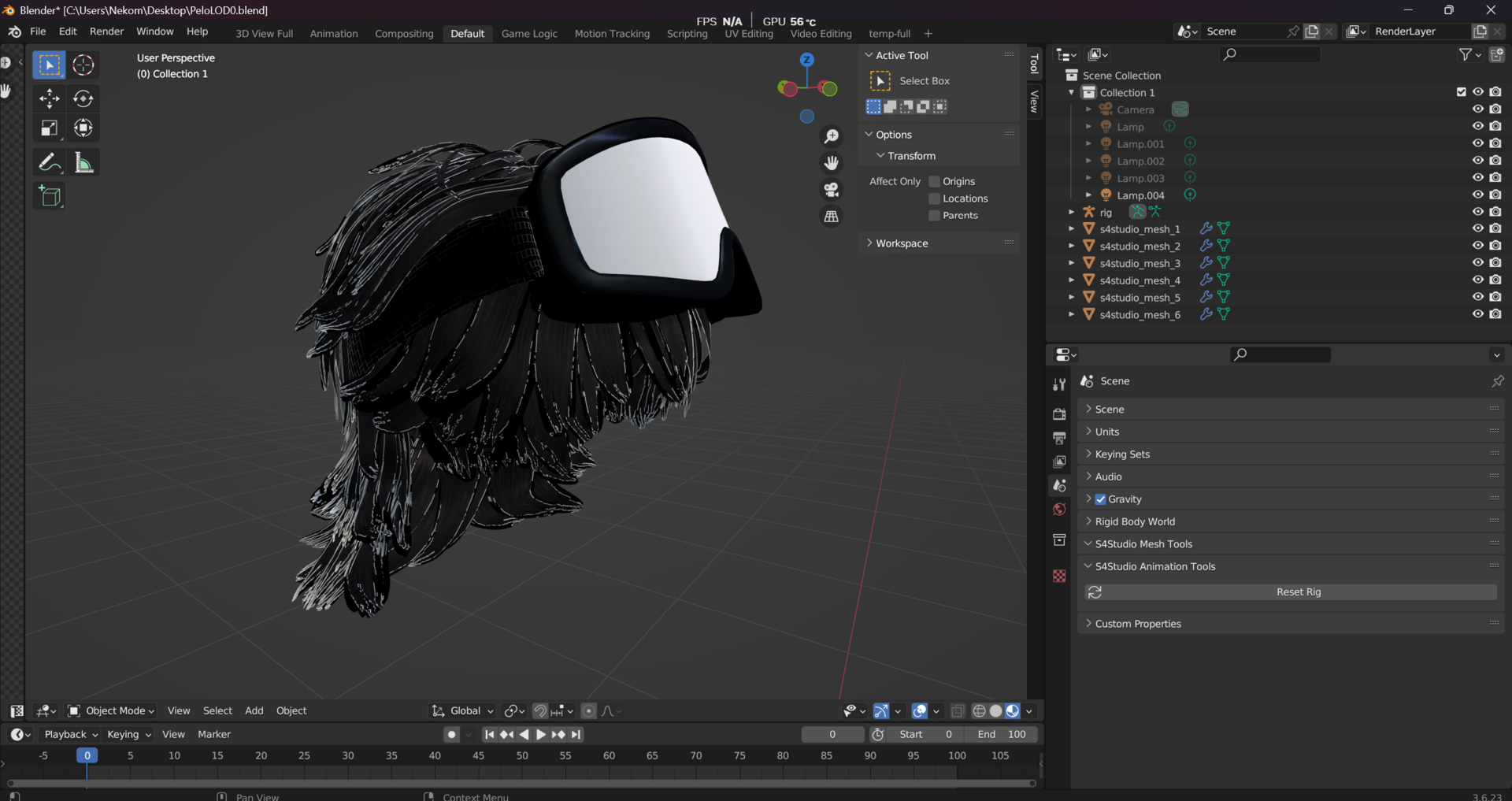
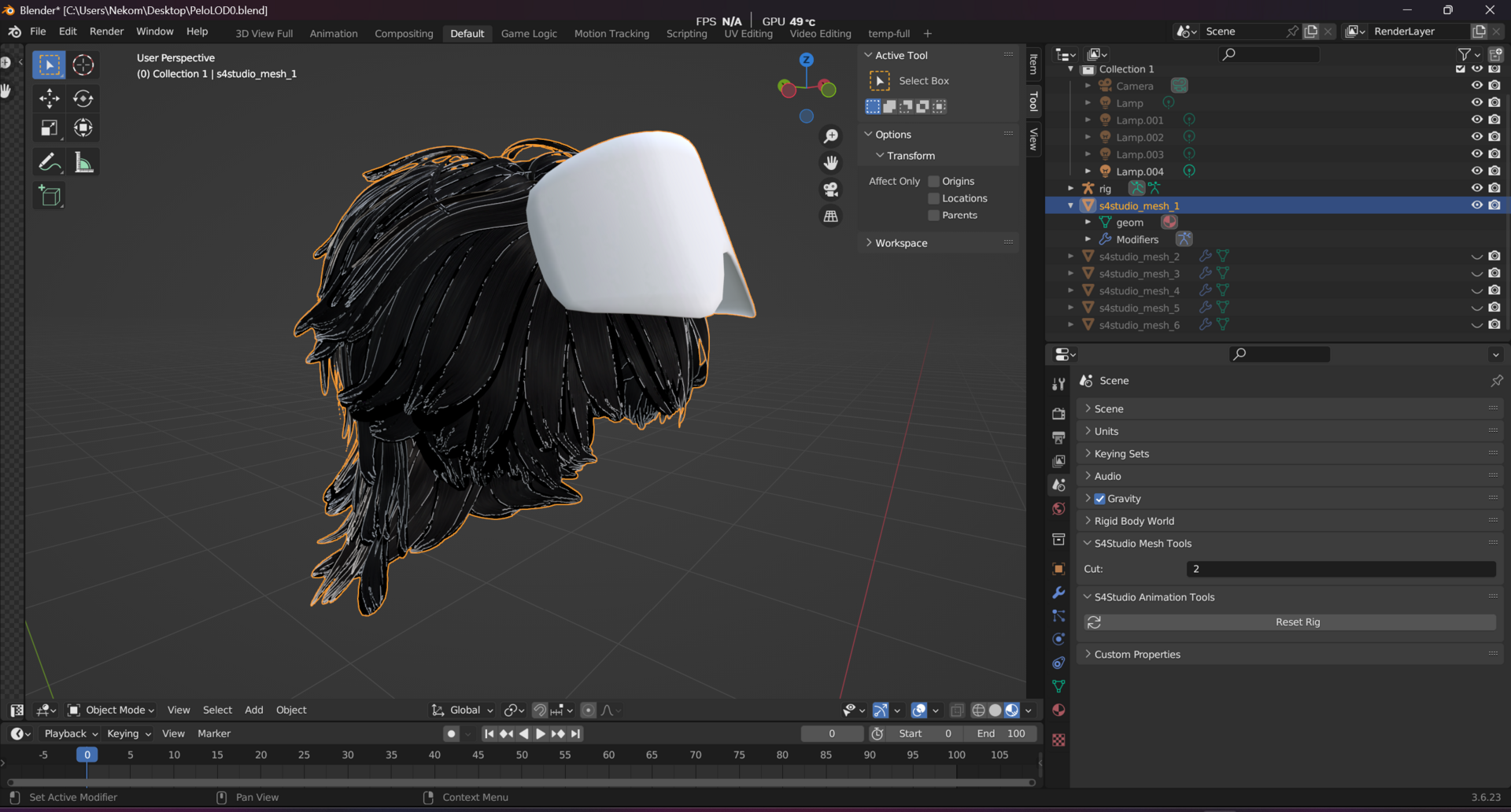
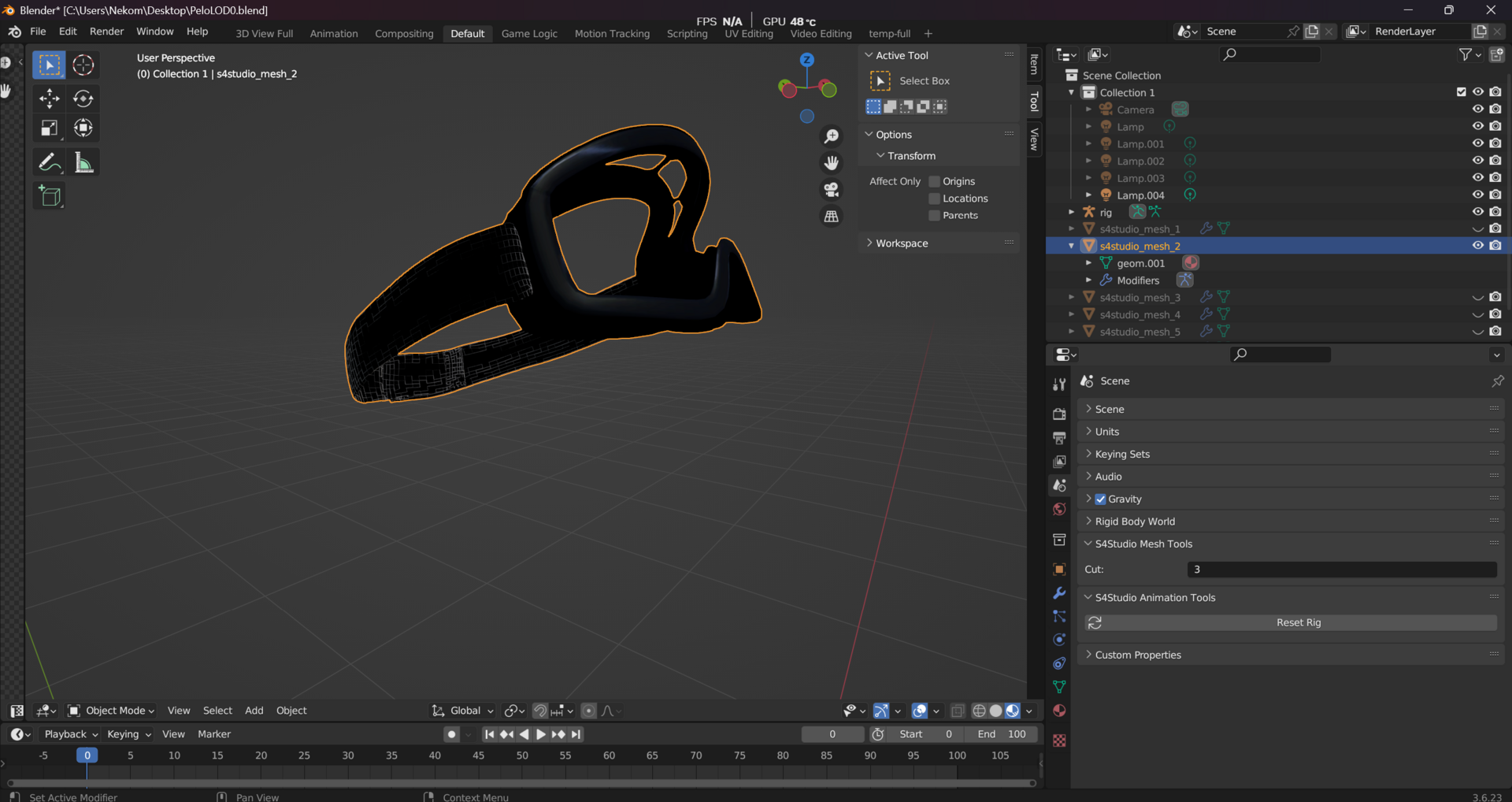
-
Hello, I don't know if it's appropriate to post this topic, but I'm looking for these NSFW models of Zooble and Gangle in Blender, by the artist @JustMinkoV on X. If someone would be able to share them, I'd be grateful uwu
.png.6184460248fbab5293402b3755a359ea.png)



-
 I am looking for a bulk rename add-on/script that allows mirror editing by weight in Blender. You know that when setting weights in The Sims, "b__" gets in the way and prevents mirroring, right? So I thought I could create a mirror rig if I removed "b__" from both, but even placing L/R at the beginning doesn't allow for mirror editing. So currently I'm carefully modifying the rig one side at a time, but I feel like I'm missing something and it's inefficient. I'm looking for an add-on that will solve this, and although I would ideally like to make one myself, I can't read the text so I can't, and I feel like there should be an add-on available, so I'm looking for one. If possible, it would be good if I could switch between Blender and The Sims 4 with one click.