
Bethesda Modding Diary - 03 July 2022

Entry posted by gregaaz in Modding Diary - July 2022
682 views
Welcome back, everyone! Today we're going to customize a mod that normally wouldn't be a great fit so that it meshes better with the game world. We're also going to add some more defensive options to Fallout in anticipation of the next chapter in Charley's story nope, ran out of time  . Fallout 4 already picked up another mod when I installed Guard Posts and Spotlights while I was writing Chapter 42, though it didn't make it into the final cut of the chapter. Here's our starting mod counts:
-
Skyrim
- Mods installed: 1742
- Plugins active: 1691
- Final load order index: EC
-
Fallout
- Mods installed: 494
- Plugins active: 553
- Final load order index: A7
Trekkapocrypha
Of the four potential numbers to focus on today, we have three with "hits" - 1742, 1691, and 553.
NCC-1742 -- U.S.S. Santissima Trinidad & maybe U.S.S. Austerlitz
U.S.S. Santissima Trinidad was originally authorized as Thelonii and was an Achernar subclass heavy cruiser. Given that the Achernar group went from 130+ authroized hulls to 13, we can probably assume that the name change happened as a consequence of Council meddling in the building plan as the Achernar order was gradually trimmed down. According to Ships of the Star Fleet, Trinidad launched in 2266; FASA has a launch date of several years before 2264, but this probably reflects the original planned launch date for Thelonii rather than the actual final commissioning date. Other than the fact that she was an Achernar we don't know much about her configuration and she was probably initially a standard "CA" type ship in terms of Star Fleet Battles statistics. She would have received the rear phaser refit no later than 2280, Auxiliary Warp Reactors some time between 2276-2279, and improved torpedo launch systems around 2280, assuming she remained in service until those dates.
Some time before 2279, Trinidad was refitted to the Enterprise mk II configuration. As we touched on in the previous article, FASA's Federation Ship Recognition Manual vision of the Enterprise refit program and subsequent new construction rhymes with but doesn't mirror the vision shown in Ships of the Star Fleet. Both sources identify three distinct versions with different initiation dates and similar but not identical specifications, but FASA identifies them all as discrete subtypes of the Enterprise refit design, while SOTSF suggests more distinct characteristics. The further I delve into the source material, the more I lean towards interpreting the Enterprise mks I, II, and III as corresponding to the SOTSF Enterprise refit, Constitution (II), and Endeavor classes, which would put the refitted Trinidad as a Connie II.
Now, this is where things get a little squirrely. Federation Ship Recognition Manual was published in-universe several years before 2282, so it doesn't really give us authoritative information about events in the 2280s and beyond. Ships of the Star Fleet is ostensibly written in 2290-2291, and indicates Thelonii (Trinidad) is still on active duty; however, SOTSF is unreliable about incorporating later and even concurrent source material because of the real-life delicate legal ground it exists on as a "tolerated" unlicensed product. Star Fleet Battles' Federation Master Starship Book indicates that some time after 2280, a heavy command cruiser (CB) U.S.S. Austerlitz with NCC-1742 "appeared" [in historical records]. All of the the FMSB CBs have names that differ from their equivalents in other sources, and we know that in some cases SFB ship names are clearly not accurate.
We do know that a few years before 2254, a Larson class destroyer named U.S.S. Austerlitz (NCC-4308) was destroyed in action, so the idea of a replacement ship commissioning isn't impossible. I think we can reasonably posit three theories for the ship's identity:
- The SFB name may be entirely irrelevant, a product of parallel-universe divergence between the SFU and the prime universe. This is the easiest, hand-waviest answer, but I prefer to save that for cases like the infamous Nathan Bedford Forrest. Importantly, the tie to a previous FASA ship provides cross-bracing between continuities, and writing off Austerlitz entirely would lose that benefit.
- Trinidad was lost some time after her Connie II refit, and Austerlitz is new construction meant to replace her. This is a perfectly viable solution, especially considering the tumultuous period of history that the late 2270s represent. However, this starts to open the door to suggesting that all or at least most of the CBs were new construction replacements, and that's inconsistent with how the Class 1 heavy cruiser design evolution is normally presented.
- All three names describe the same ship. She was authorized as Thelonii, with a plan to initially build her in the early 2260s, perhaps even laying down concurrently with Achernar in '61. Because of delays, she did not lay down until 2265, by which time she had been redesignated Santissima Trinidad. This was the name she was built under and maybe even the one she performed her space trials in '66 as. However, when she commissioned on stardate 6674.28, she received the name U.S.S. Austerlitz.
I think both theories 2 and 3 are plausible, but I lean somewhat towards theory #3. Ultimately, we don't know enough about this ship's adventures to do more than speculate. Memory Beta identifies a single reference to Thelonii in the Star Trek II Short Stories anthology, but otherwise the literature is silent.
NCC-1691 -- U.S.S. Asimov and/or U.S.S. Richard Bong
Now here we've got a real gordian knot to unravel. Consider the following facts from different sources:
- U.S.S. Asimov, NCC-1691, was a Constitution class cruiser in service in the 2250s that charter more class M planets than any other ship to date. She retired in 2293.
- U.S.S. Asimov, NCC-1652, was a Malachowski class light cruiser in service in the late 2270s. Note that she would have been build some time earlier as the Malachowski is part of the generation of designs that proved obsolete during the Klingon War of 2256.
- U.S.S. Richard Bong, NCC-1691, was a light cruiser. Some time in or after 2280, she was either built or refitted with a large shuttle bay to allow for carrier operations. While started in the "NVS" configuration, she was completed in the "NCV" configuration - a decision that probably extended her refit time.
So how do we reconcile these? It's a tricky one, but here's my best guess:
U.S.S. Asimov, NCC-1652, launched some time in the 2240s. Like her Anton-class counterparts in Galaxy Exploration Command, the Malachowski class were intended as an economical and flexible option to increase Military Operation Command's cruiser force. Unfortunately, these ships provided seriously outmatched against their Klingon equivalents; poor performance in the Four Years War and the Klingon War of 2256 were one of many factors that helped cement the acceptance of the Class 1 starship program and lead to the quasi-Class 1 Kearsarge and Sombra class cruiser programs.
Some time after the end of the Four Year War, the Federation Council authorized the construction of an unknown number of Sombra class light cruisers. These ships were simplified versions of the planned Bon Homme Richard design with most parts in common but many 'frill' features deleted. In exchange for the reduced mass and more narrow capabilities, Sombra class ships were faster than the planned BHR and would only require a crew of about 100 to operate, compared to the BHR's crew of over 200. One of the planned designs was to be a replacement for NCC-1652, which would bear the Asimov name.
A little footnote here: the Sombra class is literally a brand new discovery. This ship type was revealed three days ago in the Strange New Worlds episode All Those Who Wander, and the ship featured there, U.S.S. Peregrine had an NCC number in the same range that's traditionally associated with Kearsarge class light cruisers. It is in fact possible that the Kearsarge "class" is actually the Sombra class - while the two types of ships are depicted very differently, Star Fleet Battles artwork is not a reliable source because it's severely constrained by real-life legal restrictions tied into their unusual license with Paramount. Moreover, the Sombra appears to address some anomalies in past novels that rarely referred to some other Constitution class ships as light cruisers. But I digress.
However, for reasons that remain unknown to history, 1652 never retired. 1691, however, remained on schedule for production and launched some time in the early 2250s. With the Asimov name still in use, she instead commissioned as U.S.S. Richard Bong, named after a highly decorated aviator from Earth's past. Bong went on to carry out her record-breaking survey mission under the command of Captain Gan Laikan in the 2250s, after which she faded out of history's view for three decades. We can reasonably presume that she continued to serve in Galaxy Exploration Command during these years, searching out more new worlds in uncharted space.
By 2280, the Federation was on both a dangerous and also promising position. Tensions with the Klingon empire have been steadily growing for years, and despite the Organians' intervention, on again-off again conflict has resulted in the Klingons exercising control over many areas within the Federation's officially claimed borders. Moreover, in 2278, probably as a result of Klingon diplomatic efforts, the long 'frozen conflict' on the Federation Romulan border heated up dramatically, with a de facto state of war existing on the edge of the neutral zone. On the other hand, the decades-long effort to establish peaceful, friendly contact with the Gorn finally bore fruit in 2279 with formal agreements on defense cooperation against Romulan aggression. At the same time, the Federation had been engaged in technology transfers for years now with the Kzinti Hegemony, particularly with regard to shuttlecraft technology.
As part of the long-term plan to reestablish control over Klingon-occupied Federation territory, the Federation Council recognized the need for the added military and humanitarian capabilities that shuttle carriers provided. Several light cruisers, including Bong were drydocked for conversion into shuttle carriers capable of operating and sustaining 16 shuttles, twelve of which could be fighter versions. Before the refit was completed, further additional capabilities were added in an attempt to give the ship heavy cruiser-like performance. When Bong relaunched in this new configuration some time after 2280, she operated as the center of a task force that also included another light cruiser (not converted to a carrier configuration) and a frigate. We don't know the names of these ships, unfortunately.
Bong survived through the 2280s to see the Khitomer Accords finally start to wind down tensions with the Klingon Empire, and she was retired that year.
So to summarize, my interpretation is: Asimov 1652 is good "as-is" and is out of scope for this discussion. 1691 was never commissioned as Asimov and Decipher RPG's Starfleet Operations Manual and Starships of the Original Series Era are in error. They are also in error about her class - she is a Sombra, not a Connie. In both cases, these can be chalked up to errors made by careless future historians working from incomplete or fragmentary data. After all, Bong did look like a Connie, and at one point she was planned to be called Asimov.
NCC-593 -- U.S.S. Scipio/Wotan
U.S.S. Scipio was authorized for construction as a Cochise class destroyer on stardate 4699. The Cochise class was one of a series of designs intended to fix the deficiencies associated with the Saladin class destroyer (aka Starship, Class 1, Mk VII). Had Scipio been completed, she would have had superior performance characteristics to the older Saladins, though chances are she still would have struggled to fully meet the performance potential of her equipment complement. However, for several reasons (not the last of which being that the Larson class ship she was meant to replace - NCC-4352 - was still in service) her construction was repeatedly delayed. Eventually, Scipio was selected for the Fast Destroyer program, to be built as U.S.S. Wotan. Unfortunately for her, the supply problems that doomed the rest of U.S.S. Two Moons' sister ships also caused her to be cancelled before completion.
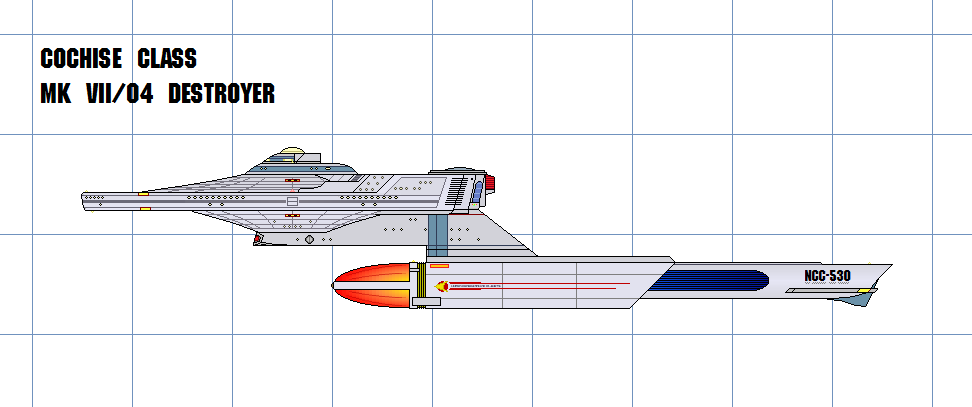
Image excerpted from JBOBroony's colorized version of the Federation Starship Recognition Chart: source
The Class 1 destroyer program is kind of a mess in its own right. First, I think it's questionable as to whether or not these ships were actually referred to as by Starfleet. While the description of a destroyer - "a fast, maneuverable, long-endurance warship intended to escort larger vessels" is technically accurate, I find myself skeptical that the Federation would adopt this kind of branding for one of its main ship classes. More likely, the Saladin family was described in universe either as an Interceptor (as seen on the Kelvin Timeline's version of the Saladin) or as a Heavy Escort (as seen used for future equivalents in Star Fleet Online).
The Saladin also "doesn't fit" with the rest of the Class 1 starships in another way: it appears to be adapted from an existing design, rather than designed from scratch to fit the Class 1 requirements. In the Kelvin Timeline, where the Class 1 program never found widespread acceptance, the Saladin class still exists. This earlier version of the design, classed as an interceptor, had a different design for its engine and deflector, and had a small internal shuttle bay over the impulse deck. Armed with phasers and photon torpedoes, much of the striking power of the Saladin was concentrated on its opening volley, after which it could only sustain a less intense level of fire while maneuvering.
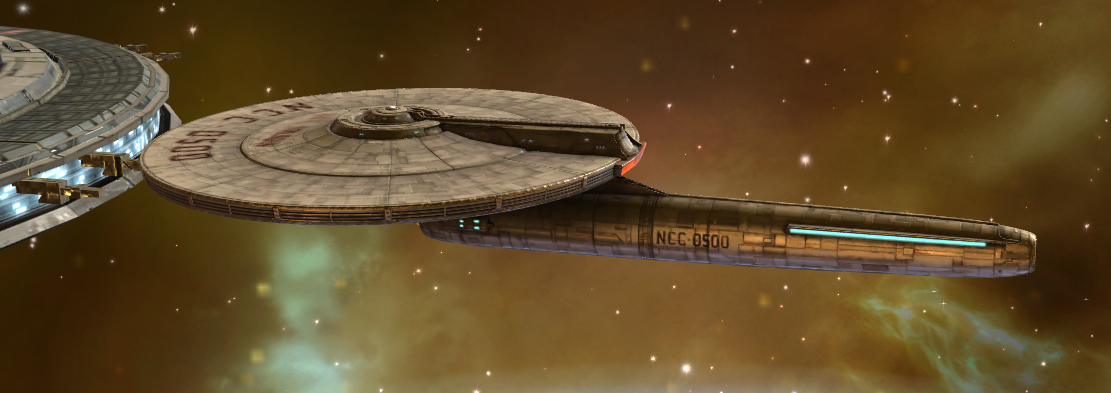
The tactical approach of relying on phaser capacitors and stasis-boxed "hot" photon torpedoes was well suited for the Saladin's original role as an interceptor and perimeter action ship. In its Class 1 incarnation, the Saladin looked very effective on paper. It still had enough mission systems space and endurance to fulfill the Class 1 concept of five year exploration missions, but it possessed firepower roughly equivalent to the Achernar class heavy cruisers: that is to say, dramatically greater than a pre-refit Connie. Unfortunately, the difficulty in utilizing its weapon systems in anything other than a first-strike scenario proved ineffective for single vessel operations, and each subsequent model of Class 1 "destroyer" tried to remedy this oversight with substantial design changes.
Had the high performance engines it relied on been available, Wotan would have addressed this problem by brute force: redirecting the larger amount of available engine power to the phaser capacitors and photon charging systems. Unfortunately, Starfleet never overcame the materiel issues surrounding the planned engines, and as a result Wotan was never completed.
Sanguine Snacks
Take a look at Sausages of Solitude and tell me Sanguine isn't involved somehow. Right? Right? At least, that's the only vaguely lore friendly explanation I can come up with. So let's integrate this silly mod into our game, shall we?
First off, we need to make sure it's clean. It doesn't have any asset conflicts and the plugin is already ESL flagged. It also doesn't have any errors or dirty records. The only conflicts are top level cell data and a single static that was moved; however, another one of my mods already disables that static so I'll just let it stay disabled.
Now let's drop into Solitude really quick and get a feel for the space this mod takes up.
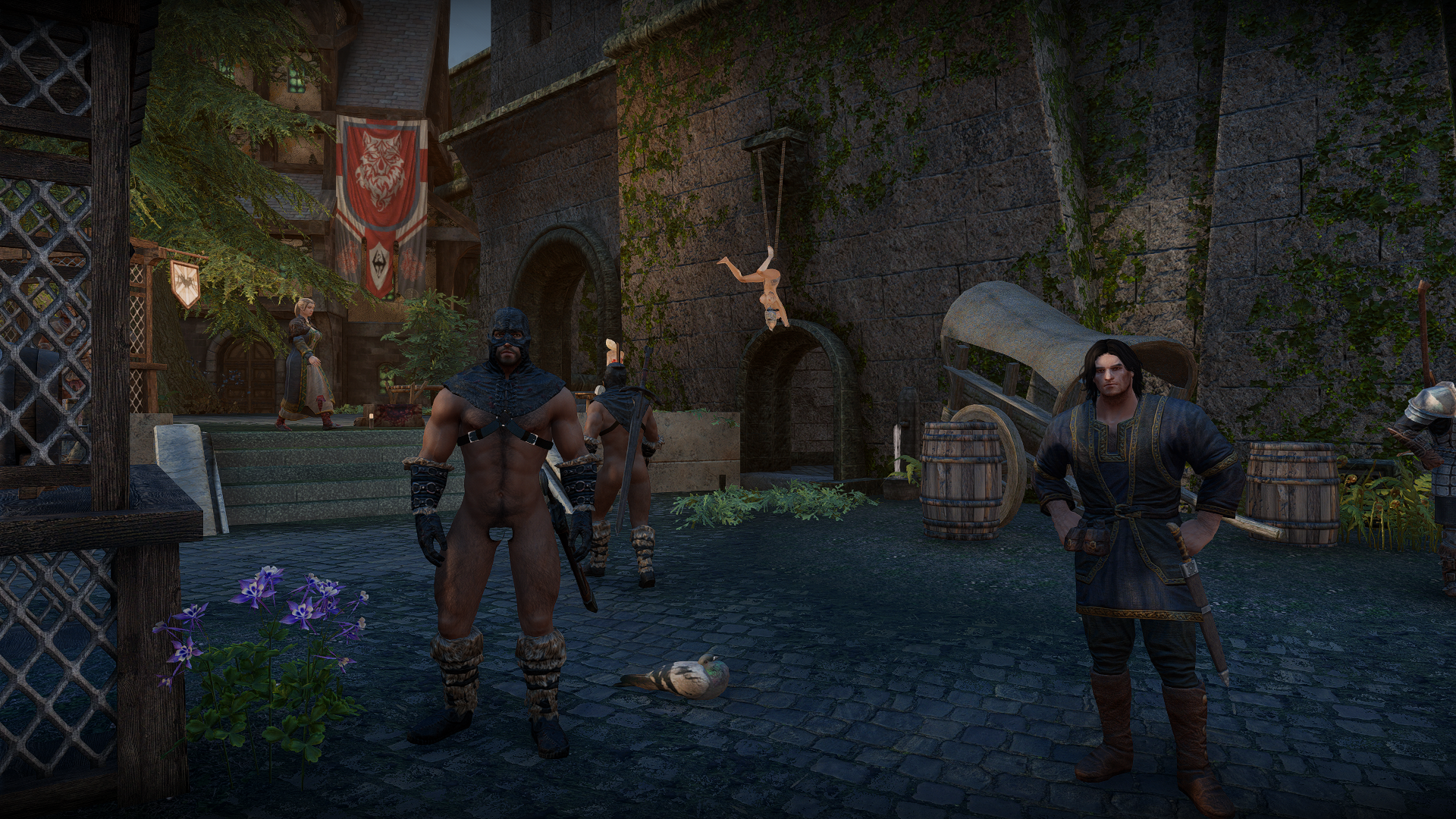
Hmm, so right away we can see a small issue. The way that Island of Mara replaces the executioner outfit is causing Crotch Hole Disease for the executioner here. I need to add this to my follow-up action list: either I need to fix the underlying problem (turn it into a standalone edit) or I need to add the relevant keywords to the executioner outfit.
Anyway, here's Arrectus and his cart. It actually works fine for where he got placed, much to my surprise. I'll probably just leave him here.
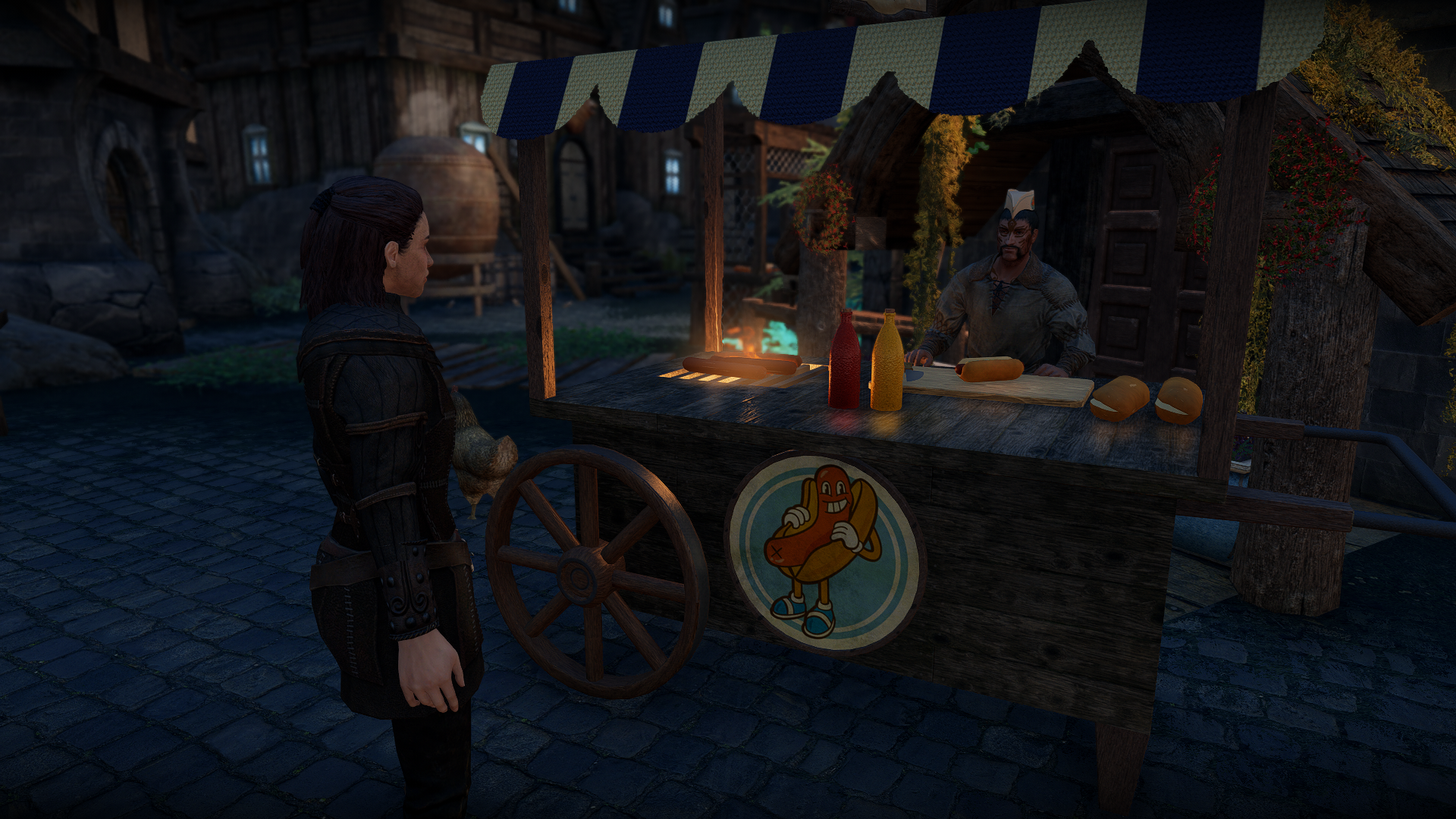
I'd also thought about putting his cart here, by the entrance to the Dragonborn Gallery. Let's see how that would look, by comparison.
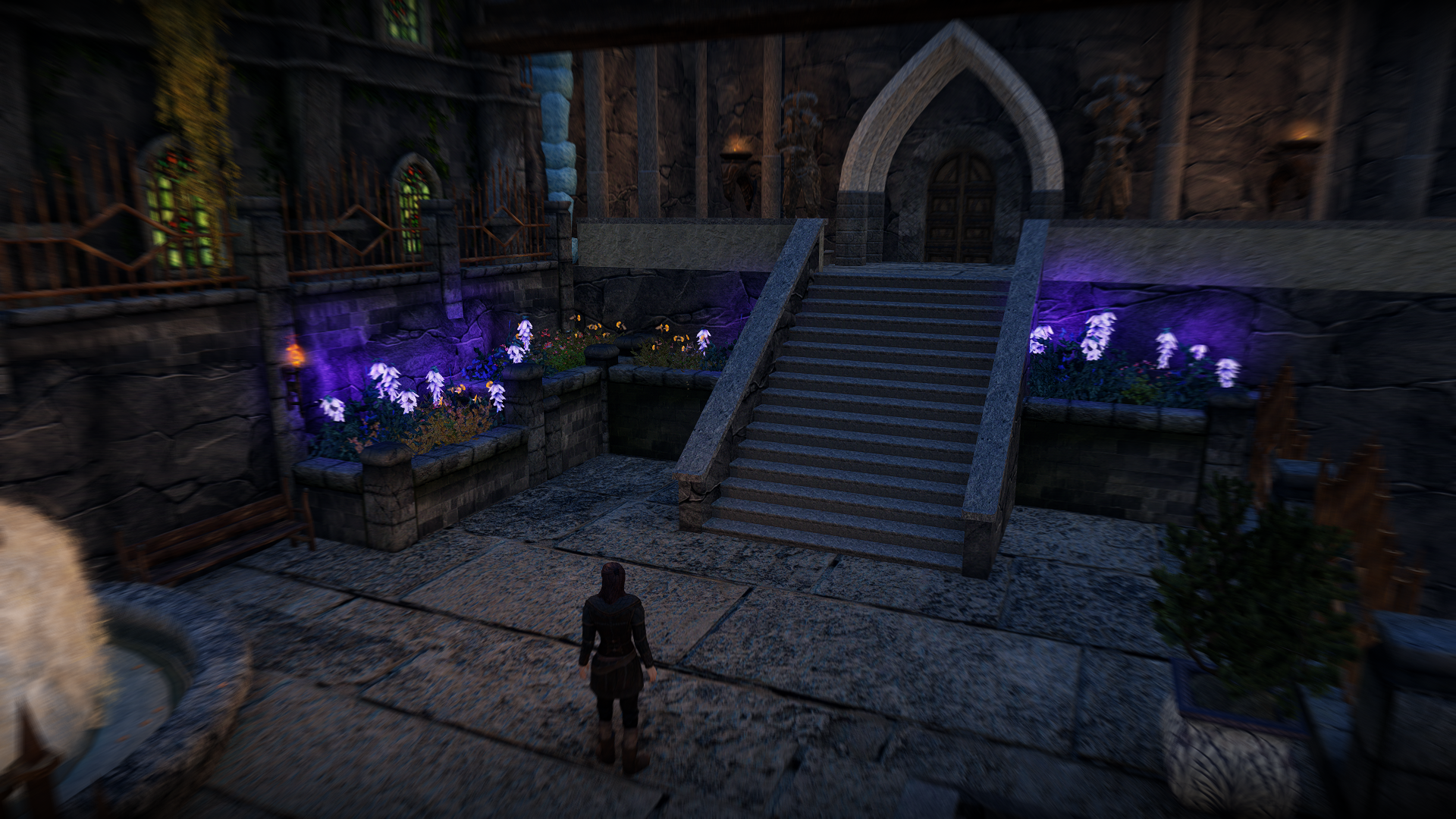
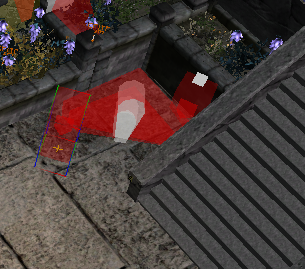
So some stuff does end up in that corner eventually - some markers and a statue. However, he can fit in right by the fountain. Let's put him there (there's a method to my madness, hang on).
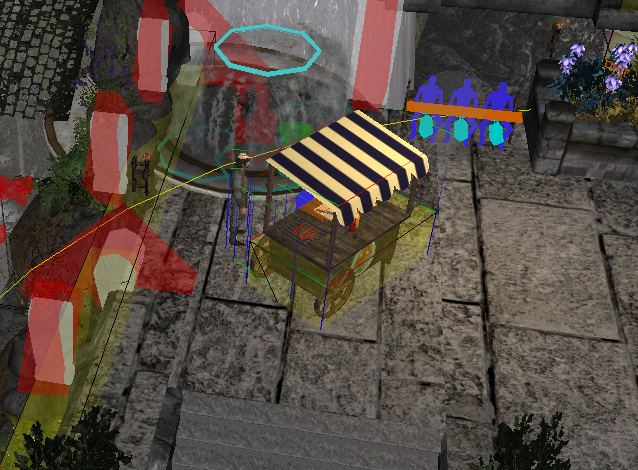
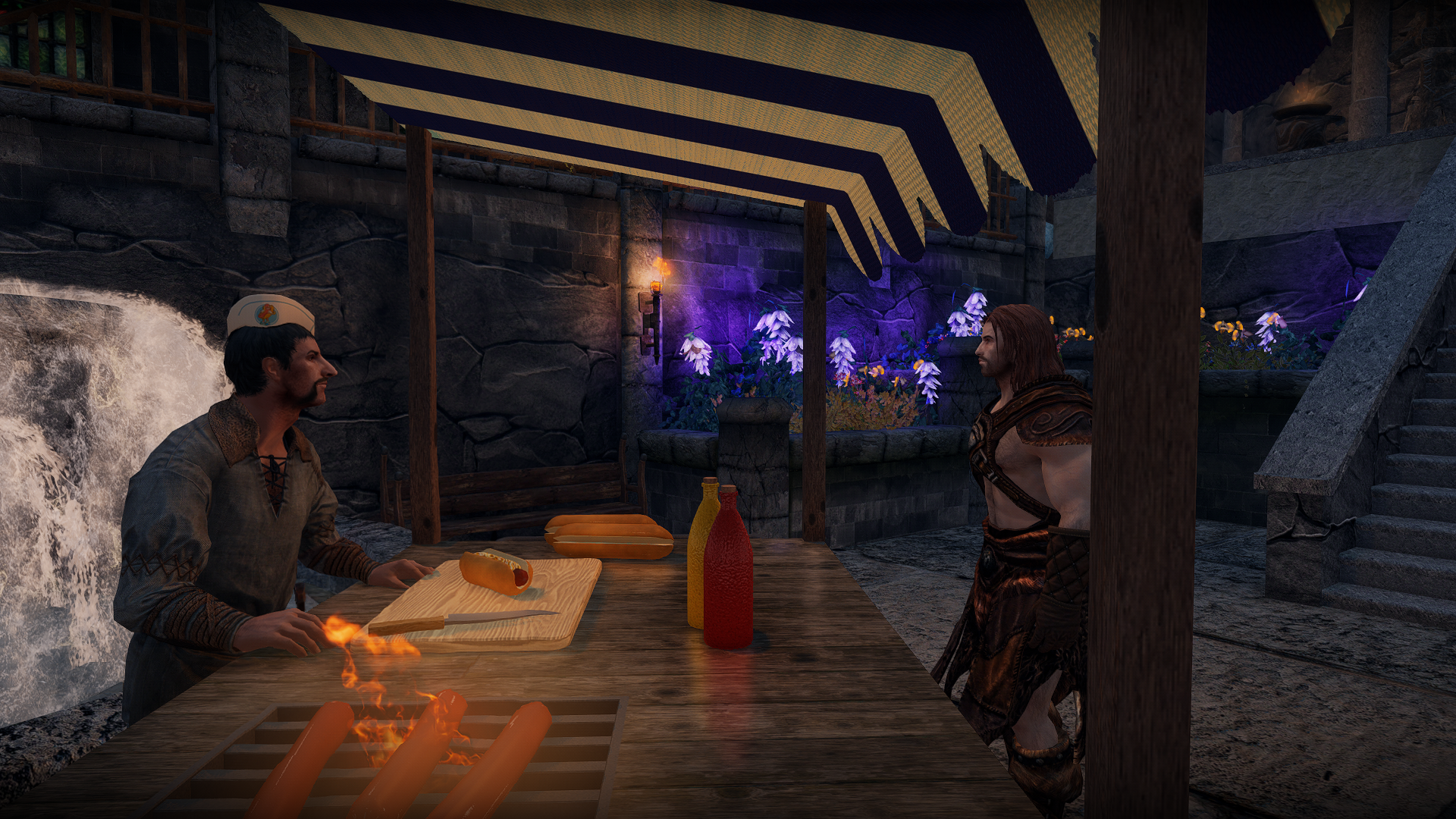
OK, so the new location looks pretty good. Now we want to do some cleanup and enhancement of the mod content. First, we'll give Arrectus the exposing version of the chef outfit. After all, surely this guy wants all his sausages on display, right?
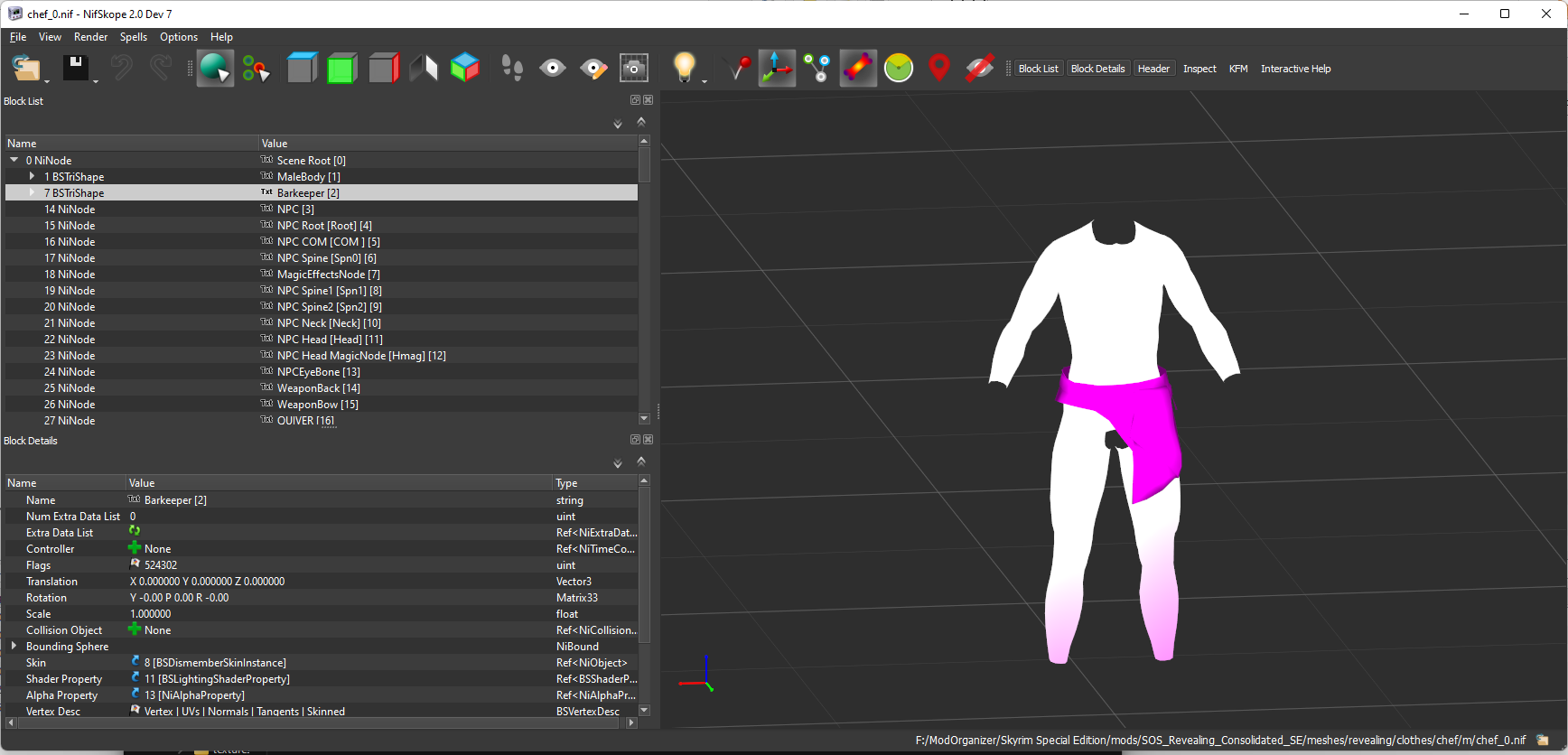
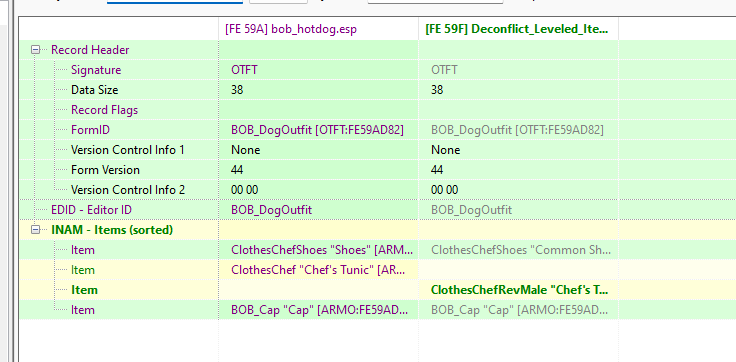
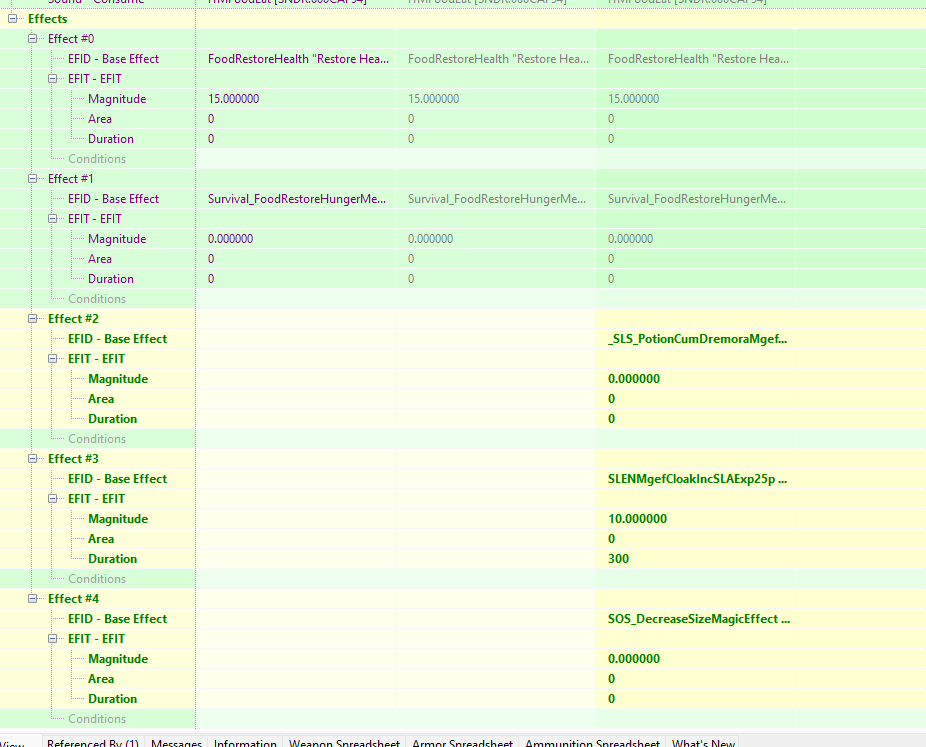
Next, we need to juice the proverbial dogs a bit. We've got five different dogs with, and I've added a mix of various 'sausage' related effects to each one.
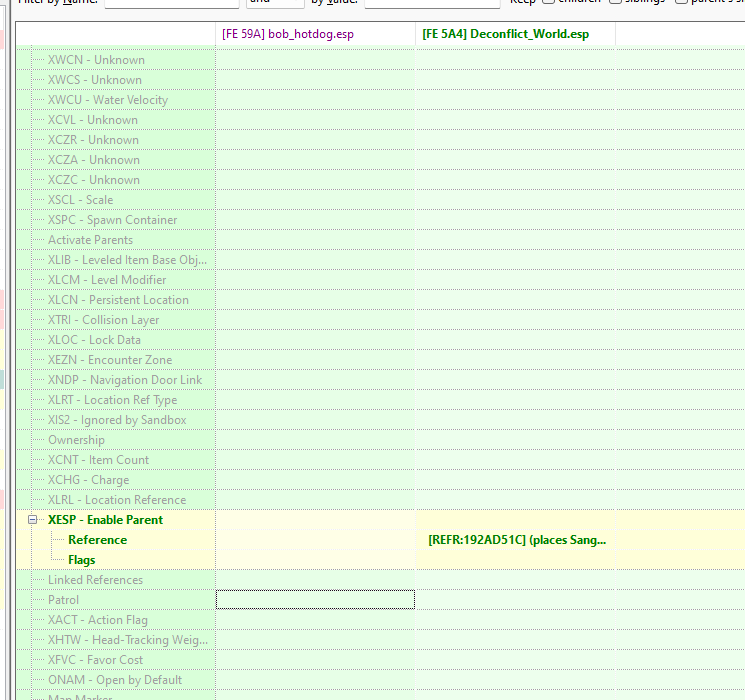
Last but not least, we only want this guy to show up when Sanguine's influence is strong. So we're going to set enable parents for all the object and character refs tied to whether or not Sanguine Rose is on display in the Dragonborn Gallery.
With those edits complete, let's give this a spin. First we'll spawn a new character and give her the Sanguine Rose.
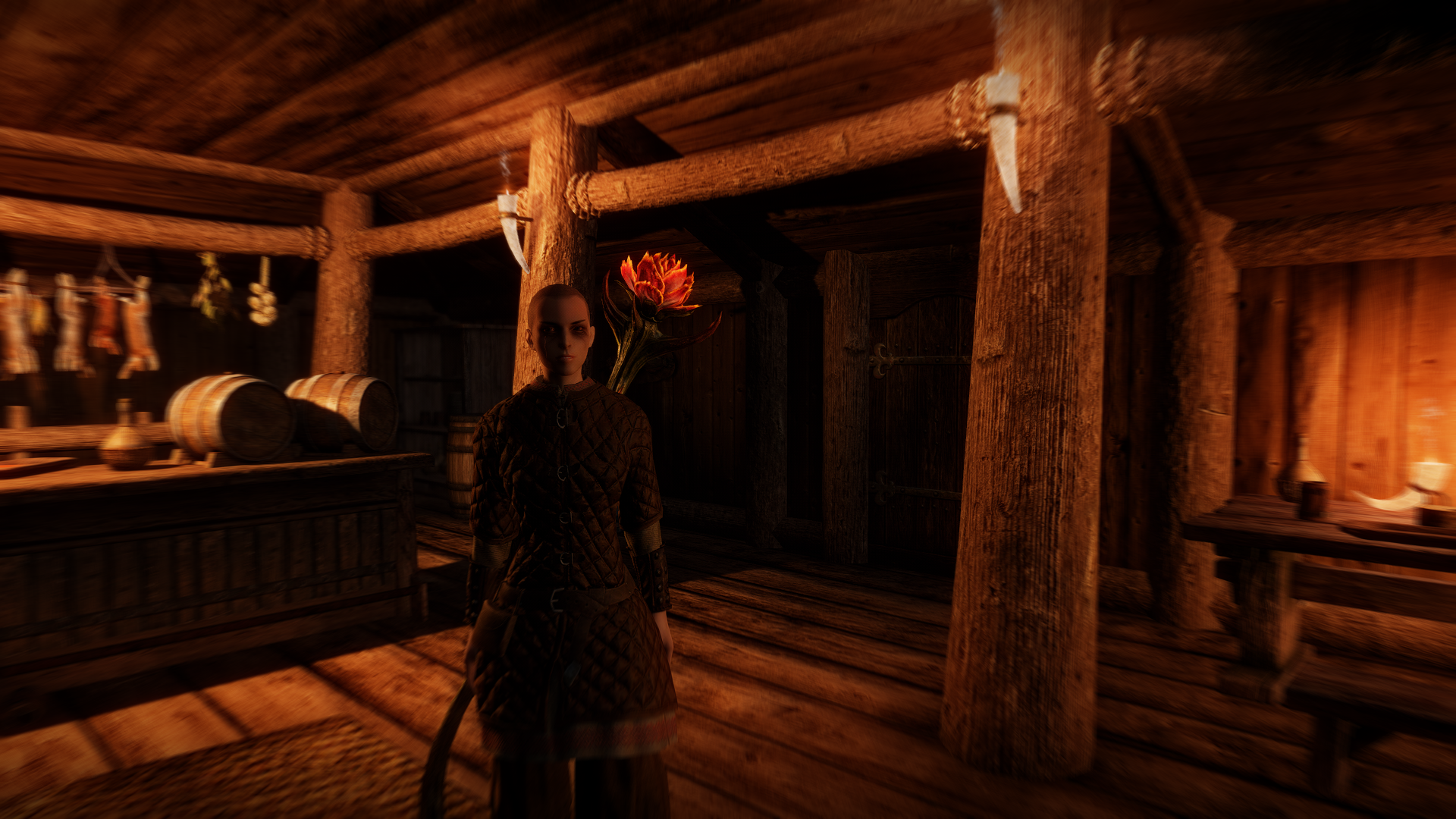
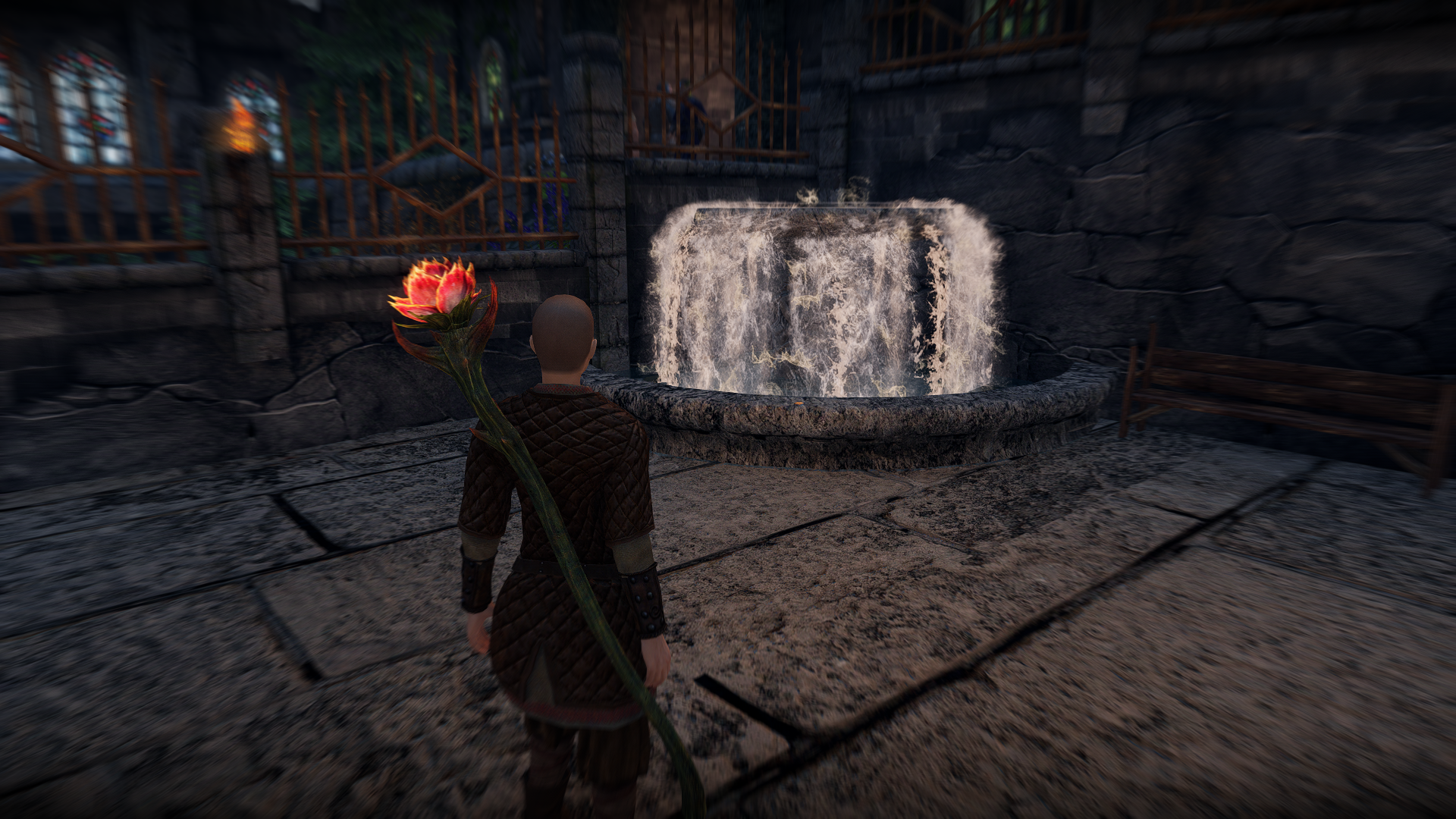
Initially, there's no sign of Arrectus to be seen. Now let's put the rose on display within the museum and go back out.
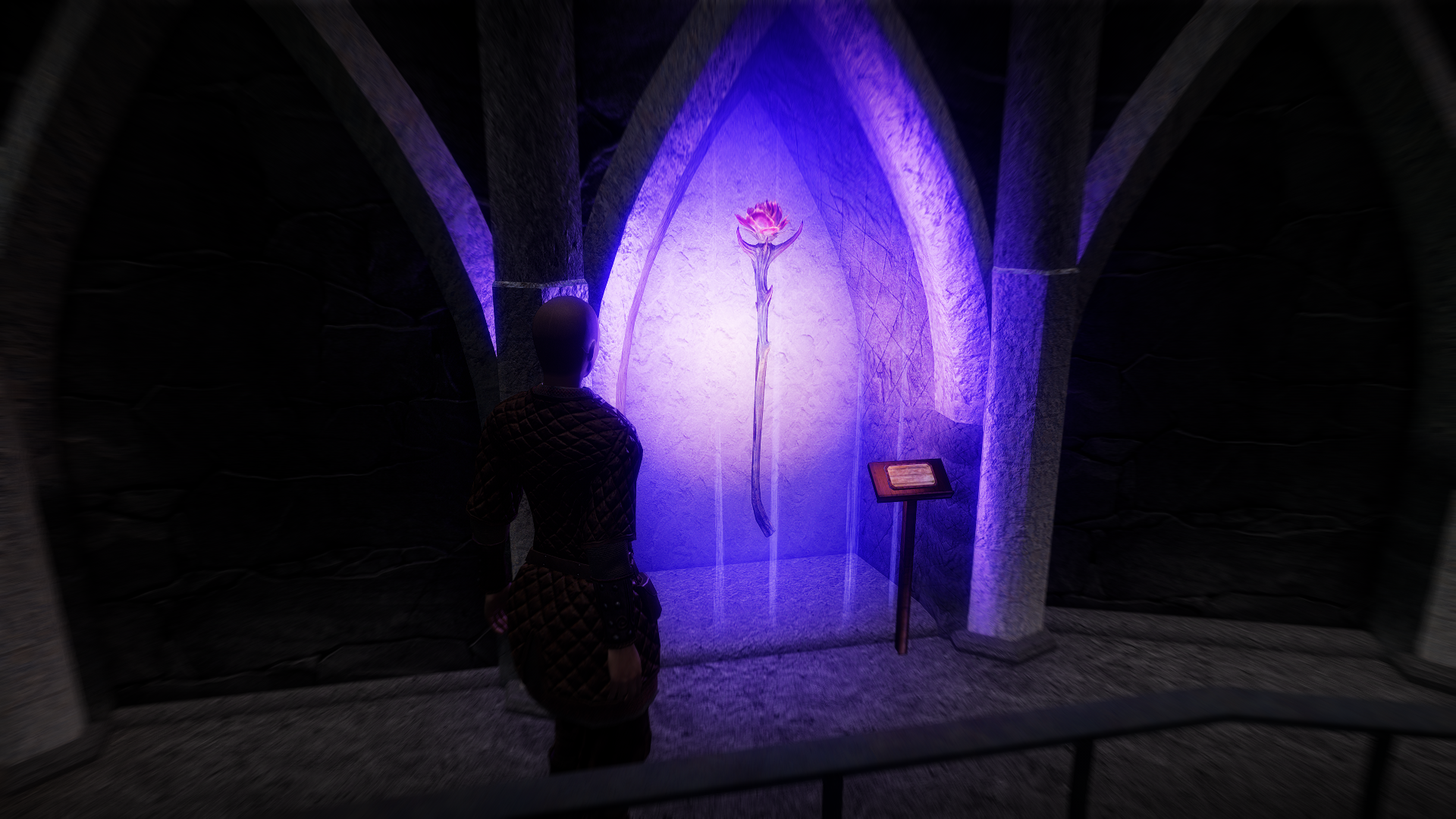
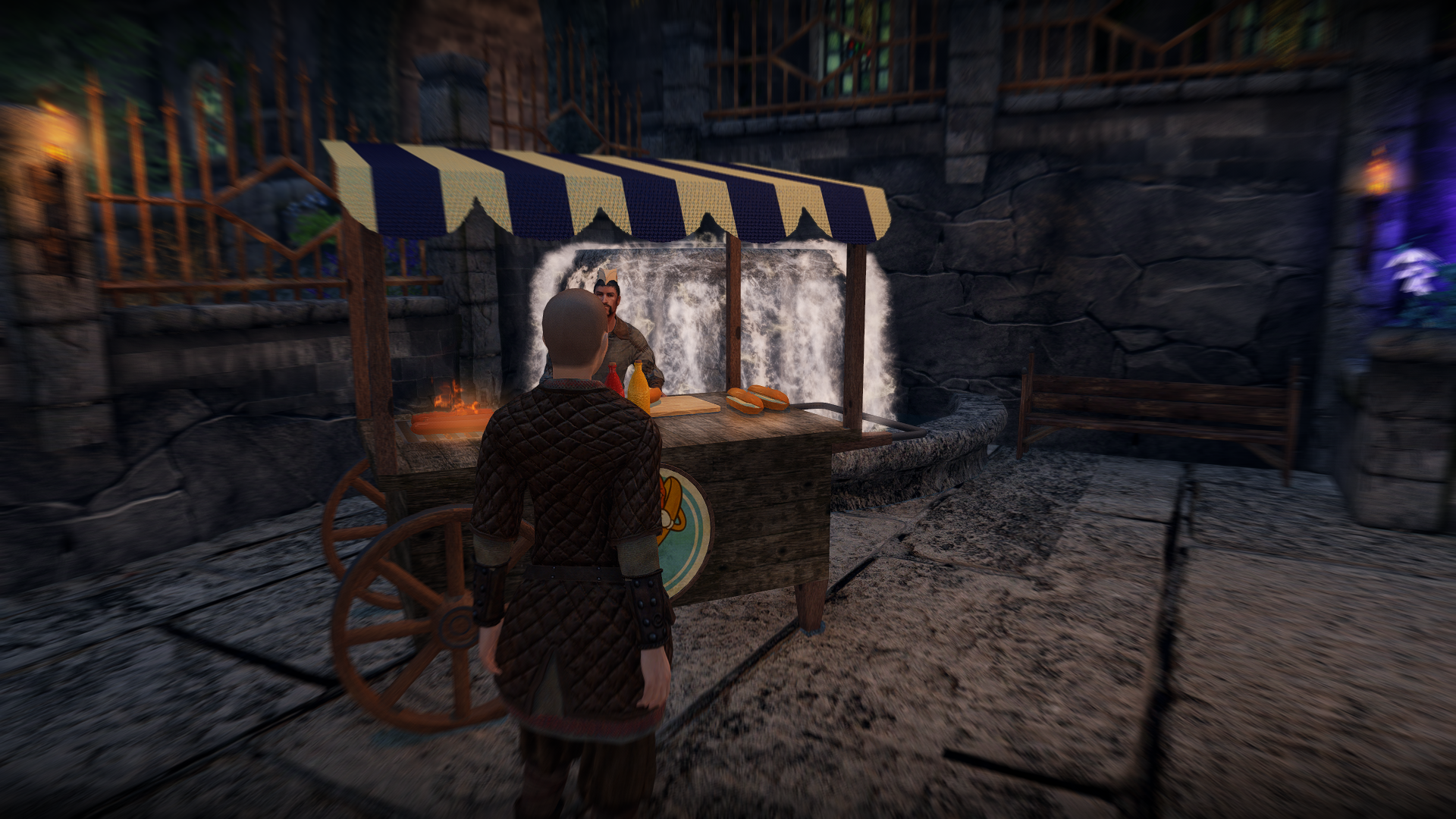
And he appears! Though it looks like his outfit is still pulling the non-revealing version. Let's fix that real quick. Ah, yeah, actually putting in the right texture paths should help.
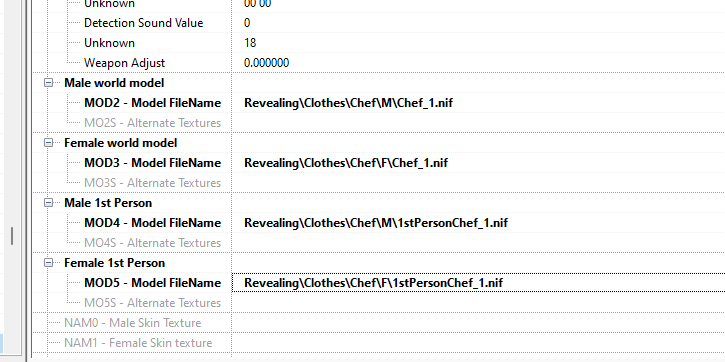
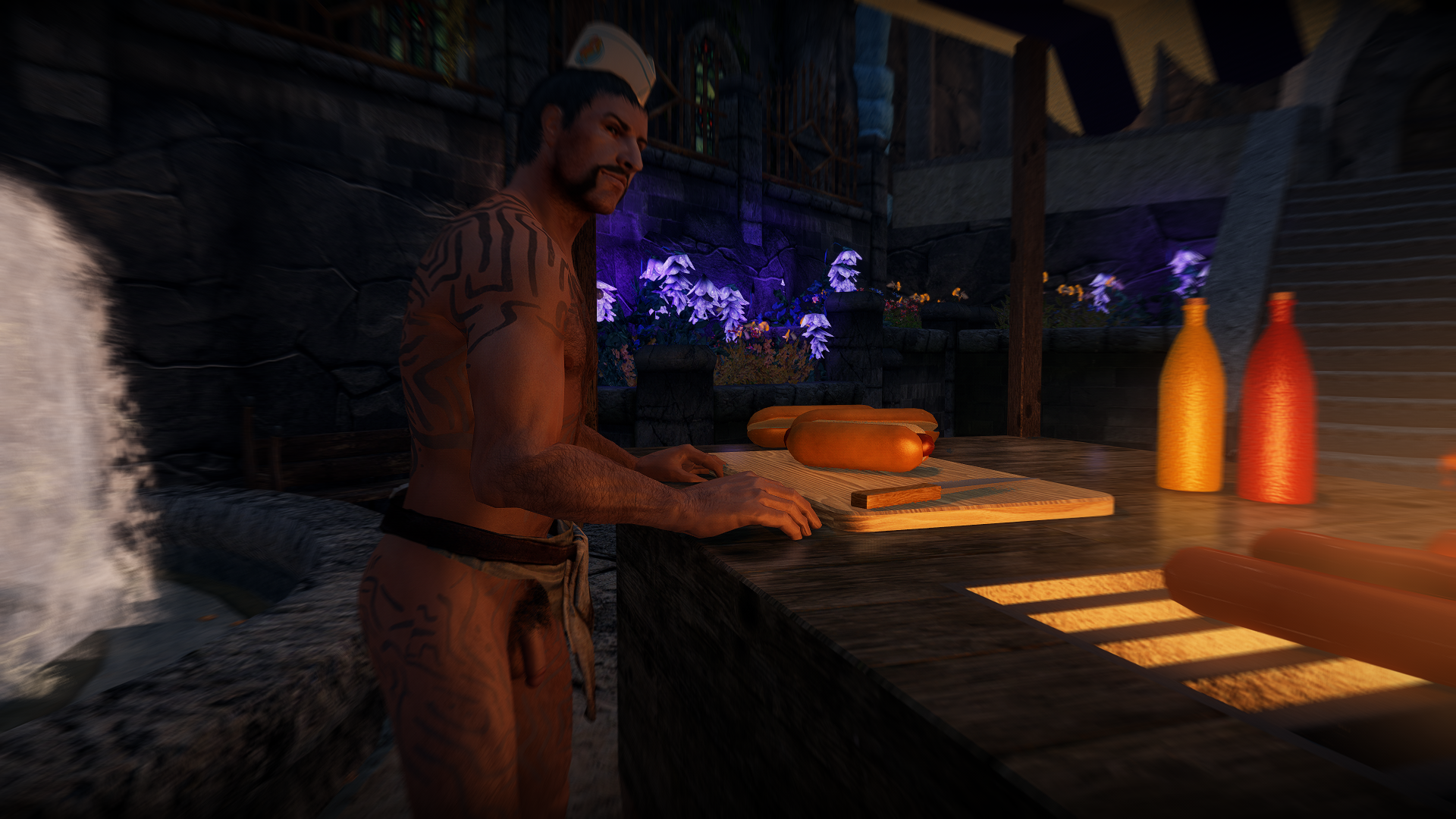
OK, looks good. I still need to do a little fine tuning on the magic effects as they aren't quite working right yet, but for the most part we're in good shape.
Well, I had some more stuff I wanted to get to today, but I spent more time on this than I expected so that'll have to wait until tomorrow. See you then!
2 Comments
Recommended Comments