
Ultimas paginas para Carpa 1408

Entry posted by ertyu in Carpa 1408
428 views
Desde la ultima entrada, he cerrado practicamente la edicion y estoy trabajando en los ultimos textos e ilustraciones. Supongo que pasaran una o dos semanas hasta su publicacion, pero esta, no tardara mucho. Como enl a entrada anterior, traducire algunos de los textos de las paginas de forma automatica al ingles.
Google translator:
Since the last entry, I have practically closed the edition and I am working on the last texts and illustrations. I suppose it will take a week or two until its publication, but this one won't take long. As in the previous entry, I will translate some of the text on the pages automatically into English.
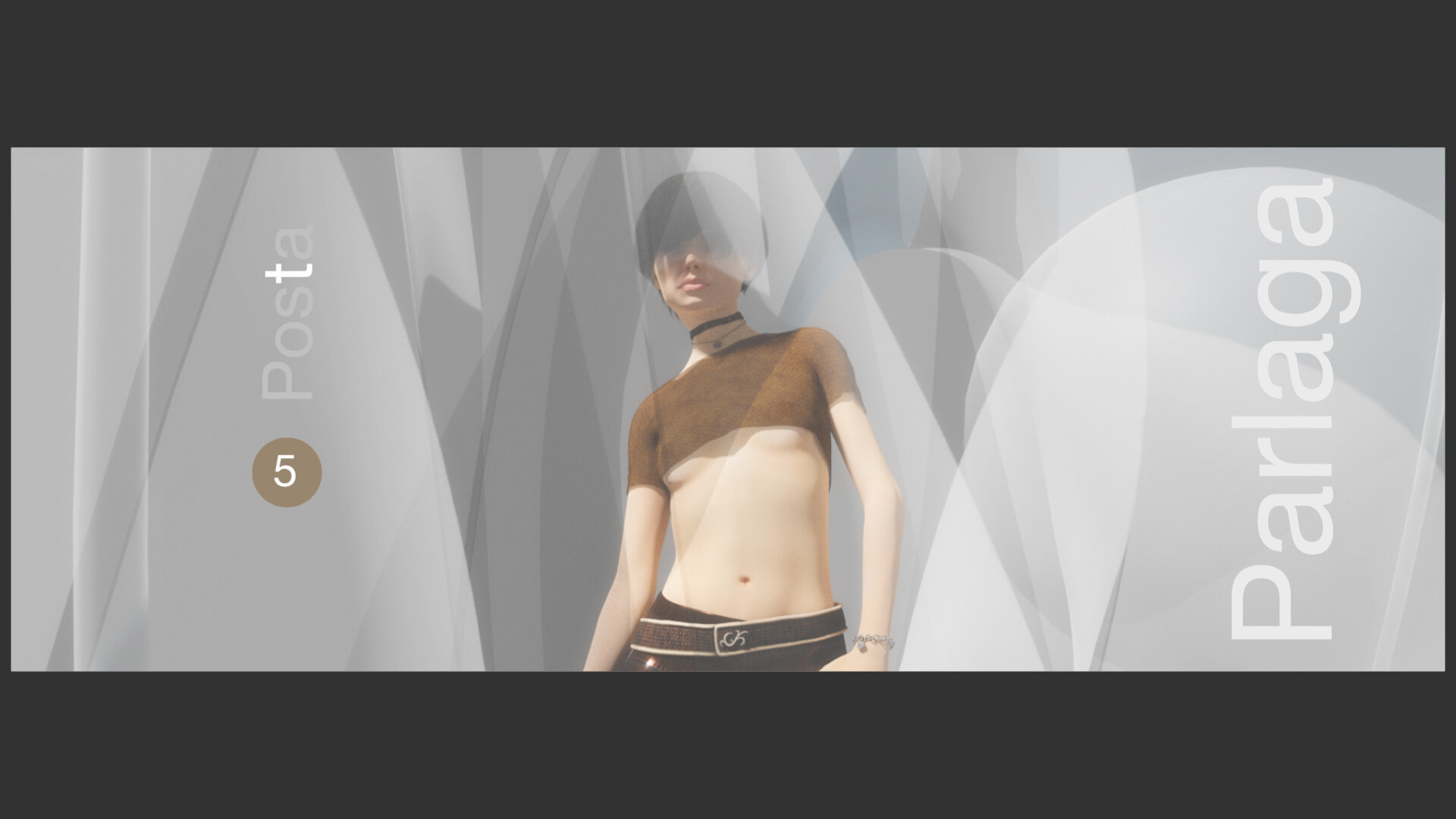
Basicamente, he trabajado en la ultima parte de la coleccion de Candelaria y en el cierre de la edicion.
Basically, I have worked on the last part of the Candelaria collection and on the closing of the edition.
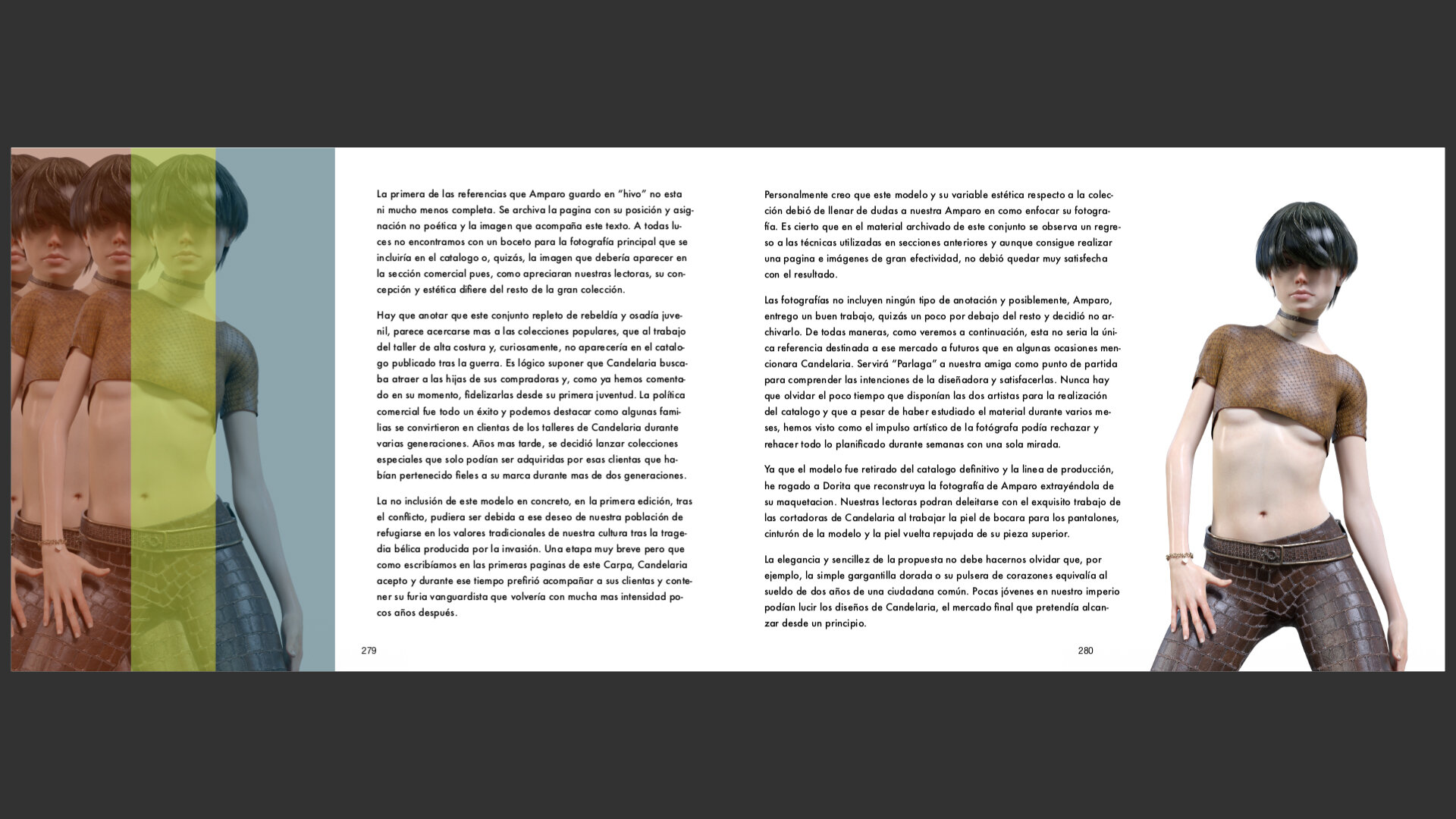
The first of the references that Amparo saved in “hivo” is by no means complete. The page is archived with its position and non-poetic assignment and the image that accompanies this text. Clearly we did not find a sketch for the main photograph that would be included in the catalog or, perhaps, the image that should appear in the commercial section because, as our readers will appreciate, its conception and aesthetics differ from the rest of the large collection.
It should be noted that this set, full of youthful rebellion and daring, seems closer to popular collections than to the work of the haute couture workshop and, curiously, would not appear in the catalog published after the war. It is logical to assume that Candelaria sought to attract the daughters of her buyers and, as we have already commented at the time, to gain their loyalty from her early youth. The commercial policy was a complete success and we can highlight how some families became clients of the Candelaria workshops for several generations. Years later, it was decided to launch special collections that could only be purchased by those clients who had been loyal to their brand for more than two generations.
The non-inclusion of this specific model, in the first edition, after the conflict, could be due to the desire of our population to take refuge in the traditional values of our culture after the war tragedy produced by the invasion. A very brief stage but as we wrote in the first pages of this Carpa, Candelaria accepted and during that time she preferred to accompany his clients and contain her avant-garde fury that would return with much more intensity a few years later.
Personally, I think that this model and its aesthetic variable with respect to the collection must have filled our Amparo with doubts about how to approach her photography. It is true that in the archived material of this set there is a return to the techniques used in previous sections and although she manages to create a highly effective page and images, she must not have been very satisfied with the result.
The photographs do not include any type of annotation and possibly, Amparo, delivered a good work, perhaps a little below the rest and decided not to archive it. In any case, as we will see below, this would not be the only reference to that futures market that Candelaria sometimes mentioned. “Parlaga” will serve our friend as a starting point to understand the designer's intentions and satisfy them. We must never forget the little time that the two artists had to create the catalog and that despite having studied the material for several months, we have seen how the artistic impulse of the photographer could reject and redo everything planned for weeks with a single look.
Since the model was removed from the final catalog and the production line, I have asked Dorita to reconstruct Amparo's photograph by extracting it from her layout. Our readers will be able to delight in the exquisite work of the Candelaria cutters when working the bocara skin for the model's pants, belt, and the embossed turned leather for her top piece.
The elegance and simplicity of the proposal should not make us forget that, for example, the simple golden choker or her heart bracelet was equivalent to two years' salary of an ordinary citizen. Few young people in our empire could wear Candelaria's designs, the final market she intended to reach from the beginning.
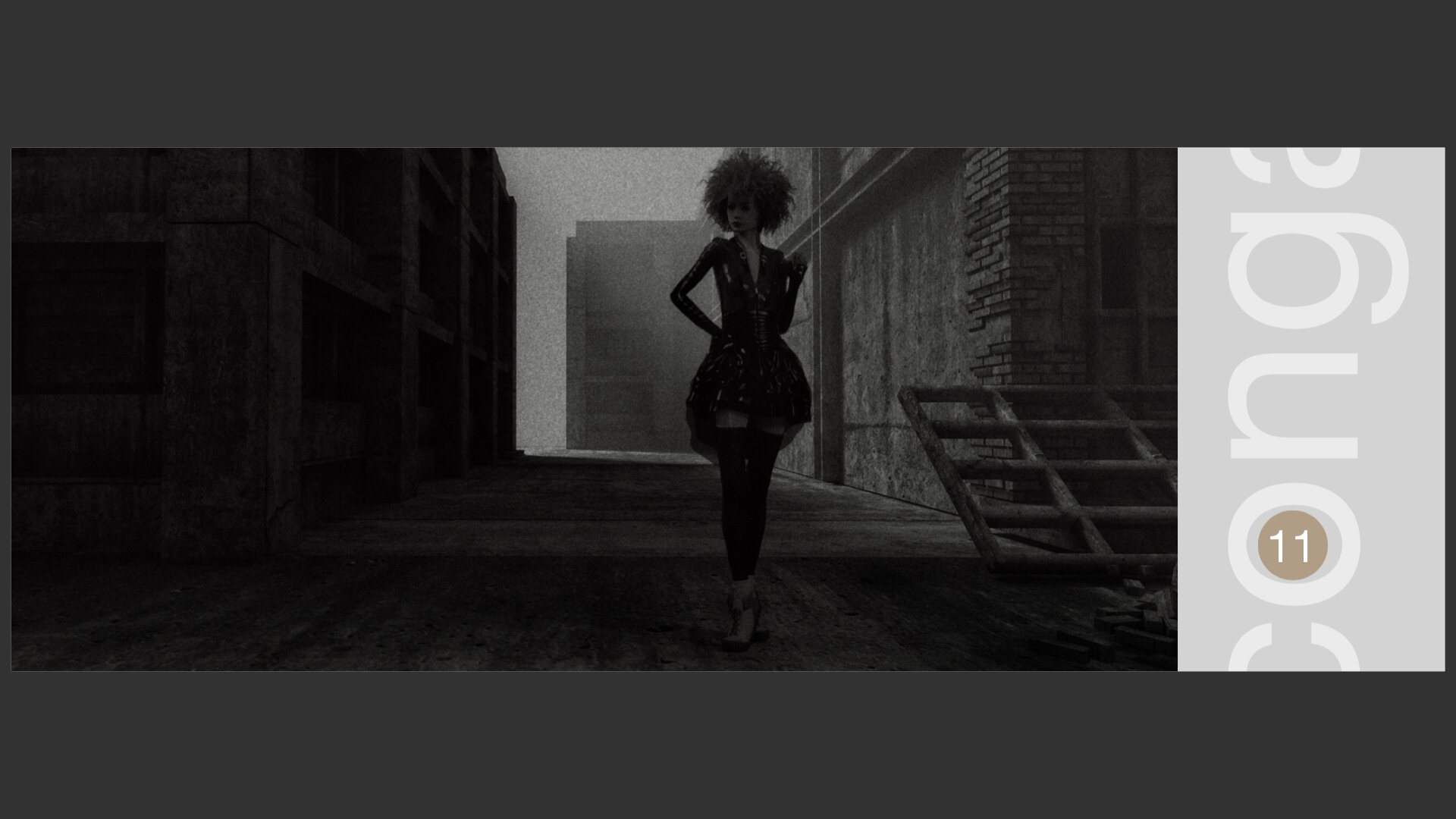
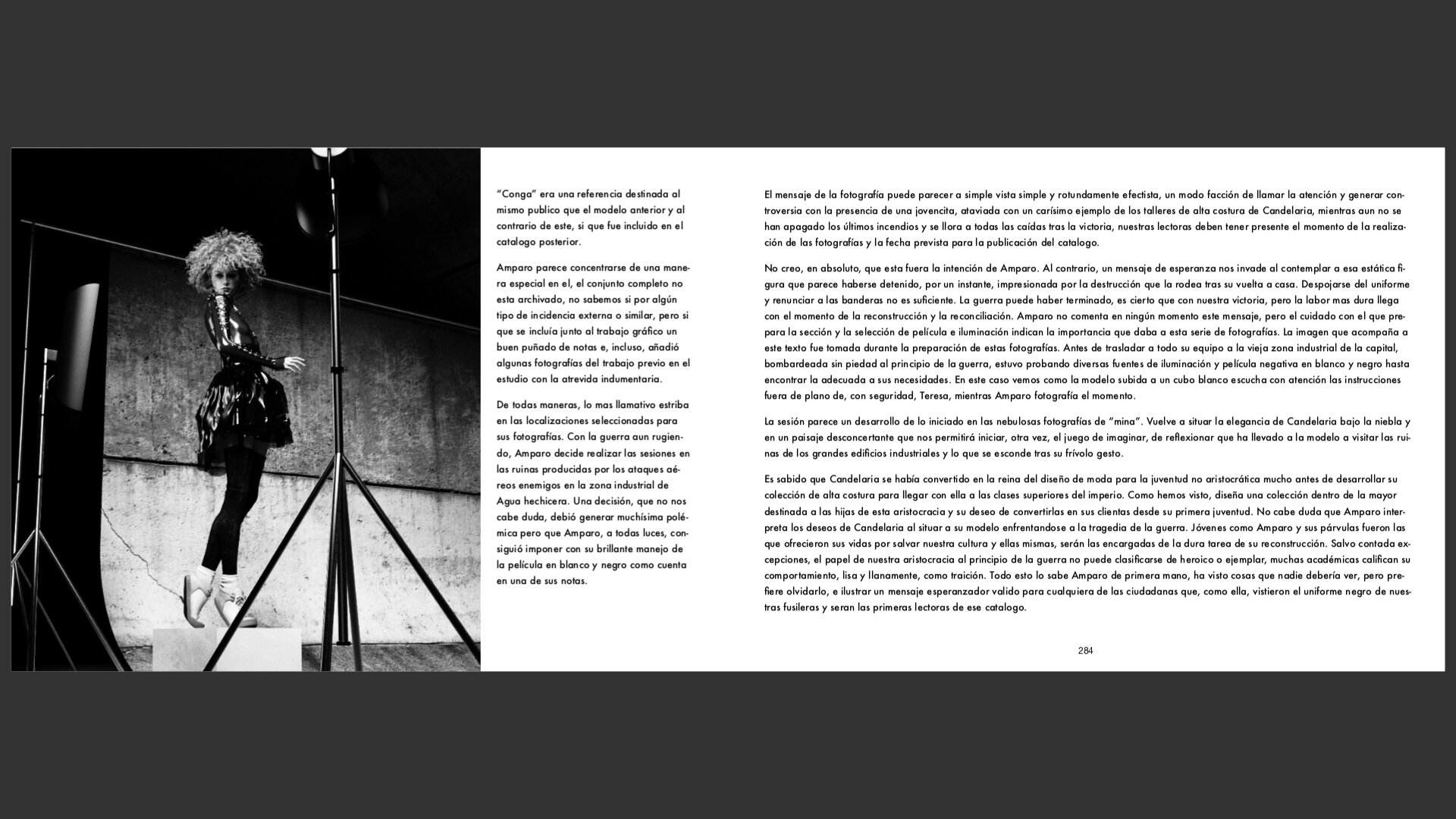
“Conga” was a reference intended for the same audience as the previous model and, unlike this one, it was included in the later catalog.
Amparo seems to concentrate in a special way on it, the complete set is not archived, we do not know if due to some type of external incident or similar, but it was included along with the graphic work a good handful of notes and he even added some photographs from the previous work in the studio with the daring clothing.
In any case, the most striking thing lies in the locations selected for her photographs. With the war still raging, Amparo decides to hold the sessions in the ruins caused by enemy air attacks in the industrial zone of Agua Hechicera. A decision, which we have no doubt, must have generated a lot of controversy but which Amparo, clearly, managed to impose with his brilliant handling of the black and white film as he explains in one of his notes.
The message of the photograph may seem at first glance simple and emphatically effective, a factual way of attracting attention and generating controversy with the presence of a young girl, dressed in a very expensive example from the Candelaria haute couture workshops, while it has not yet been They have put out the last fires and all those who fall after the victory are mourned, our readers must keep in mind the moment in which the photographs were taken and the scheduled date for the publication of the catalog.
I do not believe, at all, that this was Amparo's intention. On the contrary, a message of hope invades us when we contemplate that static figure that seems to have stopped, for a moment, impressed by the destruction that surrounds her after her return home. Getting rid of the uniform and giving up the flags is not enough. The war may have ended, it is true that with our victory, but the hardest work comes with the moment of reconstruction and reconciliation. Amparo does not comment on this message at any time, but the care with which he prepares the section and the selection of film and lighting indicate the importance he gave to this series of photographs. The image that accompanies this text was taken during the preparation of these photographs. Before moving his entire team to the old industrial zone of the capital, mercilessly bombed at the beginning of the war, she tested various lighting sources and black and white negative film until she found the right one for his needs. . In this case we see how the model standing on a white cube listens attentively to the out-of-shot instructions of, surely, Teresa, while Amparo photographs the moment.
The session seems to be a development of what began in the nebulous photographs of “mine”. It once again places the elegance of Candelaria under the fog and in a disconcerting landscape that will allow us to begin, once again, the game of imagining, of reflecting that has led the model to visit the ruins of the large industrial buildings and what is hidden. after his frivolous gesture.
It is known that Candelaria had become the queen of fashion design for non-aristocratic youth long before developing her haute couture collection to reach the upper classes of the empire. As we have seen, she designs a collection within the largest one intended for the daughters of this aristocracy and her desire to make them her clients from her early youth. There is no doubt that Amparo interprets Candelaria's wishes by placing her model facing the tragedy of war. Young people like Amparo and her preschoolers were the ones who offered their lives to save our culture and they themselves will be in charge of the hard task of its reconstruction. With few exceptions, the role of our aristocracy at the beginning of the war cannot be classified as heroic or exemplary; many academics classify their behavior, simply and simply, as treason. Amparo knows all this firsthand, she has seen things that no one should see, but she prefers to forget it, and illustrate a hopeful message valid for any of the citizens who, like her, wore the black uniform of our rifles and will be the first readers of that catalogue.
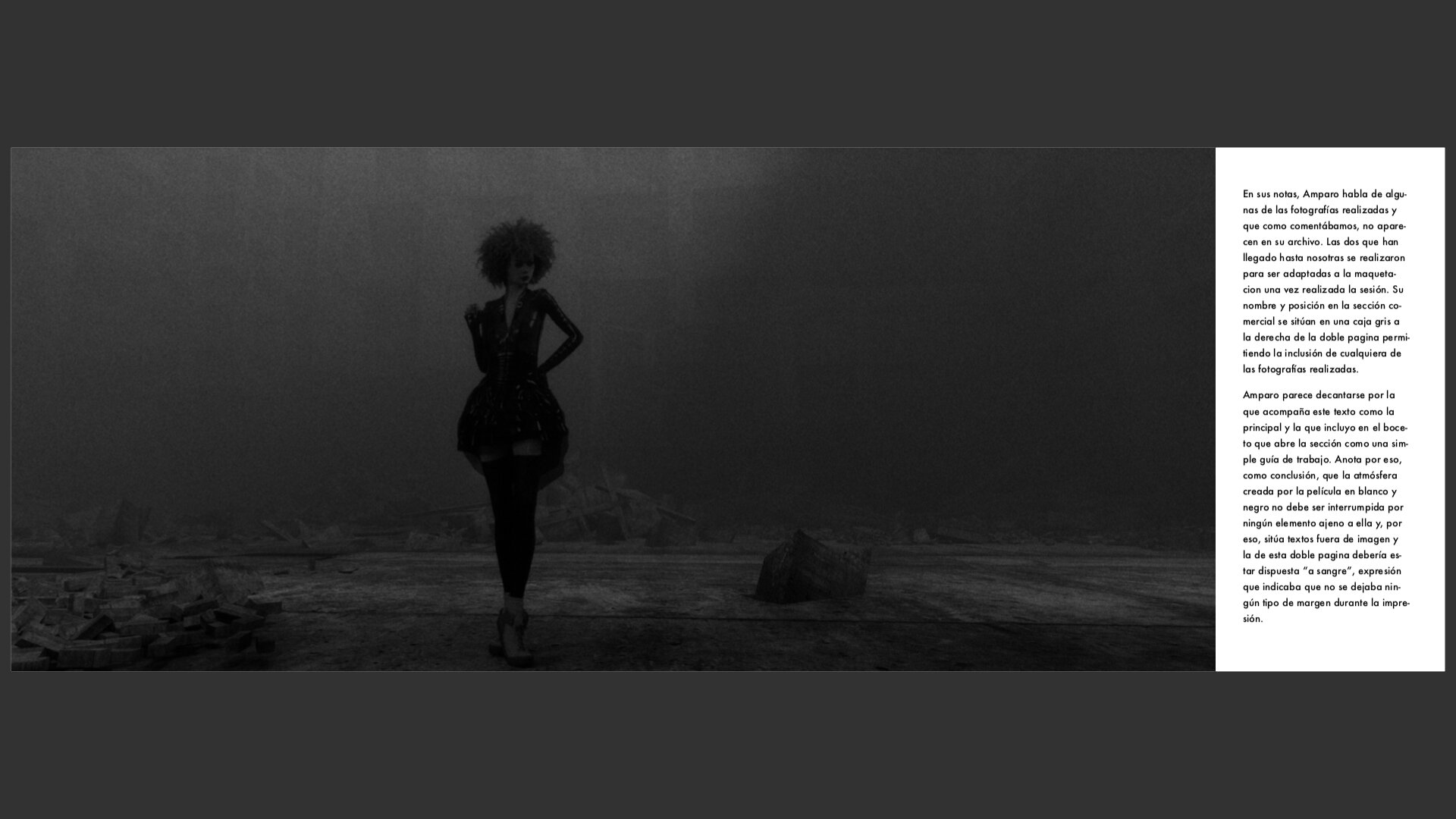
In his notes, Amparo talks about some of the photographs taken and which, as we mentioned, do not appear in his archive. The two that have reached us were made to be adapted to the layout once the session had taken place. Her name and position in the commercial section are placed in a gray box to the right of the double page allowing the inclusion of any of the photographs taken.
Amparo seems to favor the one that accompanies this text as the main one and the one that she included in the sketch that opens the section as a simple work guide. Therefore, he notes, as a conclusion, that the atmosphere created by the black and white film should not be interrupted by any element foreign to it and, for this reason, he places texts outside the image and the one on this double page should be arranged “in full blood.” ”, an expression that indicated that no type of margin was left during printing.
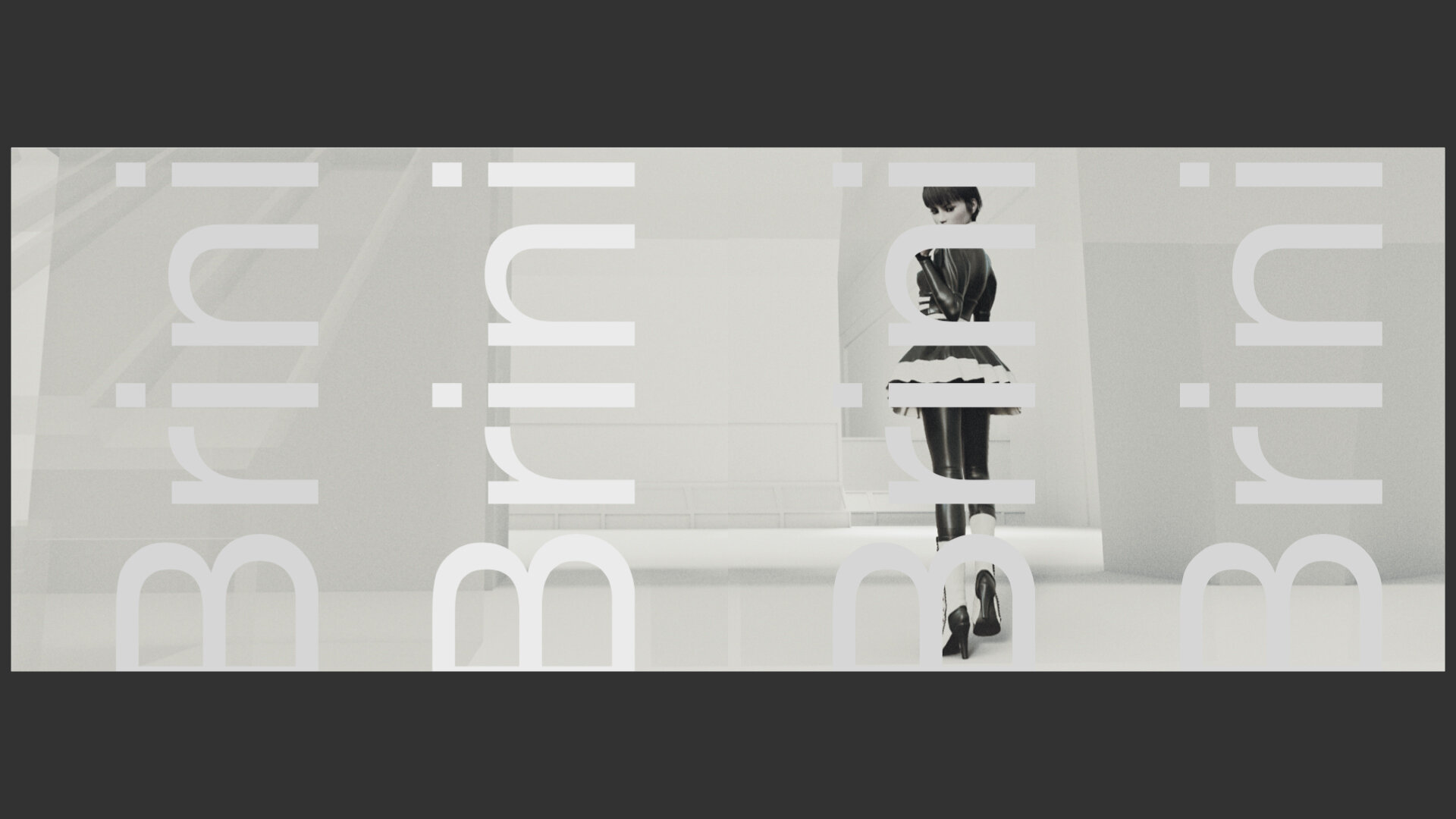
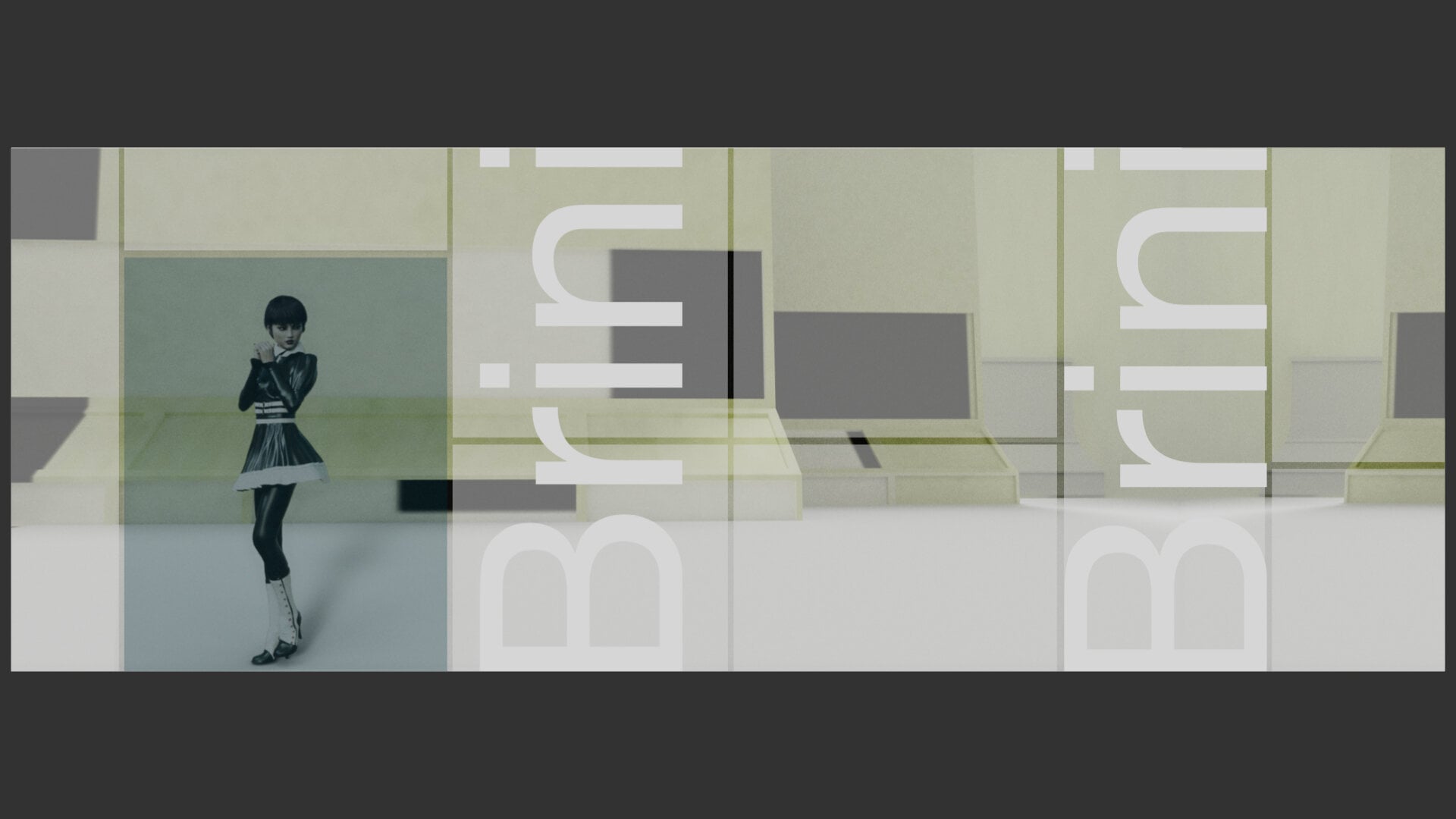
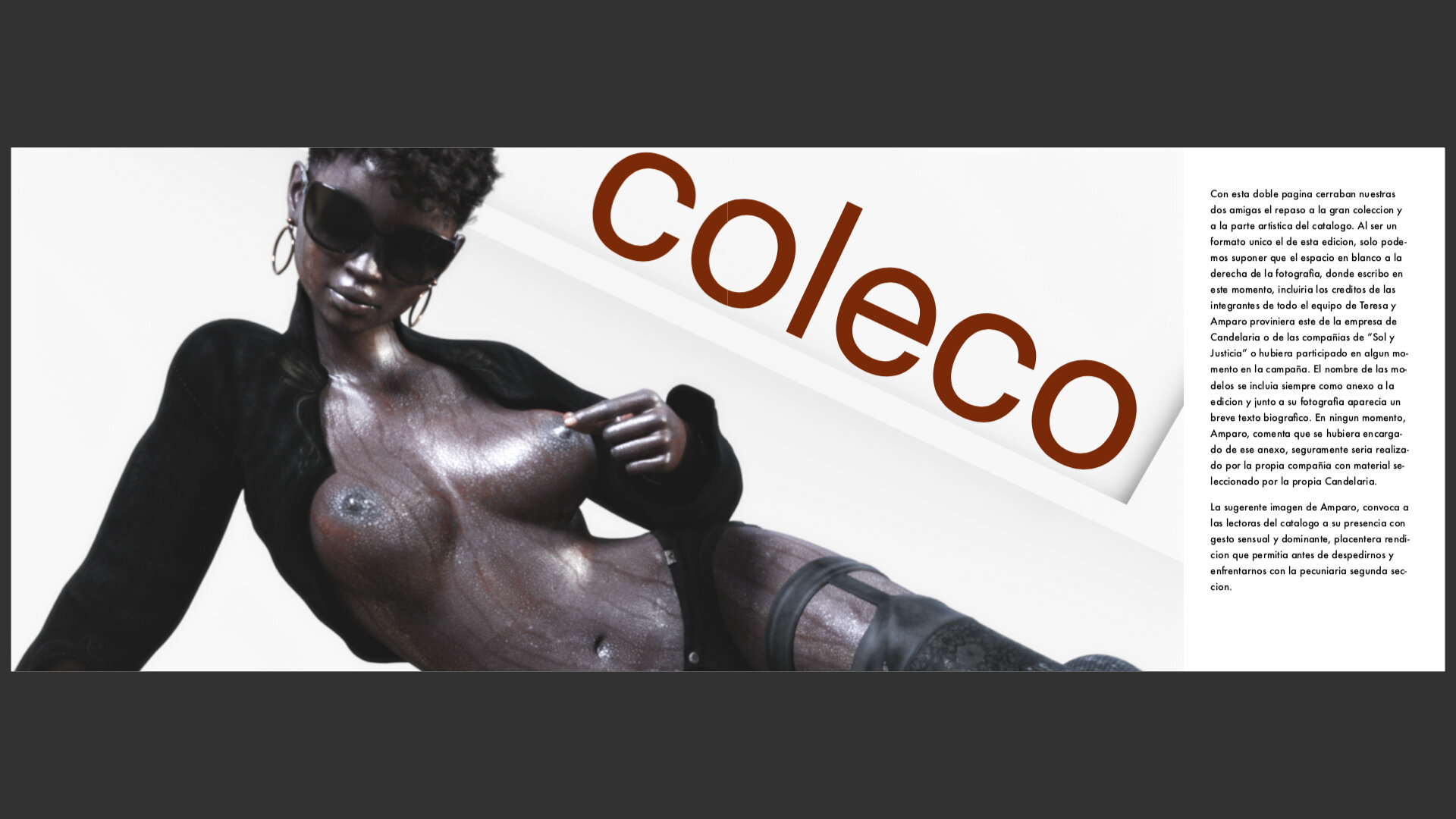
Estas dos paginas y las dos siguientes presentan los diseños que estoy trabajando en la actualidad junto con el de cierre. En ninguno de ellos he integrado los textos.
These two pages and the next two present the designs I am currently working on along with the closing one. In none of them have I integrated the texts.
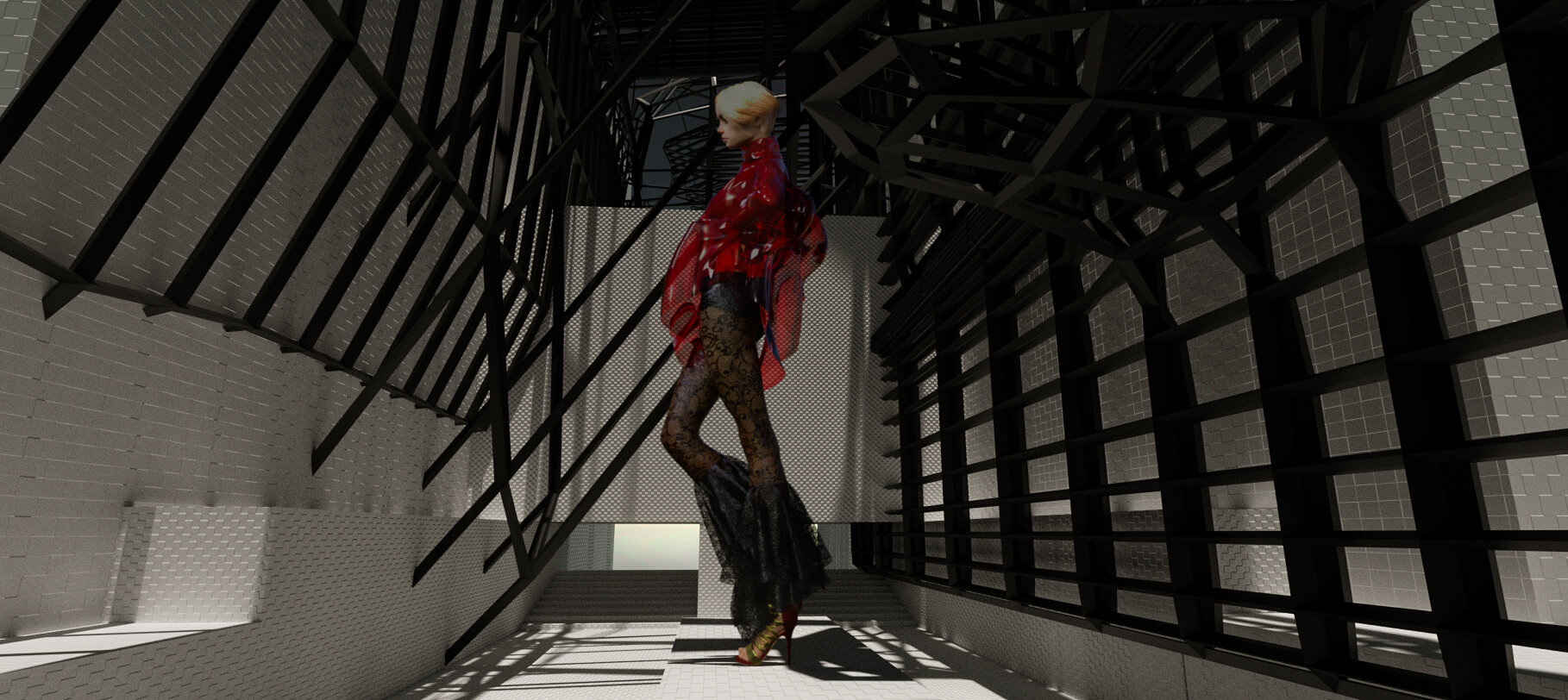
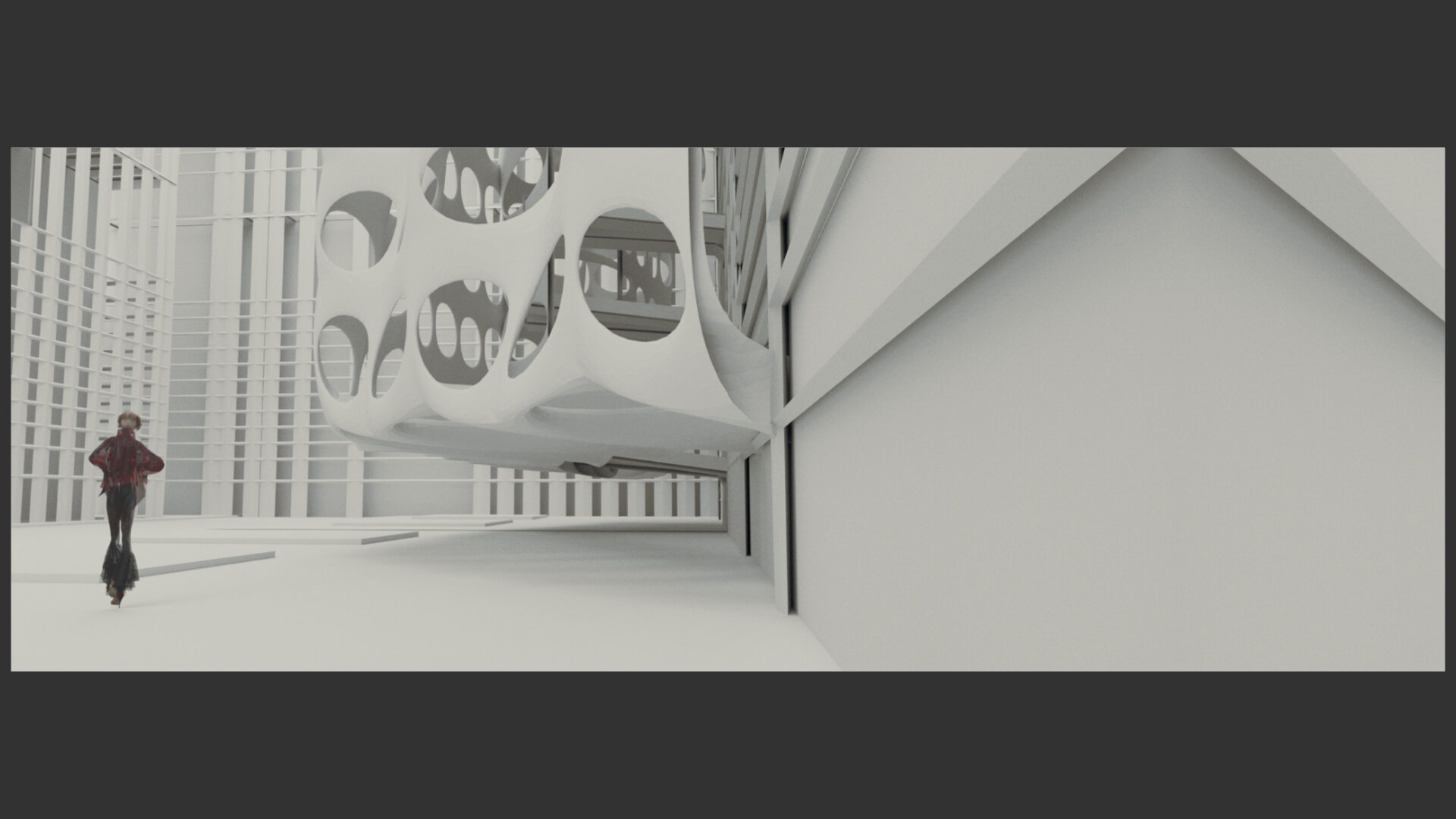
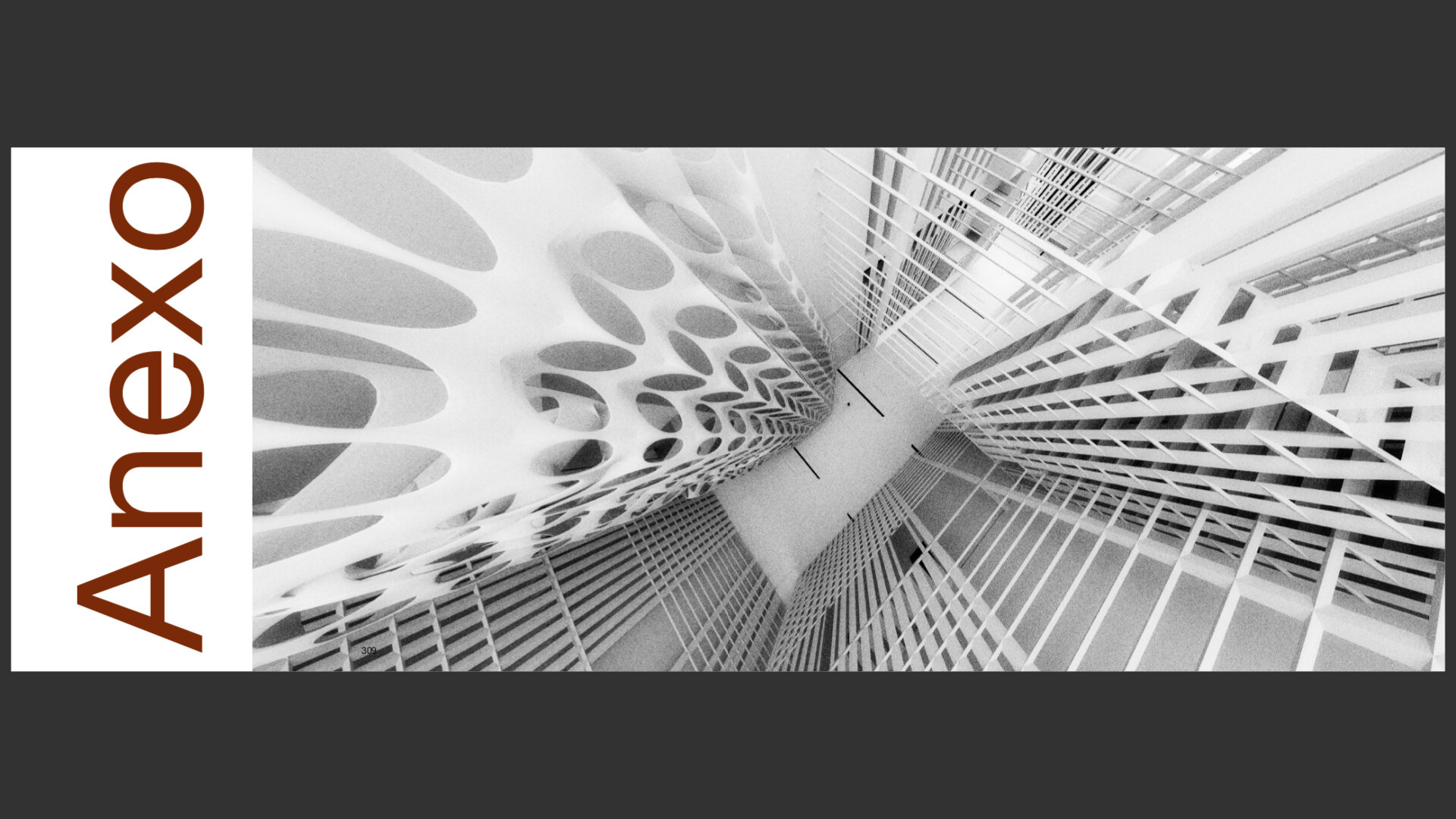
Esta sera la pagina de cierre y el ultimo diseño de Candelaria, fotografiado por Amparo, para cerrar la edicion, el texto no esta acabado. Tengo dudas sobre si incluir un anexo, en estos dias ando con la escritura pero por si fuera necesario he diseñado la correspondiente doble pagina.
This will be the closing page and the last design of Candelaria, photographed by Amparo, to close the edition, the text is not finished. I have doubts about whether to include an annex, these days I am writing but in case it is necessary I have designed the corresponding double page.
2 Comments
Recommended Comments