
Kleine Korsett-Kunde

Entry posted by Miauzi in Wissenswertes über Dinge
6202 views
Teil 1 - statt eines Vorwort
Die Idee zu diesem Beitrag ist mir vor ein paar Tagen durch die Mitarbeit an einem Mod-Projekt für Skyrim gekommen in dem es darum geht einen Catsuit mit deutlichen Fetisch-Aspekten zu schaffen zu dem auch ein Korsett geplant ist.
Das Korsett selbst ist wohl eines der am meisten umstrittenen Kleidungsstücke der modernen Zeit - es wurde z.B. für politische Kampangien im späten 19. Jahrhundert mißbraucht - angebliches medizinisches Wissen der Orthopädie aus der Fetisch-Literatur der gleichen Zeit abgeschrieben (z.B. durchnittliche Taillen-Umfänge).
Selbst heute erlebt eine Frau oder gar ein Mann die/der in der Öffentlichkeit sichtbar ein Korsett trägt höchst unterschiedliche Reaktionen.
Mein persönlicher Bezug zu diesem Thema:
Ich bin bekennende Korsett-Fetischistin und das seit meinem 15 Lebensjahr und habe einige Jahre praktische Erfahrung im sogenannten "Dauertragen" selbiger - man weiss also was Fiktion und was machbare Realität ist.
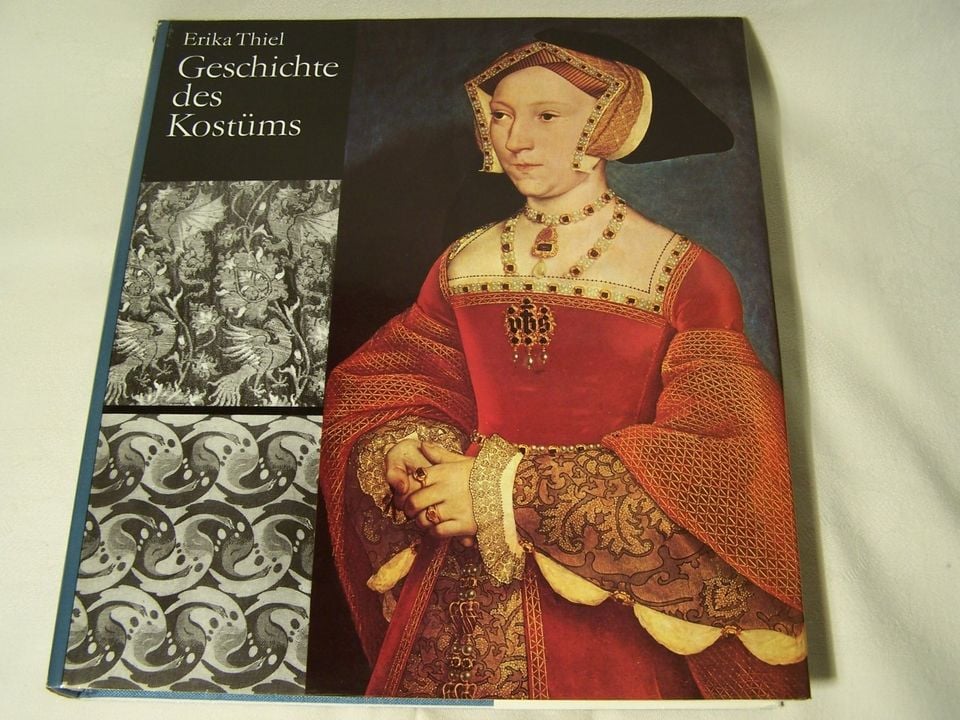
Inspiriert worden bin ich für historische Mode durch Kostümfilmen aus den 1960er und 1970er Jahre - die vorallem in der Zeitbereich des Barock oder des Rokkoko spielten aber auch die Gründerzeit (2. Hälfte des 19. Jahrhunderts) zum Thema hatten (z.B. "Effi Briest"). Aus eine öffentlichen Bibliothek leihte ich mir das Standard-Werk zu diesem Thema aus "Die Geschichte des Kostüms". Beim Lesen über die Kleidung der oben genannten Zeit stellte ich dann fest das diese äussere Form gar nicht ohne das Tragen eines bestimmten Kleidungsstückes möglich ist -> dem Korsett.
Ab da war ich sprichwörtlich "angetriggert" - ich tauchte immer tiefer in dieses Thema ein.
Und hier kommt mein familiärer Hintergrund zum Tragen:
Ich stamme väterlicher- wie mütterlicher-seits von Scheidern bzw. Schneiderinnen ab.
Der Vater meiner Mutter war Schneidermeister - arbeitete in den 1920er und 1930er Jahren für Frauen und Männer - da er im 2. WK fiel führte seine Frau (meine Oma) das Handwerk fort - nähte auch als Rentnerin noch für die Verwandtschaft und brachte es meiner Mutter bei - die in ihrer Freizeit für unsere Familie ein Teil der Kleidung herstellte.
Ich war als mit "Nadel-und-Faden" (auch der Nähmaschine) aufgewachsen - kannte mich von Kindesbeinen an mit Schnitt-Mustern, Stoffen und Nähten aus.
Nein - Schneiderin wollte ich nie werden - es war aber ein interessantes Hobby und die Mode-Geschichte ein für mich wichtiges Thema.
Im anderen (väterlichen) Zweig war die Mutter meines Vaters gelernte Damen-Schneiderin. Sie hatte das Handwerk einer Schneiderin in den 1920er Jahren in Breslau gelernt und dort bis zu ihrem Umzug Mitte der 1930er Jahre nach Wilhelmshafen ausgeübt. Dort arbeitete sie in einem Ateliers auch für die Frauen der Kapitäne von Übersee-Schiffen. Die Herstellung von Damen-Korsetts erlernte sie bereits während in ihrer Lehre - da diese eben zu der Zeit immer noch von Frauen getragen worden - denn man muss die Modegeschichte schon genauer lesen...
...auch wenn etwas "unmodern" ist heisst noch lange nicht das alle Frauen dieser Mode folgen und alle anderen Kleider wegwerfen!
ja - Coco Channel hat die Frauenmode während des 1. WK "erneuert" - aber das Korsett viel nicht über nacht von der Frau.
Übersetzung des 1. Teils
Part 1 - instead of a foreword:
The idea for this post came to me a few days ago when I was working on a mod project for Skyrim, which involves creating a catsuit with clear fetish aspects, for which a corset is also planned.
The corset itself is probably one of the most controversial garments of modern times - it was e.g. misused for political campaigns in the late 19th century - alleged medical knowledge of orthopedics was copied from the fetish literature of the same time (e.g. average waist sizes).
Even today, a woman or even a man who visibly wears a corset in public experiences very different reactions.
My personal connection to this topic:
I am a self-confessed corset fetishist and have been since I was 15 years old and have several years of practical experience in the so-called "continuous wearing" of the same - so you know what is fiction and what is feasible reality.
I was inspired for historical fashion by costume films from the 1960s and 1970s - which mainly played in the baroque or rococo period but also had the Gründerzeit (2nd half of the 19th century) as their theme (e.g. "Effi Briest") . From a public library I borrowed the standard work on the subject from "The History of the Costume". When reading about the clothing of the time mentioned above, I realized that this outer form is not possible without wearing a certain piece of clothing -> the corset.
From then on I was literally "triggered" - I dived deeper and deeper into this topic.
And this is where my family background comes into play:
I am descended from tailors on my father's and mother's side.
My mother's father was a master tailor - worked for women and men in the 1920s and 1930s - since he died in World War II, his wife (my grandmother) continued the craft - even as a pensioner she still sewed for relatives and brought it to my mother - who made some of the clothes for our family in her spare time.
I grew up with "needle and thread" (also the sewing machine) - I knew from childhood on patterns, fabrics and seams.
No - I never wanted to be a seamstress - but it was an interesting hobby and the history of fashion was an important topic for me.
In the other (paternal) branch, my father's mother was a trained seamstress. She had learned the trade of a seamstress in Breslau in the 1920s and worked there until she moved to Wilhelmshafen in the mid-1930s. There she also worked in a studio for the wives of the captains of overseas ships. She already learned how to make women's corsets during her apprenticeship - because these were still worn by women at the time - because you have to read fashion history more closely...
...even if something is "unfashionable" does not mean that all women follow this fashion and throw away all other clothes!
yes - Coco Channel "revived" women's fashion during WW1 - but the corset didn't go away from women overnight.
Teil 2 - Kurzer historischer Abriß (ohne Anspruch auf Vollständigkeit)
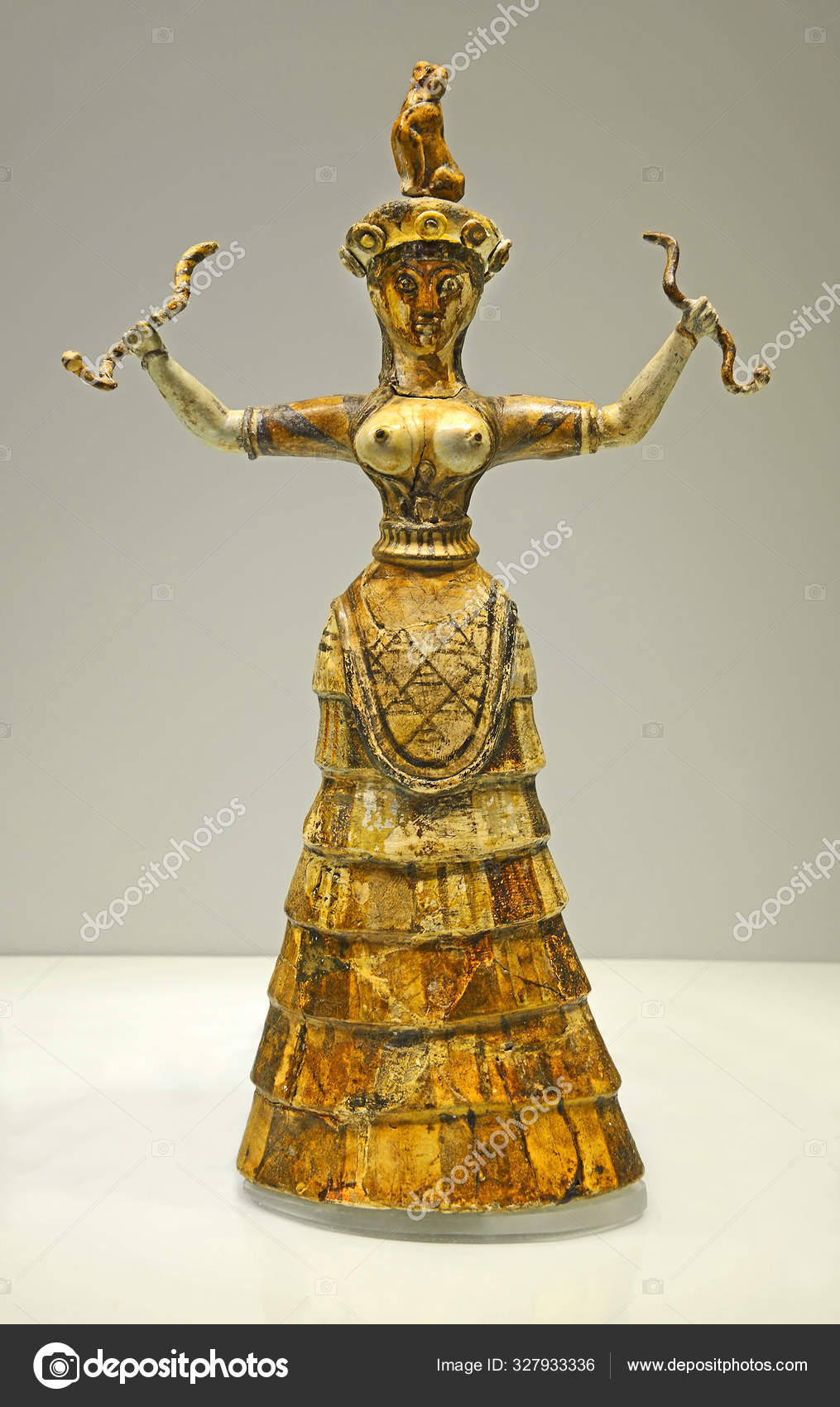
Schon im Altertum gab es Ansätze die Taille einer Frau zu betonen bzw. die Brust zu "halten"
eine der bekanntesten Darstellungen dazu ist die Schlangenfrau die der minoischen Kultur (1500 Jahre v.C. auf Kreta) zugerechnet wird
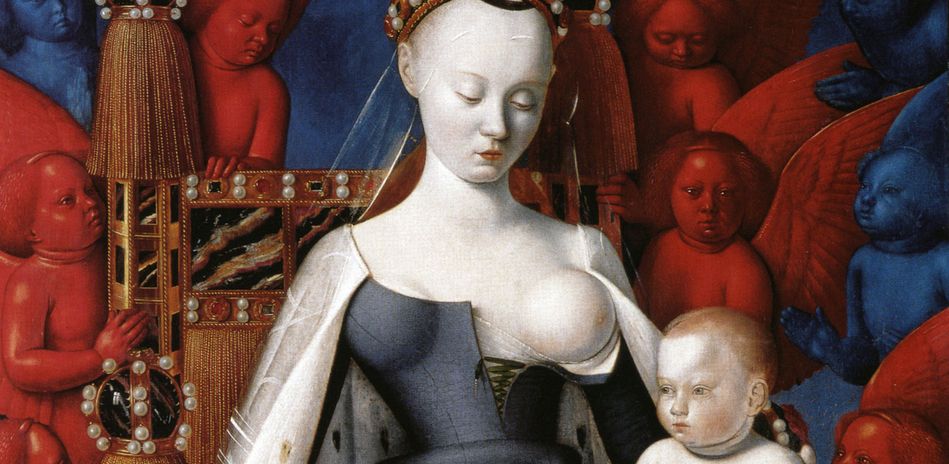
Im Mittelalter entwickelte sich als Oberkleidung das Mieder - welches entweder mit Knöpfen oder mit einer Schnürung geschlossen wird
Hier eine Maria-Darstellung aus der Zeit um 1450
Das Zeitalter der Körperformung begann jedoch erst im 16. Jahrhundert mit der Spanischen Hofmode - was ohne Korsett aka Schnürleib gar nicht möglich war.
Der kegelförmige Oberkörper wurde durch eine "Schnürbrust" erzeugt - die den Busen oft komplett bedeckte und hinten sowie an den Seiten nur bis zur Taille reichte.
Nur die Vorder-Front ging tiefer - zum Teil bis zum Beginn des Venus-Hügels - er sollte den Bauch flach haten.
Die die nachstehnden Bild zeigen waren nicht nur Frauen diesem Form-Diktat unterworfen - sondern auch die Männer - ihre Rüstungs-Kürasse hatten eine ähnliche formende Wirkung auf den Oberkörper
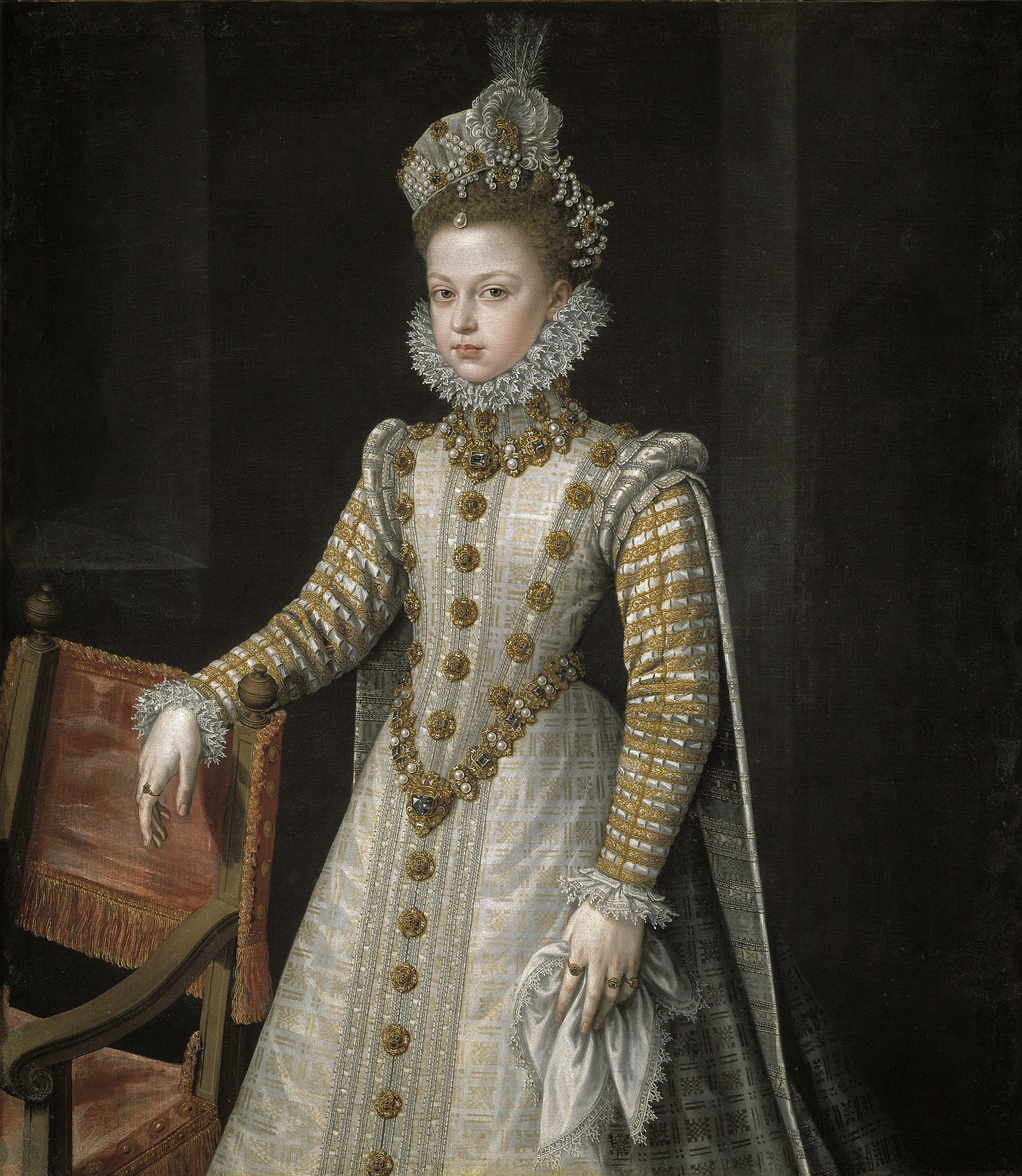
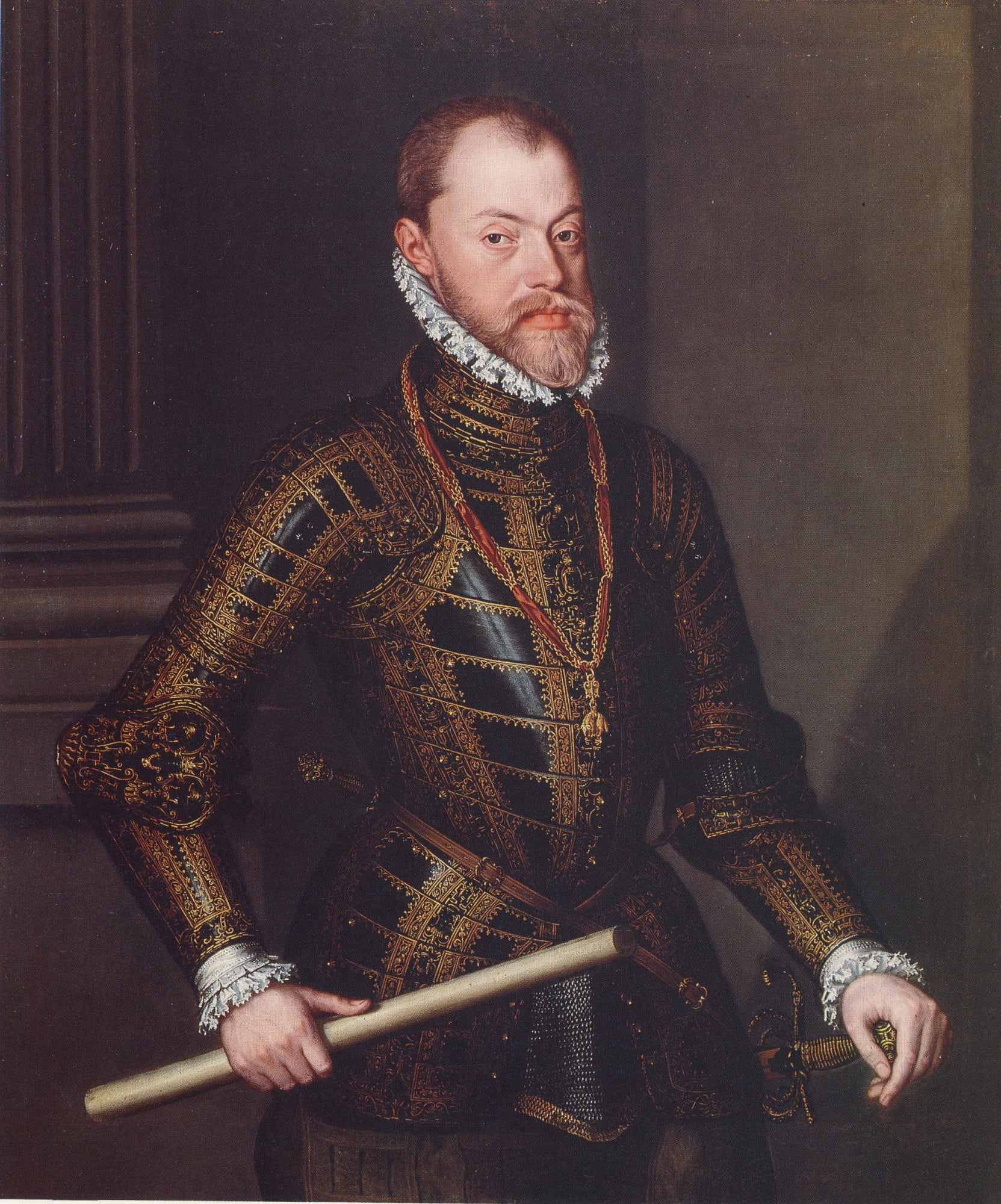
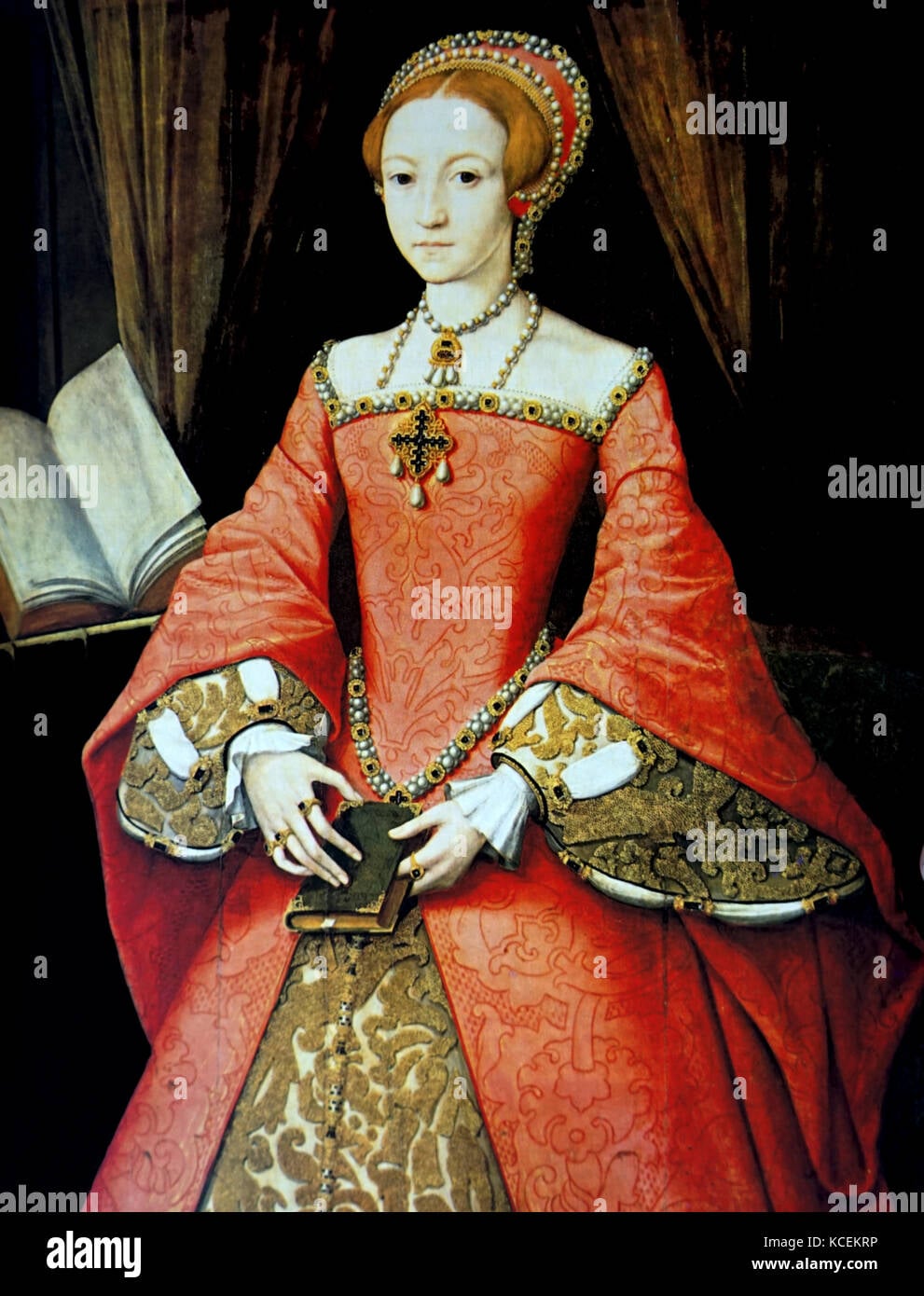
Die Hofkleidung der englischen Tudorzeit übernahm zunächst das spanische Vorbild - jedoch änderte sich das unter Elisabeth langsam un näherte sich der französischen Hofmode an - die den Busen nicht komplett flachdrückte sondern zum teil sehr stark nach oben schob
Hier ein Bild der jungen englischen Königin
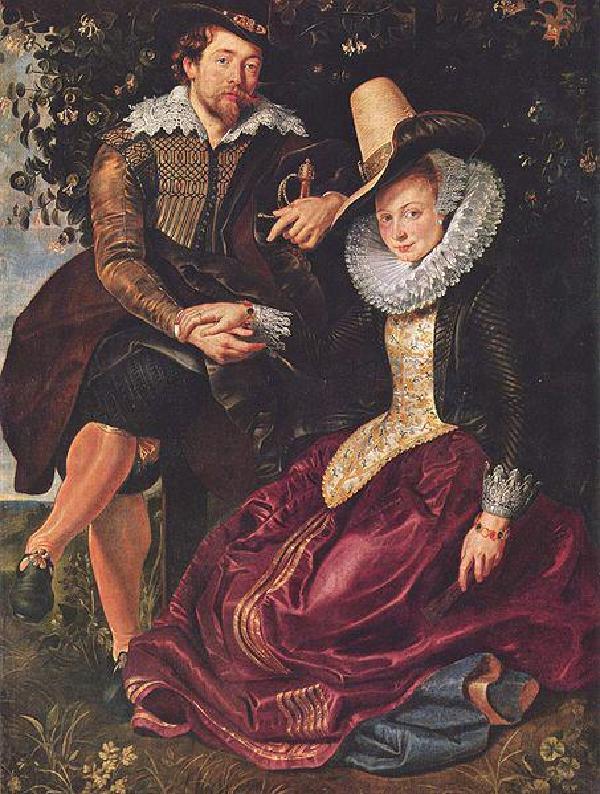
Auch das Barock kam nicht ohne Korsett zur Formgebung aus - wobei sich der Fokus immer mehr dahin verschob den weiblichen Körper (besonders den Busen) zu betonen
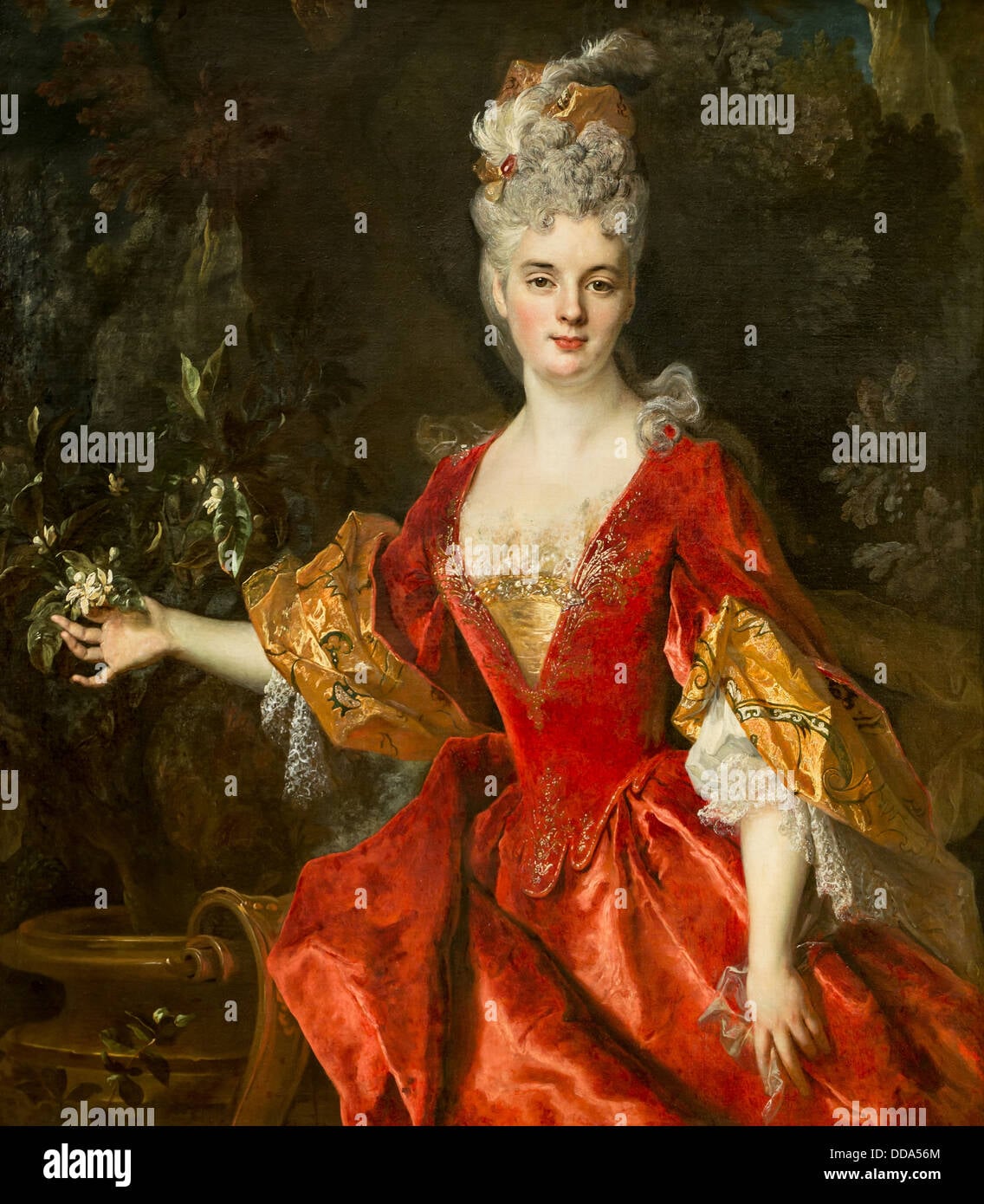
Im verspielten Rokkoko diente das Korsett dazu die weiblichen Reize maximal hervor zu heben
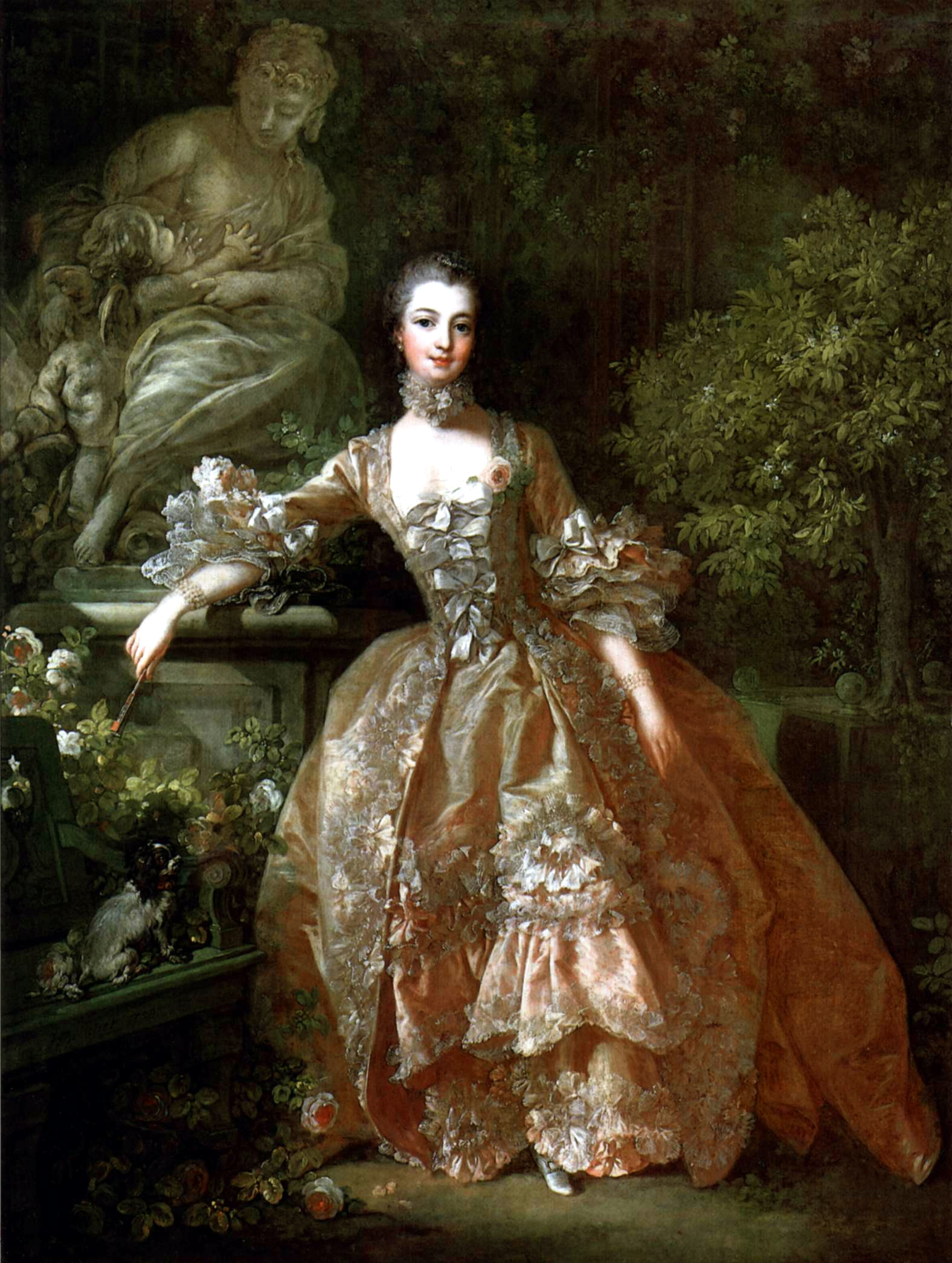
.jpg.47ba00f8da2f2770533e17d09b01178f.jpg)
(Die Dame in dem blauen Kleid hängt seit 45 Jahren als Reproduktion im familiären Wohnzimmer - zuerst bei meinen Eltern und dann bei mir)
In der Zeit des Klassizismus (Ende des 18. Jahrhunderts wurde die Mode der Frauen deutlich sachlicher - zunehmend dominierte der Einfluss Englands durch die Baumwolle die wesentlich leichtere Stoffe als die französische Seide ermöglichte.
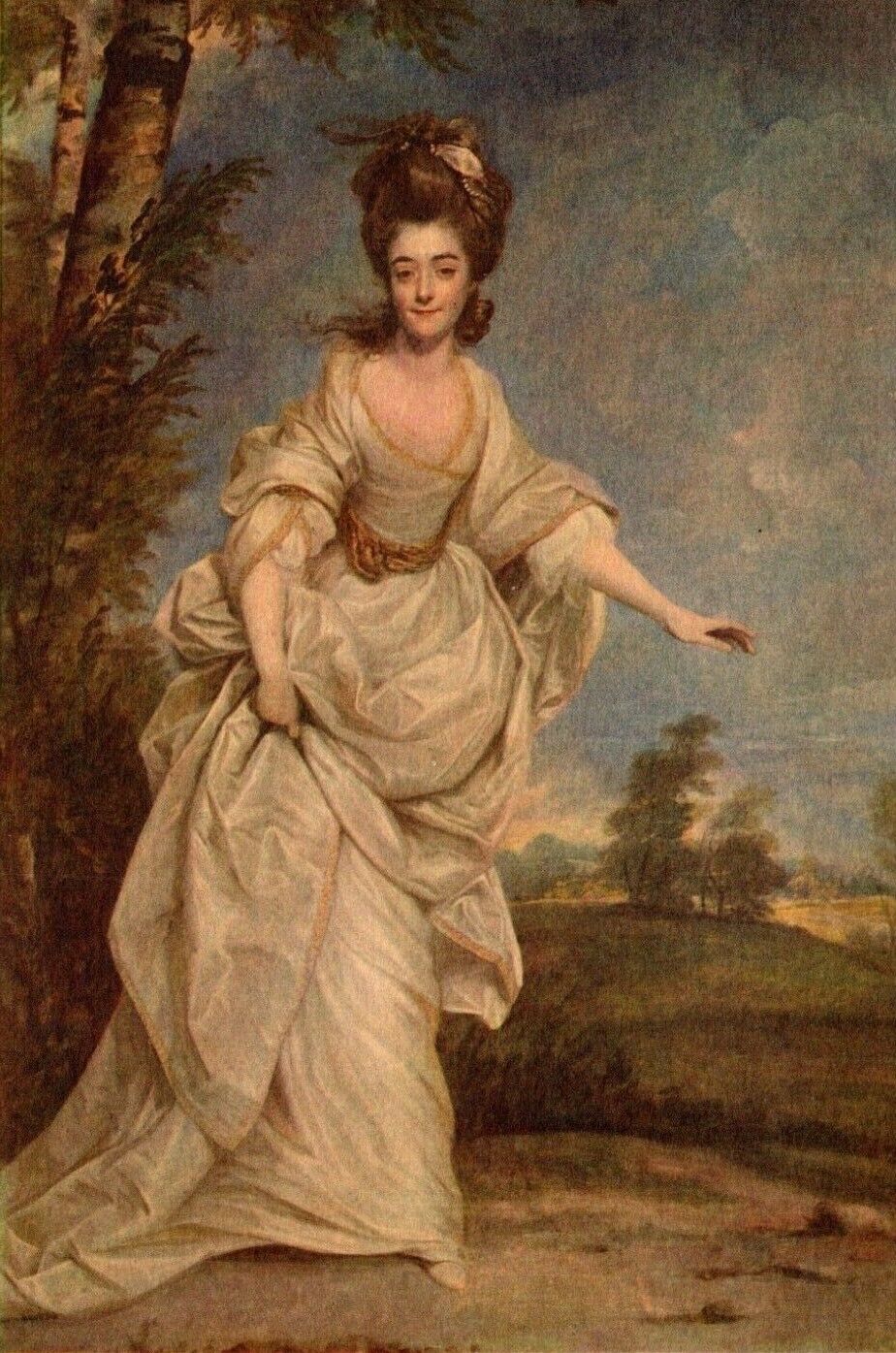
Man sollte bedenken das die arbeitende Bevölkerung sich sowieso keine Seidengewänder leisten konnte und wer körperlich arbeitet kann dies auch nur sehr bedingt in einem Korsett.
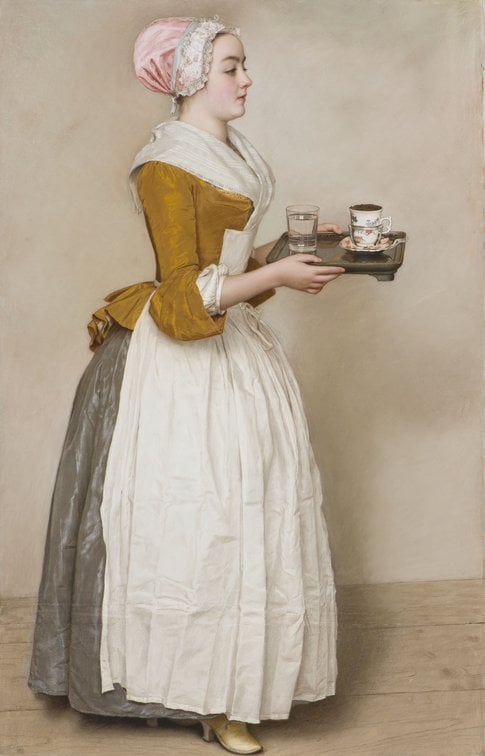
Mit der Revolution von 1789 viel nicht nur die Bastille sondern auch die Hofkleidung und damit die Schnürbrust.
Das Pendel schlug völlig in die entgegen gesetzte Richtung und in der kühleren Jahrzeit trug die modebewusste Frau denn einen fleischfarbenen Unterzieher
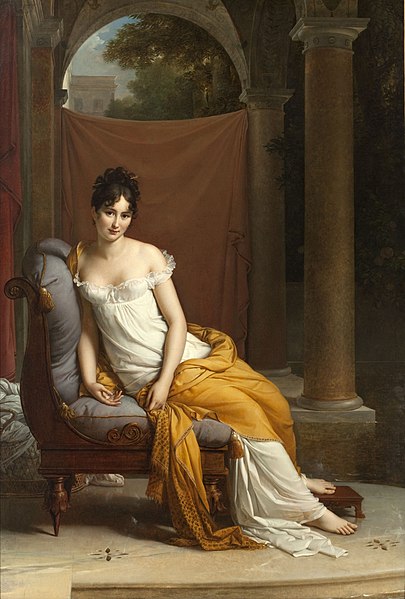
Revolutionen kommen und gehen und wenn sie gehen kommt die "Restauration" - die man im 19. Jahrhundert "Biedermeier" nannte
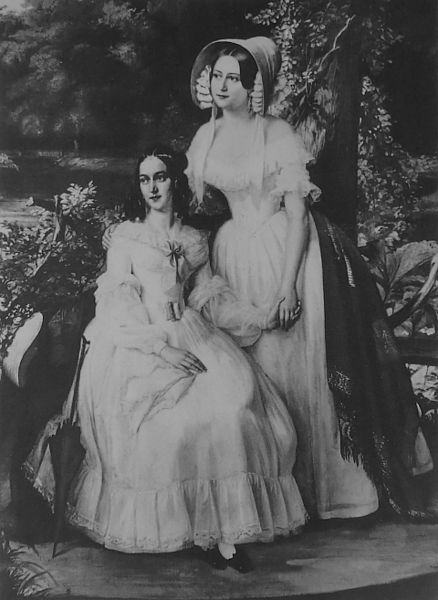
Die Herrschaft der englischen Königin Victoria gab einem ganzen Zeitalter seinen Namen - natürlich auch der Mode und so spricht man heute auch von "victorianischen" Korsetts - ihre Formen sind heute die gängigsten Vorbilder für die modernen Korsetts - nahezu jeder Hersteller wird damit das er auch "victorianische" Korsetts habe...
..nur ist das auf Grund der sehr vielen Formen und Varianten gar nicht so einfach zu sagen.
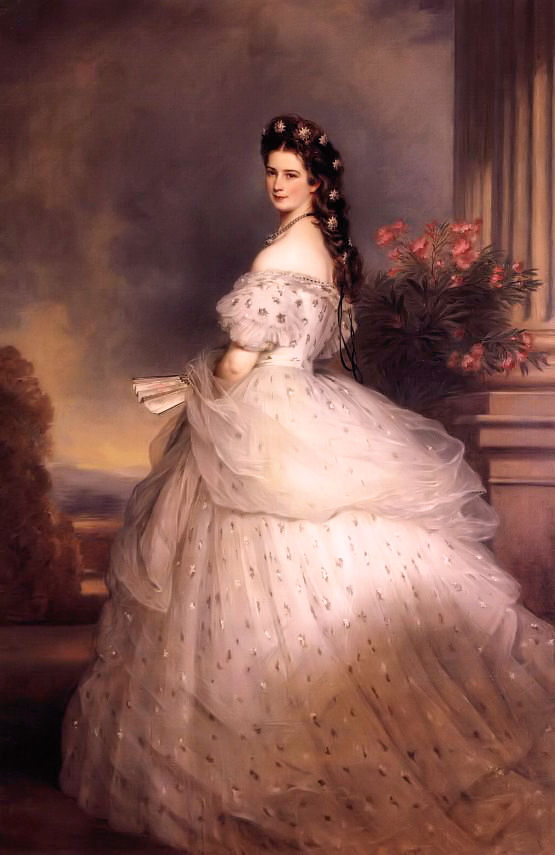
Am Anfang stand um 1850-1865 die Zeit der riesigen Reifröcke - Krinoline genannt - wobei es bereits die zweite war
die erste war mit dem Rokkoko verbunden - wobei die Röcke damals oval geformt waren
Die zweite Krinolinen-Ära hatte runde Röcke - am Höhepunkt betrug die Länge (Umfang) der Rocksames (unterer Rand) -> 6 Meter!!
Wie dass dann aussah? - ich sage da nur -> "Vom Winde verweht" oder "Sissi"
Um 1870 wurden die Röcke dann wieder normaler - wenn man ein Kissen am Po als normal betrachtet
https://de.wikipedia.org/wiki/Cul_de_Paris
Das ganze ist auch als Zeit der "Tournüre" bekannt und die prägte die Frauenmode in der "Gründerzeit" von 1870-1890
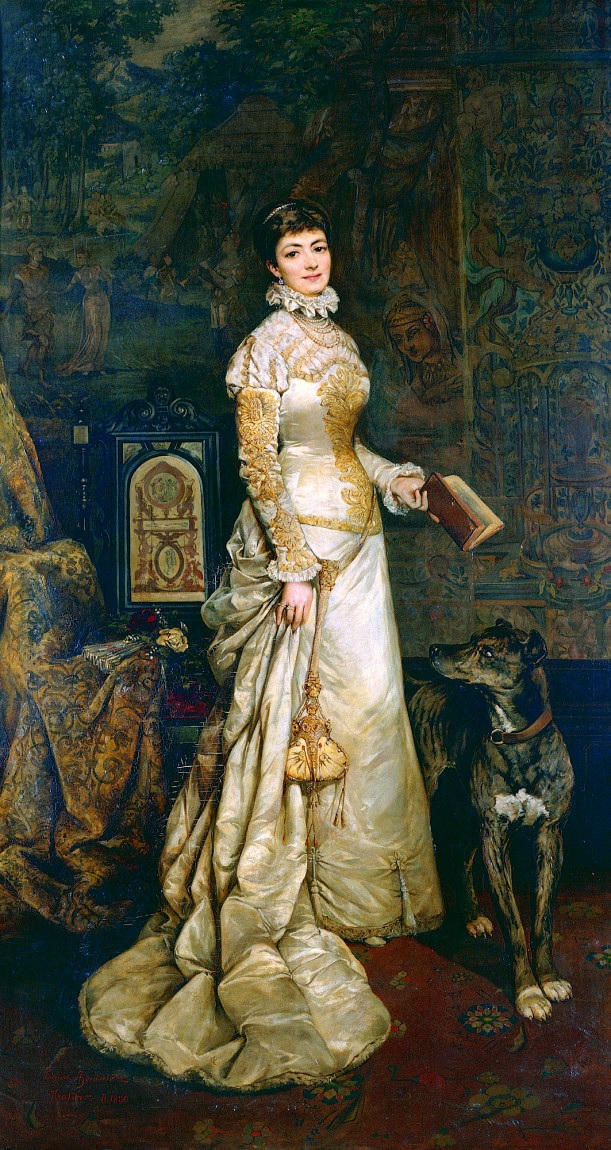
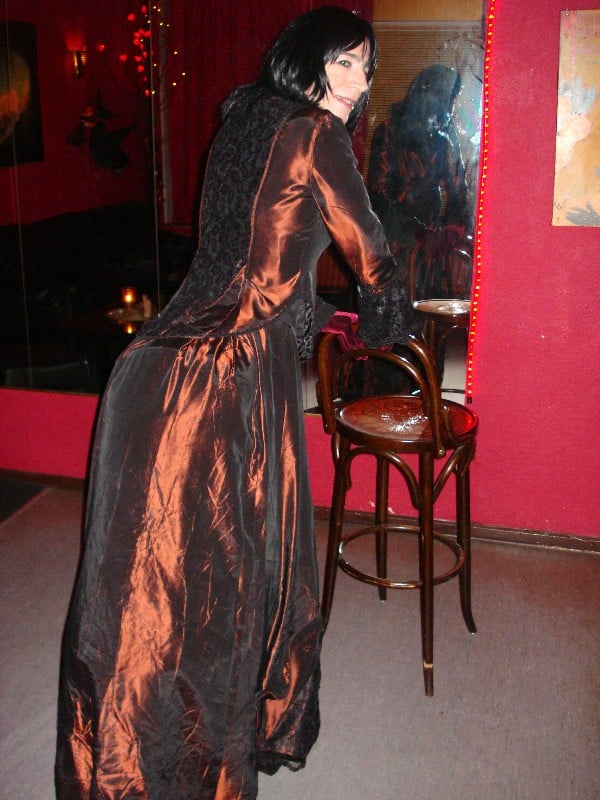
In der englischen Sprache heisst es "Bustle-Dress" und davon habe ich 3 Reproduktionen - zwei Strassenkleider und ein Abendkleid mit langer Schleppe
Eines der Tageskleider hier in einer kleinen Bar aufgenommen.
Aber es gab auch in diesem Zeitraum eine kurze Ära von sehr sehr engen Röcken - der sprichwörtliche "Humpelrock" ist zu dieser Zeit kreiert worden
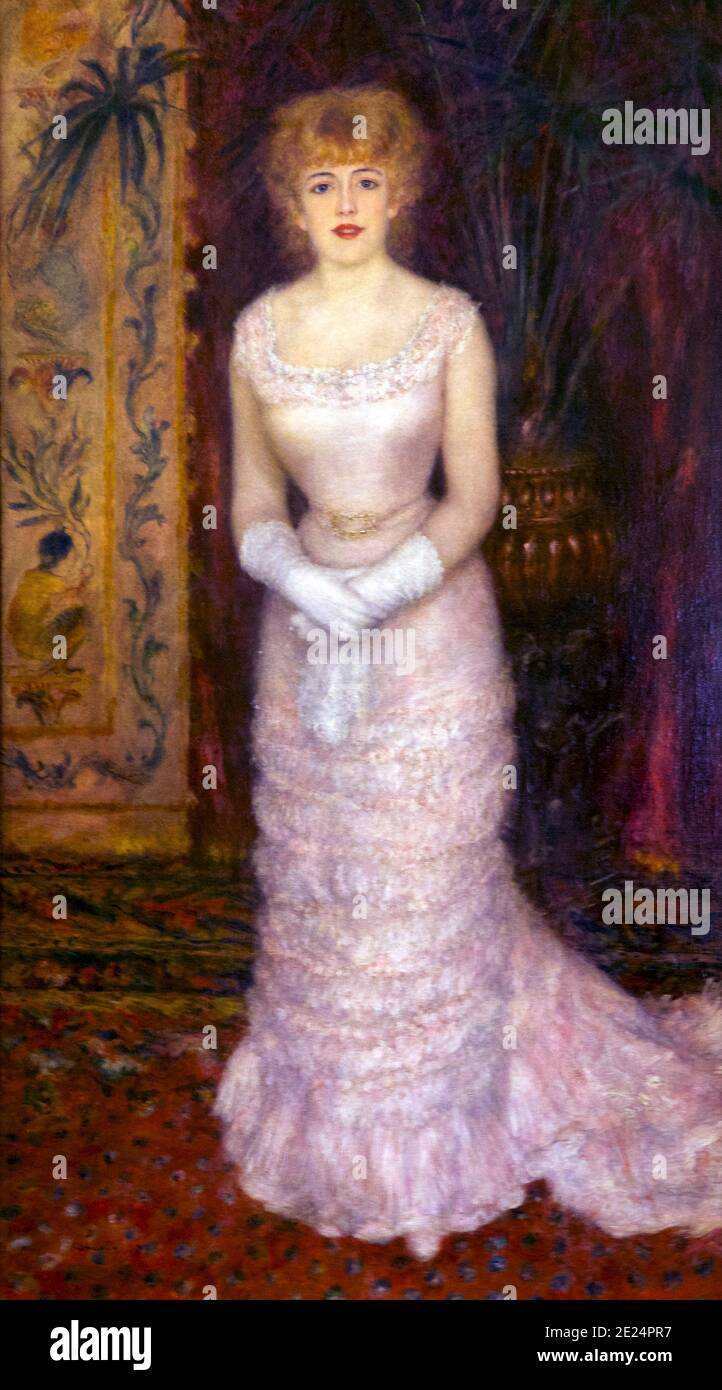
Nach dem Todes von Königin Victoria endete auch das nach ihr benannte Modezeitalter - ihr Nachfolger (König Edward) war der Namensgeber
für die Epoche von 1900 bis zum Beginn des 1. Weltkrieges.
Leute die nicht so in der Mode-Geschichte bewandert sind kennen aber den eigentlichen Namen dieser Zeit -> Jugendstil-Ära
Ein Zitat aus einem Artikel über diese Zeit bingt es gut auf den Punkt
"Die edwardianische Mode der hohen, streckenden Kragen, S-förmig geschwungenen Korsetts, aufwendigen Kopfputze und prachtvollen Pelzen verleiht den Damen eine herrschaftliche Würde. Die Sanduhrfigur ist en vogue, ebenso Unmengen von Schmuck zu tragen. Edwarianische Juwelen sind auffällig weiblich, grazil mit spitzenartigem, feingliedrigem Design in Platin auf Gelbgold und über und über besetzt mit Diamanten. Seltener werden hochkarätige farbige Edelsteine als Schwerpunkte eines Schmuckstücks verwendet. Die Favoriten der „weißen Zeit“ bleiben Diamanten, Perlen und Mondsteine."
( https://www.ernstfaerber.com/epoch/edwardian/ )
Die in dieser Zeit konzipierten Korsetts sind wesentlich komplexer in ihrer Schnittgestaltung als die aus der victorianischen - wegen dem hohen Arbeitsaufwand findet man sie auch nicht in "normalen" Korsett-Shops.
Diese Kunst beherrschen nur sehr wenige Korsett-Scheider auf diesen Planeten.
Und wie dass dann so ist - der Höhepunkt der möglichen Entwicklung einer Technologie ist ereicht und dann verschwindet es nahezu komplett.
Ja - Coco Chanel liess das Korsett aus der Mode verschwinden - etwas was 40 Jahre Reform-Kleider-Bewegung NICHT geschafft hatten.
Denn diese waren einfach unschick! Eine Frau möchte aber - sofern sie es sich selbst (oder ihr Ehegatte) es sich leisten können - etwas schönes modisches am Leib tragen.
Und genau das schaffte Frau Chanel mit ihrer aus der Not geborenen Mode der elastischen Stoffe - die für klassische edwardianische (also Jugendstil) Kleider ungeeignet waren.
Aber es war der Erste Weltkrieg und "normale" Stoffe waren rar geworden.
In der geistigen wie kulturellen Restauration nach dem 2. WK kam über den "New Look" das Korsett noch einmal offiziell in die Frauenmode zurück - anderes waren die engen Taillen einfach nicht machbar - selbst die schlankesten Mannequins waren um die Taille immer noch zu "üppig"
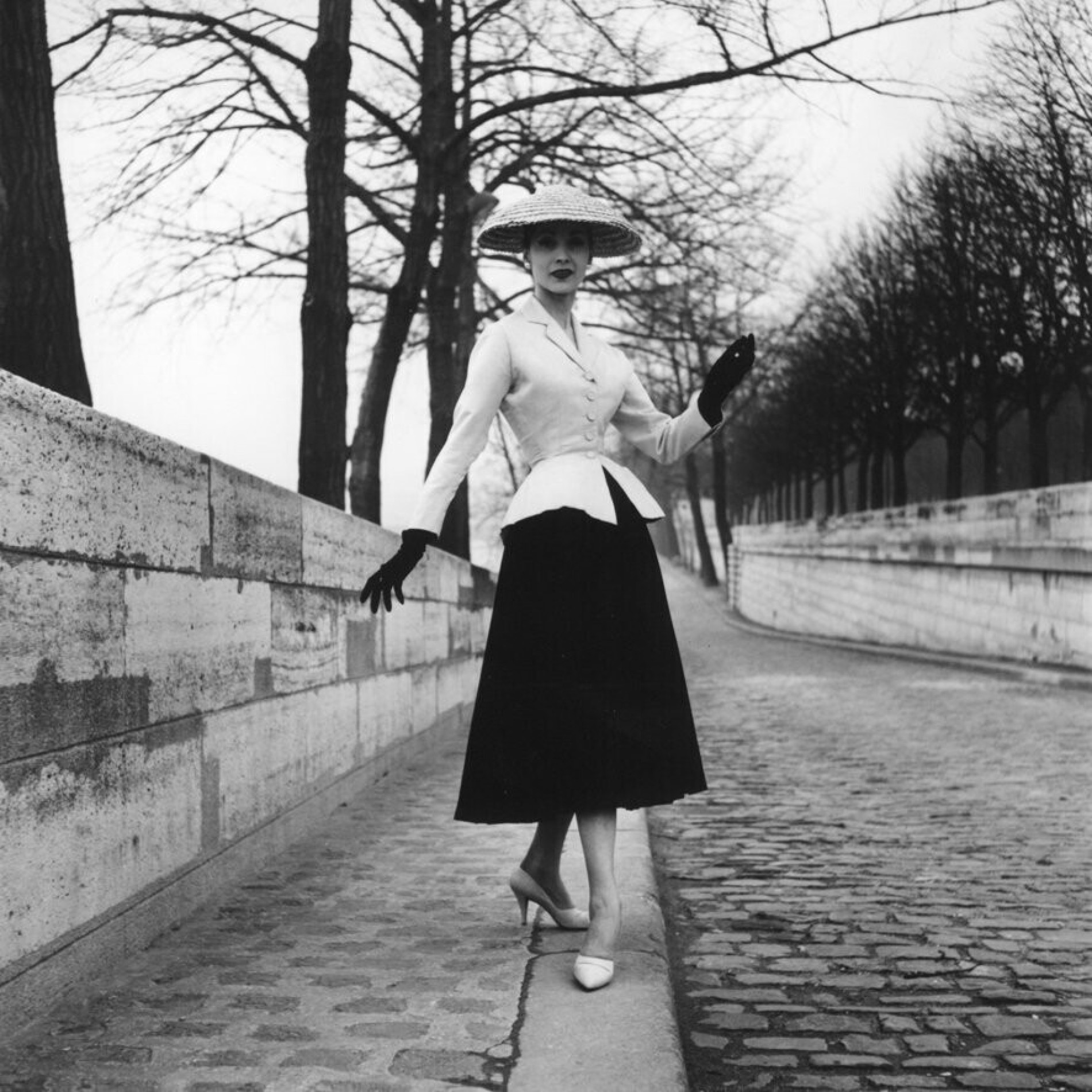
Und irgendwann kam dann eine Sängerin namens "Madonna" und stellte die modische Befreiung der Frau auf den Kopf. ?
Modische Diktate wie "in dieser Saison Rocksaum unterm Knie" gibt es heute nicht mehr - Selbstbewusstsein und Emanzipation zeigt sich in der freien Wahl was man trägt.
Und manche tragen eben auch ab und an ein Korsett - heute sogar als Oberkleidung sichtbar.
Männer im Korsett?
Hatte es immer gegeben - in der spanischen Hofmode erfüllten die Brustpanzer schon diese Funktion
In der 2. Hälfte des 19. Jahrhunderts gab es bei den Armeen Europa berittene Garde-Regimenter - deren Parade-Uniformen hatten einen an der Taille so engen Kürass das dieser ohne Korsett gar nicht zu tragen war.
Die schmale Taille eines jungen Garde-Leutnants kam durch ein diskret getragenes Männer-Korsett.
Auch die "Schulter-Riemen" Korrektur der Haltung des Oberkörpers stammen aus dieser Zeit und sind heute ein beliebtes Detail
Übersetzung des 2. Teils
Part 2 - Brief historical outline (no claim to completeness)
Already in ancient times there were approaches to emphasize the waist of a woman or to "hold" the breast
one of the best-known representations is the snake woman, which is attributed to the Minoan culture (1500 BC on Crete).
In the Middle Ages, the bodice developed as outer clothing - which is closed either with buttons or with a lacing
Here is a depiction of Mary from around 1450
However, the age of body shaping only began in the 16th century with the Spanish court fashion - which was not possible without a corset aka corset.
The cone-shaped upper body was created by a "lace-up chest" - which often completely covered the breasts and only reached to the waist at the back and sides.
Only the front-front went deeper - partly to the beginning of the Venus hill - he should have a flat stomach.
The following picture shows not only women were subject to this form dictate - but also the men - their armor cuirasses had a similar shaping effect on the upper body
The court attire of the English Tudor period initially adopted the Spanish model - however, this slowly changed under Elizabeth and approached the French court fashion - which did not flatten the breasts completely, but pushed them up quite a bit
Here is a picture of the young English queen
Even the baroque could not do without a corset for shaping - whereby the focus shifted more and more towards emphasizing the female body (especially the breasts).
In the playful rococo style, the corset served to emphasize the female charms to the maximum
(The lady in the blue dress has been hanging in the family living room as a reproduction for 45 years - first with my parents and then with me)
In the time of classicism (end of the 18th century, women's fashion became much more objective - the influence of England increasingly dominated through cotton, which made much lighter fabrics possible than French silk.
One should consider that the working population could not afford silk robes anyway and those who work physically can only do so to a very limited extent in a corset.
With the revolution of 1789, not only the Bastille but also the court dress and with it the lace breast.
The pendulum swung completely in the opposite direction and in the cooler season the fashion-conscious woman wore a flesh-colored undergarment
Revolutions come and go and when they go comes the "Restoration" - which was called "Biedermeier" in the 19th century
The rule of the English Queen Victoria gave its name to a whole age - of course also to fashion and so today one also speaks of "Victorian" corsets - their shapes are the most common models for modern corsets - almost every manufacturer will use it to " Victorian" corsets have...
..but that's not so easy to say due to the large number of shapes and variants.
In the beginning, around 1850-1865, there was the time of the huge hoop skirts - called crinolines - although it was already the second
the first was associated with Rococo - skirts then being oval in shape
The second crinoline era had round skirts - at the peak the length (circumference) of the skirtsames (bottom edge) was -> 6 meters!!
What did that look like then? - I just say -> "Gone with the wind" or "Sissi"
Around 1870, skirts became more normal again - if you consider a pillow on the bottom as normal
https://de.wikipedia.org/wiki/Cul_de_Paris
The whole thing is also known as the time of the "bustle" and shaped women's fashion in the "Gründerzeit" from 1870-1890
In English it is called "bustle dress" and I have 3 reproductions of it - two street dresses and an evening dress with a long train
One of the day dresses shot here in a small bar.
But there was also a brief era of very, very tight skirts during this period - the proverbial "hobble skirt" was created at this time
After the death of Queen Victoria, the fashion age named after her also ended - her successor (King Edward) was the namesake
for the period from 1900 to the beginning of the First World War.
But people who are not so well versed in fashion history know the actual name of this time -> Art Nouveau era
A quote from an article about that time sums it up nicely
"The Edwardian fashions of high, stretching collars, S-shaped corsets, elaborate headdresses and sumptuous furs lend the ladies a stately dignity. The hourglass figure is en vogue, as is wearing copious amounts of jewellery. Edwardian jewels are strikingly feminine, graceful with a lace-like edge , delicate design in platinum on yellow gold and set all over with diamonds. Rarely, high-quality colored gemstones are used as focal points of a piece of jewellery. The favorites of the "white age" remain diamonds, pearls and moonstones."
( https://www.ernstfaerber.com/epoch/edwardian/ )
The corsets designed at this time are much more complex in their cut design than those from the Victorian era - because of the high amount of work involved, you won't find them in "normal" corset shops.
Very few corset tailors on this planet have mastered this art.
And as it is then - the peak of the possible development of a technology is reached and then it almost completely disappears.
Yes - Coco Chanel put the corset out of fashion - something 40 years of the dress reform movement had NOT managed to do.
Because these were just awkward! However, a woman would like to wear something nice and fashionable if she (or her spouse) can afford it.
And that's exactly what Mrs. Chanel managed to do with her fashion of elastic fabrics born out of necessity - which were unsuitable for classic Edwardian (i.e. Art Nouveau) dresses.
But it was the First World War and "normal" fabrics had become scarce.
In the spiritual and cultural restoration after the 2nd World War, the corset officially came back into women's fashion with the "New Look" - the narrow waists were simply not feasible otherwise - even the slimmest mannequins were still too "lush around the waist "
And at some point a singer called "Madonna" came along and turned the fashion liberation of women upside down.
Fashionable dictates such as "skirt hem below the knee this season" no longer exist - self-confidence and emancipation are shown in the free choice of what to wear.
And some also wear a corset from time to time - today even visible as outer clothing.
Men in corsets?
It had always existed - breastplates already fulfilled this function in Spanish court fashion
In the second half of the 19th century, the armies of Europe had mounted guard regiments - their parade uniforms had a cuirass that was so tight at the waist that it could not be worn without a corset.
The narrow waist of a young Guards lieutenant came through a discreetly worn men's corset.
The "shoulder straps" correcting the posture of the upper body also date from this time and are a popular detail today
Teil 3 - Welche Formen von Korsetts bzw. Schnürbrüsten gibt es?
Ein Bild sagt oft mehr als tausend Worte
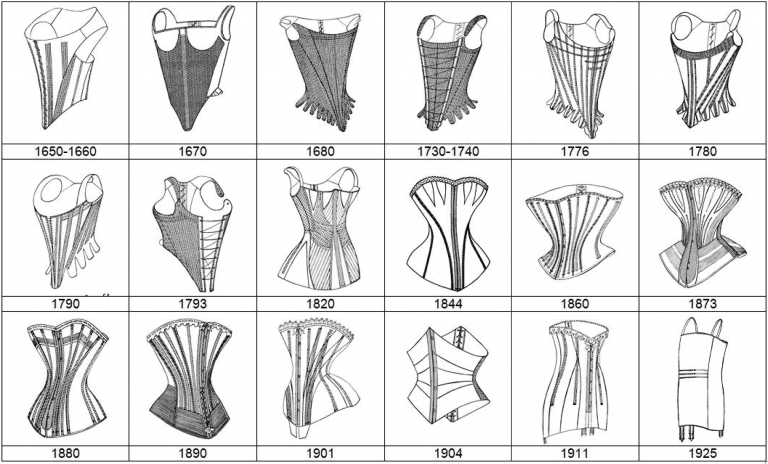
für das 16. bis zum Ende des 18. Jahrhunderts spricht man von der "Schnürbrust"
das sie für den sich in Arbeit befindlichen Fetisch-Mod keine Relevanz haben - gehe ich nicht näher darauf ein
(ja - ich habe Reproduktionen von Kleidern aus der Tudor-Ära - aus dem Barock und aus dem Rokkoko und natürlich habe ich auch die für
ein halbwegs autentisches Tragen nötige "Schnürbrust" - ein Korsett aus dem 19. Jahrhundert passt einfach NICHT dazu!)
Aus der heutigen Sicht redet man ab dem 19. Jahrhunderts vom "Korsett" - wobei der Begriff "victorianisch" eigentlich nur auf die Modelle aus der Zeit von 1844 bis 1880 angewendet werden darf/sollte - aber die (gewünschte) "Sanduhr"-Form ist eben nicht nur bei Korsetts aus der victorianischen Epoche.
Schaut man auf die Shop-Seite einer Korsettschneiderin gibt diese in der Regel die Epoche (den Zeitraum) und die Form ihrer angeboten Korsett in der Regel korrekt an.
Sucht man aber im Internet einfach nur nach Begriffen wie "Korsett" sind die Treffer zunächst auf seiten reiner Shops für die Begriffe wie "Unterbrust" oder "victorianisch" einfach nur als Schlagworte für den verkauf benutzt - das reinste Begriffschaos.
Also zunächst die Basis-Formen
a) Taillen-Korsett
gibt es wirklich erst ab 1904/05 - ist aus dem Reitkorsett entstanden
Reitkorsett?
Frauen sind schon immer geritten im auch in "Schnürbrust" oder "Korsett" - nur benutzten sie dazu den "Damensattel" - sassen also seitlich.
Wer das mal versucht hat weiss wie komplex (schwierig) es ist die Balannce zu halten und eine österreichische Kaiserin ("Sissi") nahm an Fuchsjagten teil - sie sprang also auch mit dem Pferd über Hindernisse.
Das extrem kurze Taillen-Korsett ermöglichte es Frauen auch die Benutzung von Männer-Satteln und...
..ja - das Korsett stützte/fixierte auch die Brust der Frau - auch wenn es NICHT über die Brust ging - denn Frauen rugen unter dem Korsett IMMER zumindest ein Hemd
und in der Verbindung von (Unterbrust-) Korsett und Hemd funktioniert das wie ein Büstenhalter!
(Zusätzlich ist die Reitjacke extrem passgenau auf den Körper geschnitten - was eine zusätzliche Fixierung ist.)
b) Unterbrust-Korsett
die am häufigsten produzierte wie verkaufte/getragene Version des Korsetts - damals wie heute
sie ist auch am "einfachsten" herzustellen - weil der/die Schneider/-in sich nur mit den Formen und Maßen des Körpers von der Hüfte über die Taille bis zum Unterkante der Brust beschäftigen muss - was schon komplex genug ist.
auch noch die Form und Größe des Busens einzubeziehen verdoppelt faktisch den Aufwand.
(bei einer Frau sind nicht mal die beiden Brüste wirklich symetrisch - habe das selbst beruflich Fälle erlebt wo der Unterschied 1/2 Cup betrug)
(und ich weiss selbst wovon ich hier rede/schreibe - sind doch Korsett und Büstenhalter die komplexesten Teile im Bereich der Schnitt-Erstellung - das lernt jede/r angehende Mode-Designer/in an der Modeschule und ich habe selbst für einigen Absolventen solcher Schulen gearbeitet in deren Ateliers)
c) Überbrust-Korsett
die klassische "Schnürbrust" bis zum Ende des 18. Jahrhunderts war IMMER Überbrust - sie sollte ja den Busen nach "oben" verschieben und so das Dekolltee formen
ab 1820 (Biedermaier) bis Anfang 1850 waren die Korsetts des 19. Jahrhunderts zumeist Überbrust-Korsetts - ab da benutzten die Frauen die Unterbrust-Version
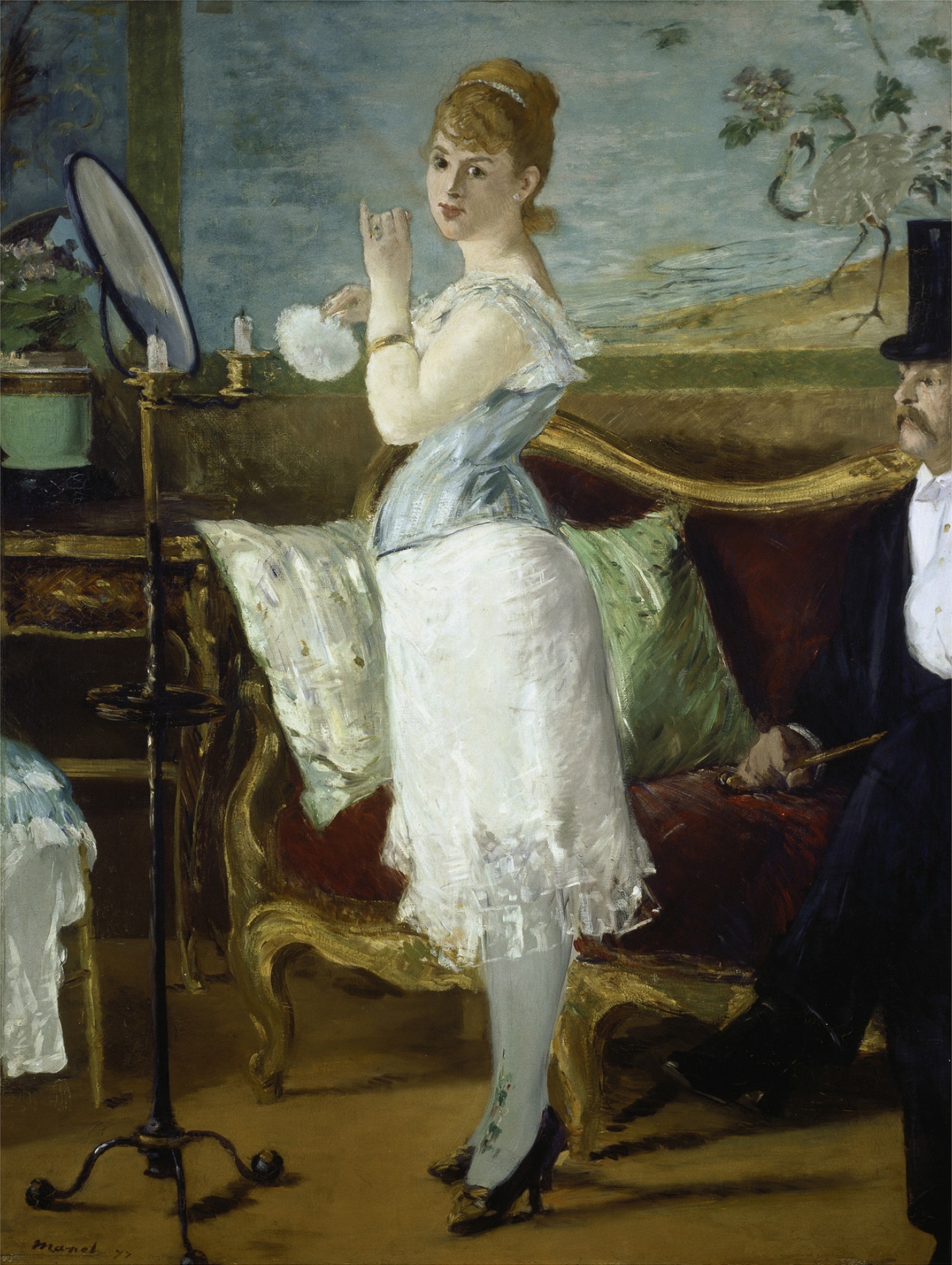
Heutige Korsetts werden im Gegensatz zur früheren Zeit als Oberbekleidung benutzt - sie sind also sichtbar und bestimmen als optischer Eye-Catcher das Erscheinungsbild der Trägerin (oder des Trägers). Deshalb sind gerade bei Überbrust-Korsetts heute so beliebt und es gibt heute wesentlich mehr Varianten als im 19. Jahrhundert
d) Sonderform S-Line
siehe dazu "1901"
dazu ein Text-Zitat von folgender Seite
http://www.the-ardent-collection.com/index.php/de/historische-korsetts/korsettstil-s-line.html
"Unter dem Druck einer neuen Modesilhouette mit besonderer Betonung einer extrem schmalen Taille entwickelte sich zu Beginn des 20. Jahrhunderts aus dem Korsett-Stil "Straight-Front" das S-Line-Korsett. Die Frauen jener Epoche stellten zunehmend fest, daß durch diese neue Korsettform auch ein stärkeres Schnüren für eine schmalere Taille möglich war, d.h. der Taillen-Hüftsprung konnte größer werden. Das Empire-Korsett war dann letztendlich eine Weiterentwicklung hieraus mit neuer, sehr schlanker Silhouette, die sowohl in der Form eines Straight-Front- wie auch als S-Line -Korsetts angeboten wurden. Hier lag die Betonung auf den stark komprimierten Hüften."
Da ich selbst so ein Korsett habe...
..nein es macht KEIN extremes Hohl-Kreuz aber durch den Schnitt wird der Körper stärker in die "senkrechte" gebracht als bei den "victorianischen" Korsetts
und ihr Charakteristikum ist die gerade Front - d.h. der Korsett-Verschluss (das Planchette) wird NICHT mehr nach innen gebogen und drückt dadurch nicht mehr in die Bauchhöhle.
Es trägt sich dadurch sogar wesentlich angenehmer!
Die Reduzierung der Taille wird nahezu vollständig aus der Seite heraus erzeugt - darum auch der optisch sehr akzentuierte "Sprung" von Taille zu (seitlicher) Hüfte
Das ganze kann dann noch durch zusätzliche optische Elemente wie z.B. unterschiedliche (wechselnde) Farbgebung bei den Schnitt-Teilen enorm verstärkt werden.
e) Sonderform "edwardianisches" Korsett
siehe dazu "1911"
aus heutiger Sicht ein extremes Haltungs-Korsett - da es von der Unterkante der Brust bis um Ansatz des Schrittes reicht und die Hüfte komplett umschliesst.
Sitzen was darin schon sehr schwer umzusetzen - aber da es die Hüften der Frau massiv modellierte im Sinne der "Jugendstil"-Silhouette wurde es getragen.
Schon die Korsetts um 1880 waren so "konstruiert" das sie die Hüfte verschankten für die extrem schmalen langen Humpel-Röcke
(man vergleiche mal auf der obrigen Übersicht die Modell vor und nach 1880 - die aren an der Hüfte deutlich kürzer)
aus ihnen sind quasi die heutigen "Disziplin-Korsetts" hervorgegangen
f) Disziplin-Korsetts
sind eigentlich eine reine Fetisch- bzw. BDSM-Variante - da sie das untere Ende des Korsetts bis zur Mitte der Oberschenkel oder gar Oberkante der Knie verschiebt...
..ein Sitzen ist damit nicht mehr möglich!
(und genau darum geht es ja bei dem Spiel zw. dominanten und submessiven korsett-tragenden Part)
g) Sonderform "Straight-Front S-Line Korsett"
ist quasi eine heutige Kombination von "gerade Front" mit "S-Line" - ein absolutes Sondermodell für die
"Im Gegensatz zu den vorherrschenden Korsettformen weist das Straight-Front S-Line Korsett einige Besonderheiten in der Schnitt- und Linienführung auf, die entgegen verbreiteter Vorbehalte jedoch dafür Sorge tragen, daß dieses Korsett nicht nur einen exellenten Tragekomfort bietet, sondern darüber hinaus eine 'traumhafte' Silhoulette zaubert und gleichzeitig für eine aufrechte Haltung sorgt.
Aus diesem Grund werden diese Korsetts auch als 'Haltungskorsetts' bezeichnet, in denen alle modischen Aspekte berücksichtigt werden können.
Die Silhoulette ergibt sich ausschließlich aus der Schnittgestaltung.
Die Verwendung von 'Zwangsführungen' durch besonders starke oder speziell geformte Federstähle o.ä., die sich un- vorteilhaft auf den Tragekomfort auswir- ken würden, ist in den hier gezeigten Korsetts nicht vorgesehen."
Heutige Korsett-Schneider versuchen auf Basis der alten Schnitte das Korsett den Bedürfnissen der heutigen Zeit und ihrer Träger/innen anzupassen.
Nein - es gibt keine fertigen Schnitt-Muster wie man sie z.B. aus Mode-Zeitschriften wie der Burda kennt.
Nein - Korsetts sind an Mode-Schulen nur ein Nebenthema und es gibt keinerlei Unterricht in der Anfertigung von passgenauen Zuschnitten.
Jeder oder jede die sich selbst oder für andere ein Korsett erstellen will muss faktisch bei NULL anfangen und sich aus den nicht maßstab-genauen Abbildung von historischen Schnitt-Vorlagen sein eigenes System bauen...
..wenn denn das Korsett zu dem Zweck hergestellt wird einen tatsächliche REDUZIERUNG z.B. der Taille zu bewerkstelligen
und wie diese Abbildung zeigt gibt es viele Interpretationen was aus diesen "Basis"-Schnitten bzw. "Basis"-Modellen machbar ist
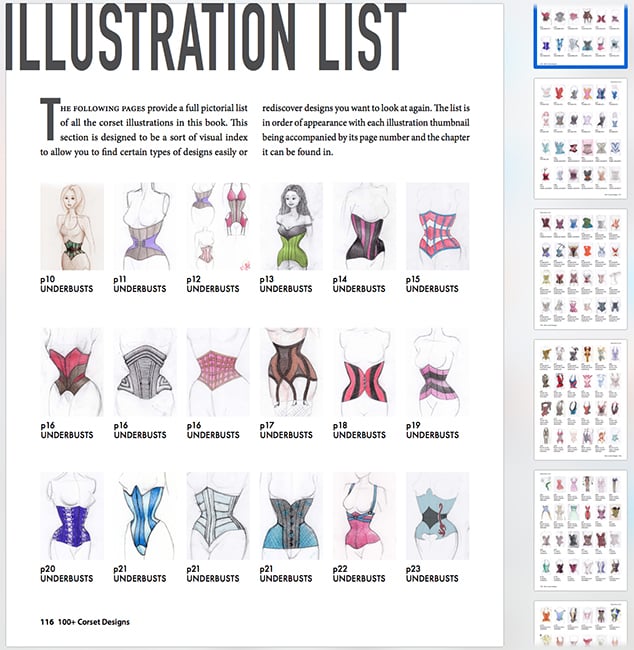
Übersetzung Teil 3
Part 3 - What types of corsets and lace-up breasts are there?
A picture often says more than a thousand words
for the 16th to the end of the 18th century one speaks of the "lacing breast"
that they have no relevance for the work in progress fetish mod - I will not go into detail
(yes - I have reproductions of dresses from the Tudor era - Baroque and Rococo and of course I also have the "tie chest" needed for semi-authentic wear - a 19th century corset just does NOT go with them!)
From today's point of view, from the 19th century people are talking about the "corset" - whereby the term "Victorian" can/should actually only be applied to the models from the period from 1844 to 1880 - but the (desired) "hourglass" shape It's not just for corsets from the Victorian era.
If you look at the shop page of a corset tailor, they usually correctly state the epoch (period) and the shape of their corset.
However, if you search the Internet for terms such as "corset", the hits are initially used on the part of pure shops for terms such as "underbust" or "Victorian" simply as keywords for sales - the purest confusion of terms.
So first the basic shapes
a) Waist corset
does not really exist until 1904/05 - developed from the riding corset
riding corset?
Women have always ridden in a "laced chest" or "corset" - only they used the "lady's saddle" for this - so they sat on the side.
Anyone who has tried it knows how complex (difficult) it is to keep the balance and an Austrian empress ("Sissi") took part in fox hunts - so she also jumped over obstacles on horseback.
The extremely short waist corset also allowed women to use men's saddles and...
..yes - the corset also supported/fixed the woman's chest - even if it did NOT go over the chest - because women ALWAYS wore at least one shirt under the corset
and in the combination of (underbust) corset and shirt it works like a brassiere!
(In addition, the riding jacket is extremely precisely tailored to the body - which is an additional fixation.)
b) underbust corset
the most commonly produced and sold/worn version of the corset - then as now
it is also the "easiest" to make - because the tailor only has to deal with the shapes and measurements of the body from the hips to the waist to the bottom of the bust - which is complex enough as it is.
including the shape and size of the breasts effectively doubles the effort.
(in a woman, the two breasts are not really symmetrical - I have experienced this myself professionally where the difference was 1/2 cup)
(and I know myself what I'm talking/writing about here - after all, corsets and brassieres are the most complex parts in the area of creating a pattern - every prospective fashion designer learns that at fashion school and I have a few graduates from such schools myself worked in their studios)
c) overbust corset
the classic "tie breast" up to the end of the 18th century was ALWAYS overbust - it was supposed to move the breasts "up" and thus shape the décolleté
from 1820 (Biedermaier) to the beginning of 1850, the corsets of the 19th century were mostly overbust corsets - from then on women used the underbust version
In contrast to earlier times, today's corsets are used as outerwear - they are therefore visible and determine the appearance of the wearer as an optical eye-catcher. This is why overbust corsets are so popular today and there are far more variants today than in the 19th century
d) Special form S-Line
see "1901"
a text quote from the following page
http://www.the-ardent-collection.com/index.php/en/historical-corsets/corset-style-s-line.html
"Under the pressure of a new fashion silhouette with particular emphasis on an extremely narrow waist, the S-Line corset developed from the "straight front" corset style at the beginning of the 20th century. The women of that era increasingly realized that this new corset shape, stronger lacing was also possible for a narrower waist, i.e. the waist-hip jump could be larger.The empire corset was ultimately a further development from this with a new, very slim silhouette, which was both in the form of a straight-front and were also offered as S-Line corsets. Here the emphasis was on the heavily compressed hips."
Since I have a corset like that myself...
..no, it does NOT create an extreme hollow back, but the cut brings the body more into the "vertical" position than the "Victorian" corsets
and their characteristic is the straight front - i.e. the corset closure (the planchette) is no longer bent inwards and therefore does not press more into the abdominal cavity.
This makes it even more comfortable to wear!
The waist is almost completely reduced from the side - hence the optically very accentuated "jump" from waist to (lateral) hip
The whole thing can then be enhanced enormously with additional optical elements such as different (changing) colors for the patterned parts.
e) Special form "Edwardian" corset
see "1911"
from today's point of view an extreme postural corset - since it reaches from the lower edge of the chest to the base of the crotch and completely encloses the hips.
Sitting in it was already very difficult to implement - but since it massively modeled the woman's hips in the sense of the "Art Nouveau" silhouette, it was worn.
Even the corsets around 1880 were "constructed" in such a way that they gave away the hips for the extremely narrow long hobble skirts
(compare the models before and after 1880 on the overview above - they are much shorter at the hips)
it is from them that today's "discipline corsets" emerged
f) discipline corsets
are actually a pure fetish or BDSM variant - because they move the lower end of the corset to the middle of the thighs or even the upper edge of the knees...
..sitting is no longer possible!
(and that's exactly what the game between dominant and submessive corset-wearing part is all about)
g) Special form "Straight-Front S-Line Corset"
is almost a contemporary combination of "straight front" with "S-Line" - an absolute special model for the
"In contrast to the prevailing corset shapes, the straight-front S-Line corset has some special features in the cut and line, which, contrary to widespread reservations, ensure that this corset not only offers excellent wearing comfort, but also a ' dreamlike' silhouette and at the same time ensures an upright posture.
For this reason, these corsets are also known as 'posture corsets', in which all fashion aspects can be taken into account.
The silhouette results exclusively from the cut design.
The use of 'forced guidance' by means of particularly strong or specially shaped spring steel or similar, which would have an adverse effect on the wearing comfort, is not intended in the corsets shown here."
Today's corset tailors try to adapt the corset to the needs of today and their wearers on the basis of the old cuts.
No - there are no ready-made patterns as you know them from fashion magazines like Burda, for example.
No - corsets are only a secondary topic at fashion schools and there are no lessons in making tailor-made cuts.
Anyone who wants to create a corset for themselves or for others must actually start from ZERO and build their own system from the not-to-scale depiction of historical pattern templates...
..when the corset is made for the purpose of achieving an actual REDUCTION, e.g. of the waist
and as this figure shows, there are many interpretations of what can be done with these "base" cuts or "base" models
Teil 4- Wie kam ich zu meinen eigenen Korsetts?
Zunächst versuchte ich um das Jahr 2000 herum Korsetts im Internet zu kaufen und wie jeder "Anfänger" machte ich die typischen Fehler...
...unter anderem beachtete ich nicht das mein eigener Körper nicht den gängigen Konfektions-Maßen entspricht
Tatsächlich passen selbst bei Hosen oder Hemden/Blusen nur ca. 50% der Betreffenden die nach den Konfektion-Vorgaben hergestellten Sachen -
Wie kann da es bei einem Korsett funktionieren? Antwort -> gar nicht!
also häuften sich die Fehlkäufe - die Korsetts passten nicht - was sich beim Tragen unter anderem durch Schmerzen bemerkbar machte
Bei einer Firma war der Kauf eines Korsetts von der Stange KEIN Fehlkauf
https://www.vollers-corsets.com/
Ja - die machen wirklich seit fast 130 Jahren Korsetts und ja die eignen sich tatsächlich auch zum Schnüren
das Modell was ich kaufte eignet sich für meinen langen Oberkörper
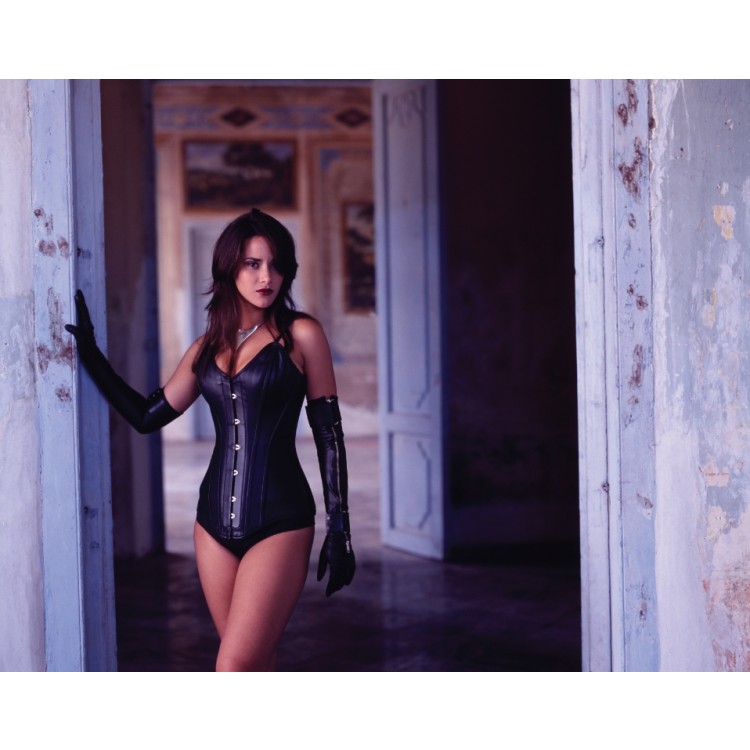
(man wird es später an einer anderen Stelle wieder sehen...)
Also hiess das letztlich für mich als "Sitz-Riesin" (sehr langer Oberkörper und kurze Beine) nur eines -> ein Korsett auf meine individuellen Maße - genannt "Maßkorsett"
Um das Jahr 2002 wurde ich fündig - in den USA und nicht in Europa! -> "waspcreation" - die Inhaberin -> "Amy Crowder"
Durch sie kam ich an mein erstes wirklich passendes Korsett
und ich erlebte was auch andere Menschen beschreiben die ein wirklich paßgenaues Korsett tragen -> es ist großartig - es macht süchtig
Amy war derart genial mit ihrer "Erfindung" eines eigenes Maßsystems (also welche Maße muss ich vom Kunden nehmen damit mein Korsett-Schnitt faktisch
ohne große Änderungen auf Anhieb paßt) - das ich NICHT in die USA reisen musste und es nur eines einigen Probe-Korsetts (üblich bei Maßanfertigugen!) bedurfte
Amys Designs waren für das tägliche Tragen von Korsetts entwickelt wurden - da ging es nicht um Super-Design sondern um Praktikabilität - z.B. das man sich alleine
ohne Hilfe einschüren konnte
jaja - die Szene aus "vom Winde verweht" - da wo die Nanny der Protagonistin ("Scarlet") das Knie ins Kreuz stemmt...
..manno - das ist Hollywood-Bullshit vom feinsten!
aber 99% aller Frauen und Männer glauben bis heute das es unermessliche Kraft benötigt ein Korsett zu schießen.
Wenn es keine Schnürung gäbe die durch Ösen führt hätten sie sogar Recht - aber ich frage mich immer wozu man in den Schulen auf der Welt mehr als einfaches "Lesen, Schreiben und Rechnen" lehrt - wenn man nicht mal in der Lafge ist zu erkennen das man bei der Korsett-Schnürung ein FLASCHENZUG-System vor sich hat...
..und "Kraft" in "Wegstrecke" umgewandelt wird.
Amy perfektionierte den "Flaschenzug" des Korsetts - indem sie sich einem Hauptproblem annahm das auch praktische Flaschenzüge haben -> die Reibung an den Umlenkstellen.
Bei einem "richtigen" Flaschenzug läuft das Seil über sich MIT-drehende Rollen und die Reibung in den Rollenlagern ist relevant.
Bei einem Korsett gleitet die Korsett-Schnur über FEST-stehende Ösen und die Riebung zwischen Schnur und Öserand (Form und Oberfläche) wird zu entscheidenden Faktor.
Darum sind bei ihr die Ösen größer als bei allen anderen Korsett-Herstellern - aber auch darum kann man aus der Mitte (der Taille) heraus das Korsett zuziehen ohne das die Schnur "stockt".
(siehe dazu das Video - das geht nur bei ihr so und ich habe letztlich von 7 verschiedenen Herstellern Korsetts)
Also gibt es kein "mit den Armen blind auf dem Rücken herum Tasten" um die Schnur zu greifen wie bei allen anderen Herstellern.
Und bei ihr ist der Abstand zwischen den Ösen in der Taillen-Mitte geringer als im Bereich ausserhalb - denn je enger die Ösen stehen deto höher ist der "Flaschenzug"-Faktor...
..also je weniger Kraft wird für das Ziehen der Schnur benötigt.
Da die Reduktion in der Taillengegend am grössten ist und dadurch auch die benötigte Kraft - wird durch den höheren "Faktor" die vom Schnürenden aufzubringende kleiner.
Der Nebeneffekt: Durch die erhöhte Reibung zwischen Ösen und Korsettschnur tritt der Umstand ein - dass sich das Korsett an der Taille nicht mehr beim Binden der Schleife selbst aufzieht...
...was es der Trägerin ermöglich ohne fremde Hilfe nicht nur die Schnüre enger zu ziehen sondern auch abschliessend die Schnur mittels Knoten-und-Schleife zu "fixieren"
Andere Korsett-Hersteller haben das mit der Zeit übernommen - einige sagen heute offen das sie bei Amy "abgeschaut" ähm "gelernt" haben - andere tun bis heute so als wären sie darauf alleine gekommen. Egal - Hauptsache der Korsett-Hersteller macht es so.
Selbst dieses "Monster-Korsett" von mir - eine Maßanfertigung einer Berliner Korsett-Manufaktur (TomTo) - kann ich ohne viel Kraft selbst schnüren - kann ich es ohne Hilfe selbst anziehen und schnüren- ich muss nur dabei "unedlich" viel Korsett-Schnur ziehen
und wenn man mal in den Bereich der Taille schaut ... sitzen die Ösen enger - ja man hatte meiner Anregung (sie reparierte an meinen "waspcreation"-Korsett eine Kleinigkeit und wunderte sich zunächst über die Anordnung der Ösen - bei meiner Erklärung machte es dann "klick") nicht nur für meine Korsetts übernommen.
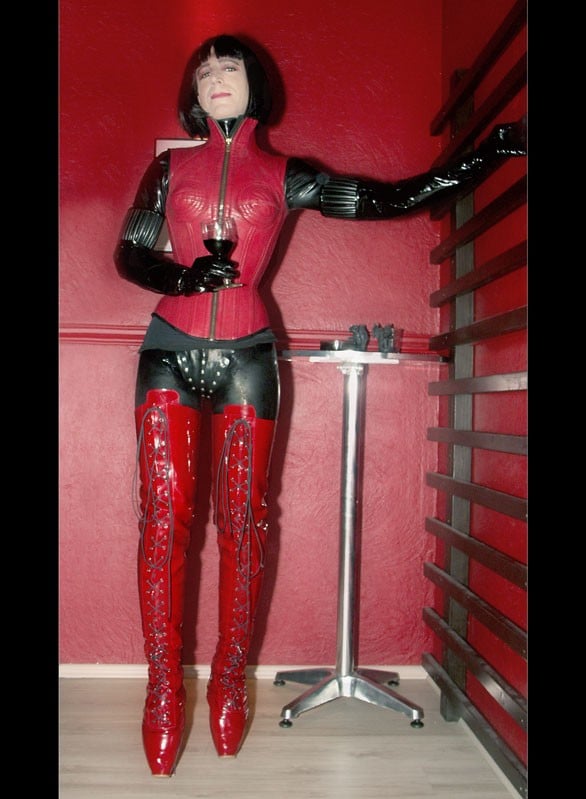
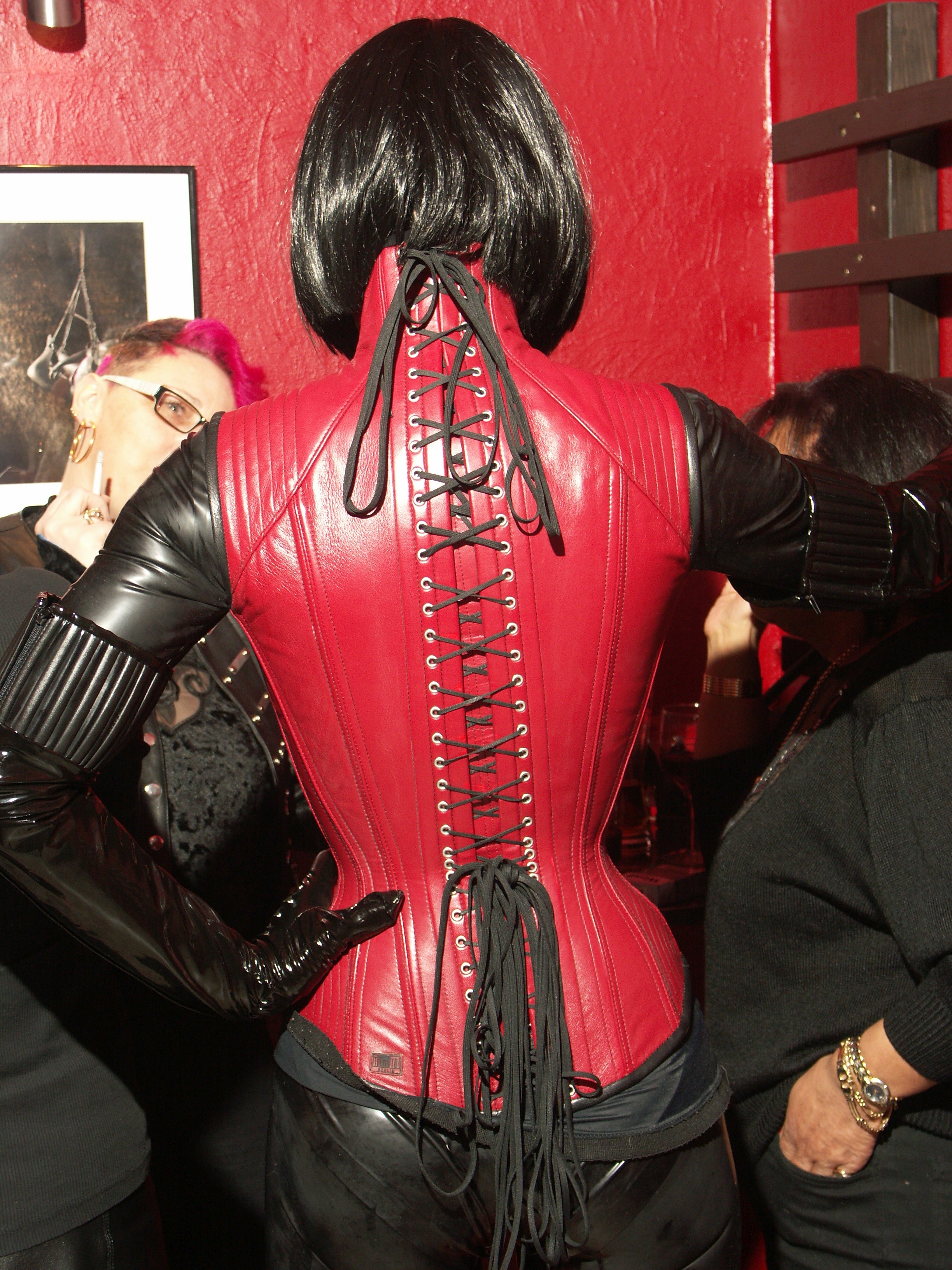
Die Idee für dieses Korsett stammt aus einer Fetisch-Geschichte aus den 1970er - da war es aber für eine submessive Trägerin gedacht
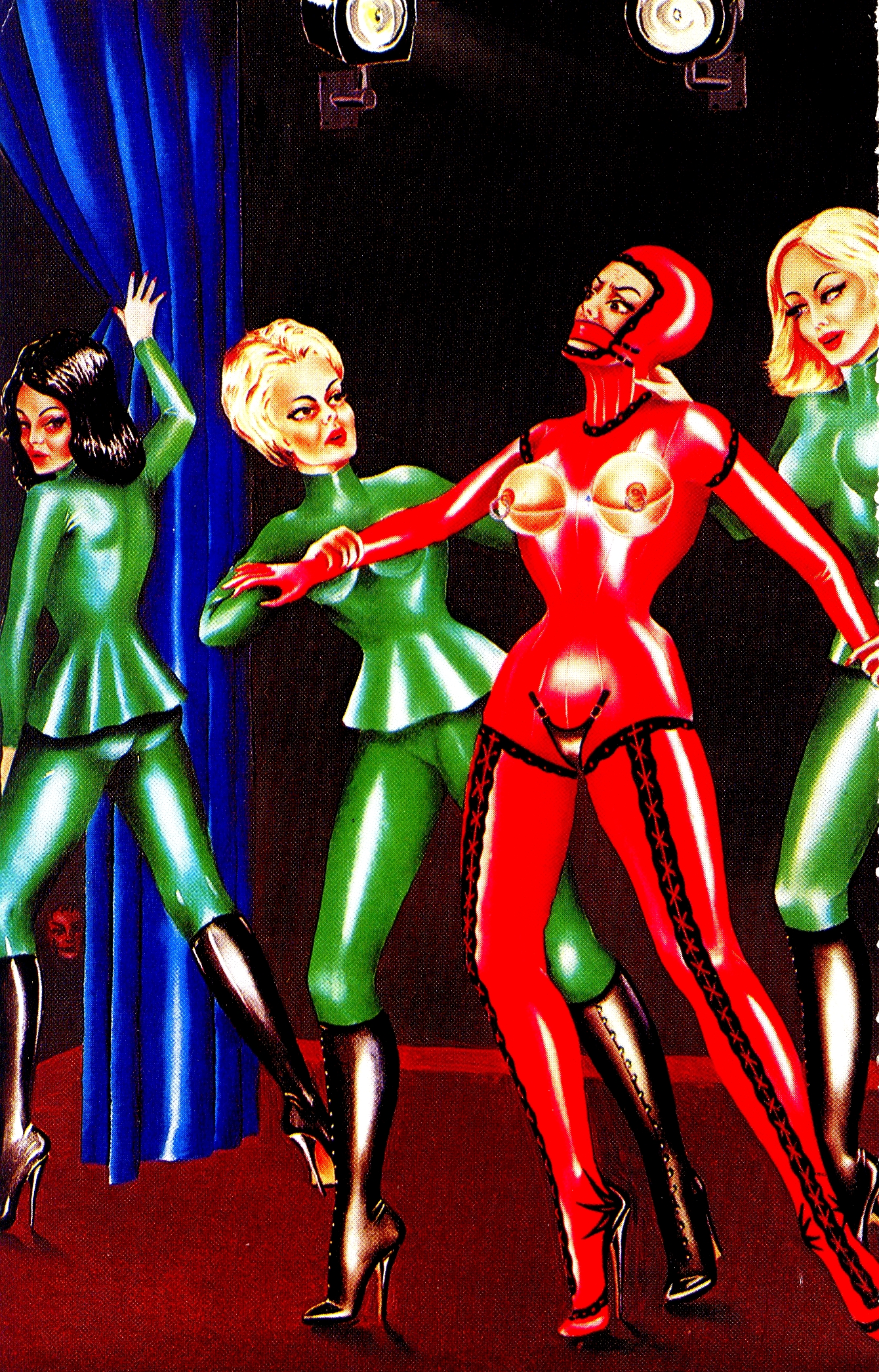
Frau Merz schaute sich das Bild an - hörte sich an was ich wollte und sagte:
"Miauzi - ich verstehe was Du möchtest - ich mache Dir einen eigenen Vorschlag"
Zurück zu Frau Amy Crowder
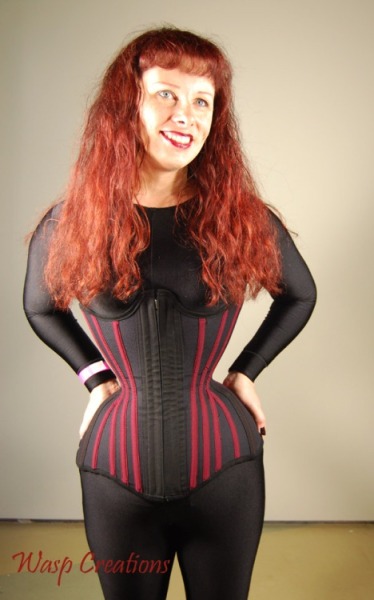
(ich verlinke diesen 20 Jahre alten Artikel weil er immer noch recht viele Dinge enthält die auch heute gültig sind - darum nutze ich diesen Text für diverse Zitate)
https://www.thepitchkc.com/adventures-in-tight-lacing/
Das Bild in dem Artikel zeigt wie sie von ihrem Ehemann in ein (oben beschriebenes) "Disziplin"-Korsett geschnürt wird und zwar ohne mit "Knie ins Kreuz zu stemmen"
Crowder arbeitet im zweiten Stock eines zweistöckigen Bungalows im Kunsthandwerksstil, den sie und Cady in Harrison in der Nähe der 55th Street teilen, und kreiert speziell entworfene Korsetts für Kunden auf der ganzen Welt. Für diejenigen, die ihre Kurven auf die Spitze treiben wollen, ist das beliebte Hourglass-Korsett eine „ausgezeichnete Wahl für den gelegentlichen Tightlacer“. Da ist das Numan-Korsett, das für „größere Männer“ entworfen wurde. Und für feuchte Sommermonate geben belüftete Korsetts aus Polyester und Baumwolltwill Körperwärme ab. Es gibt jedoch keine Befreiung vom Disziplinkorsett – das sich von der Brust bis zur Mitte des Oberschenkels erstreckt und manchmal bis zu 50 Fuß Schnürsenkel enthält – bis eine barmherzige Domina beschließt, den unterwürfigen Korsett zu befreien. Der wahrhaft Bußfertige kann den Sarkophag bestellen, ein Disziplinierungskorsett, das von der Brust bis zum Knöchel reicht.
Da steht was von "Sommerkorsetts" - was ist das?
Nun - da ein Korsett führer den ganzen Tag getragen wurde und in Europa wie Nordamerika im Sommer es deutlich wärmer als im Winter ist - wurde schon im 19. Jahrhundert das "Sommer-Korsett" entwickelt - welches andere Materialien verwendete als die "normalen" Korsetts.
Heutiges Problem für alle Korsett-Schneider -> man bekommt diese Stoffe nicht mehr - weil sie schlicht weg NICHT mehr HERGESTELLT werden.
Das ganze waren hochfeste Seidenstoffe - die es ermöglichten das Sommerkorsett aus einer einzigsten Stofflage herzustellen und trotzden eine Körper-Kompression zu bewirken
So wog ein Unterbrust-Korsett für den Sommer nicht mehr als 500 Gramm.
(Bei heutige Korsett-Sammlern existieren einige noch erhaltene Exemplare - meine Berliner-Schneiderin bekam ein solches mal von eiem Sammler zur Ansicht - da wurde es auch gewogen)
Die "normalen" Korsetts waren zweilagig und selbst mit Stäben usw. wog so ein Korsett damals kaum mehr als 1 kg.
Heute gibt es weder die Stoffe für "Sommer" wie für "normale" Korsetts - die Schneider für heutige Schnür-Korsetts müssen auf Stoff aus der Möbel-Industrie ausweichen - somit kommt es oft zu einem drei-lagigen Aufbau - welches sich auch im Gewicht ausdrückt - für ein Unterbrust-Korsett durchaus 1,5 bis 2 kg.
Auch spielt hier die Auswahl der Obermaterials eine Rolle - viele dekorative Materialien die man für ein offen getragenes Korsett verwendet sind nicht stabil genug gegenüber den Verformungskräften - so eben auch Leder.
Amy war eine der ersten die versuchte dem entgegen zu wirken und schuf ein eigenes Sommer-Modell
andere Korsett-Hersteller folgten im Laufe der Jahre und fanden einen anderen Weg
Variante von Vollers-Korsett
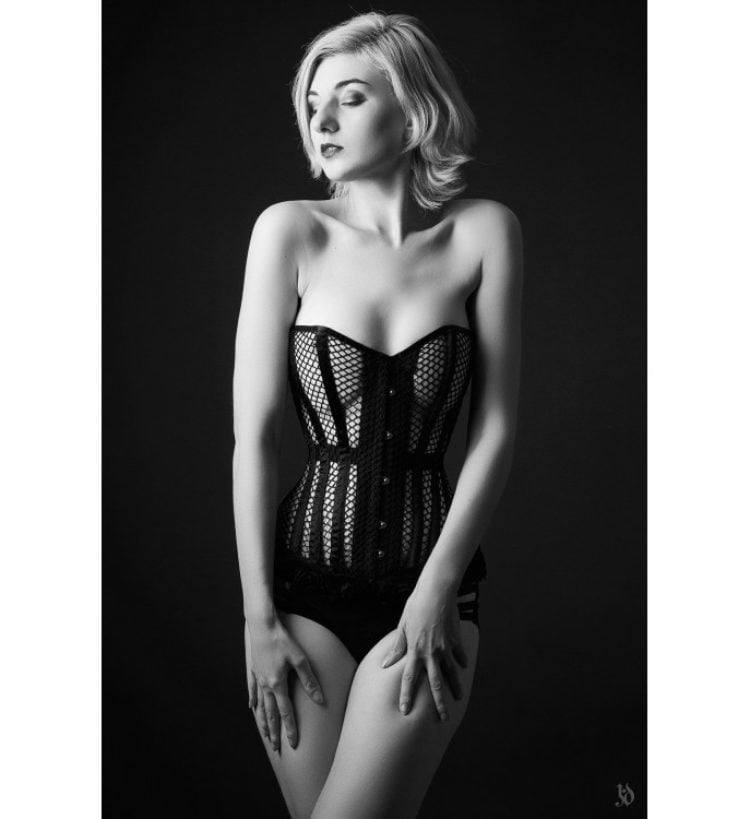
Variante von TomTo aus Berlin
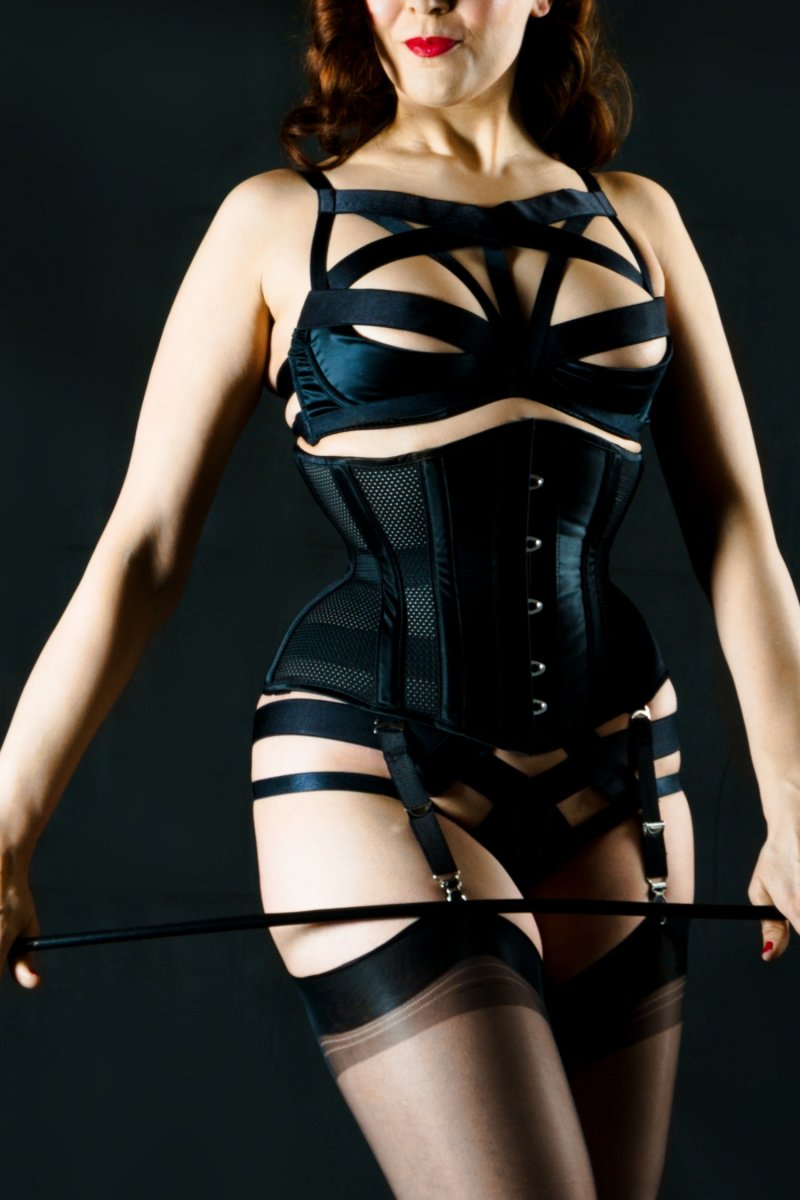
Bin sehr stolz eines der ersten Modell damals gekauft zu haben - das war zwar ein "Konfektions"-Korsett aber die nötigen Änderungen für meinen Körper waren bei dem Schnitt derart gering das sie gleich beim Zuschneiden und Nähen ohne zusätzlichen Arbeitsaufwand mit eingefügt werden konnten
(was ein Charakteristikum dieser Korsett-Manufaktur ist)
Und stiess wie alle anderen die sich ernsthaft mit dem Thema auseinander setzen auf diverse "urbane Legenden" ums Korsett
Crowder blätterte in muffigen Büchern über das Kleidungsstück, das oft als quälend beschrieben wird. Sie las erschreckende Geschichten über gebrochene Rippen und in zwei Hälften geschnittene Lebern. Sie blätterte vergilbte Bilder von sadistischen Gouvernanten, die jungen Schützlingen den Atem raubten.
Eingefleischte Tightlacers drückten ihre Taille auf 16 Zoll oder weniger, schreibt Valerie Steele, Chefkuratorin und Direktorin des New Yorker Fashion Institute of Technology, in ihrem Buch The Corset: A Cultural History . Ärzte des 19. Jahrhunderts berichteten über Fälle von ehemals korsettierten Leichen mit verschobenen Organen und verschrumpelten Eingeweiden. Engschnürende Jugendliche wurden beschuldigt, sich den Übeln der Masturbation hingegeben zu haben.
Zur gleichen Zeit entstanden Pro-Tightlacing-Broschüren und -Bücher zusammen mit Underground-Zeitschriften, die Briefe im Forum - Stil über Engschnürung, Piercing, Unterwäsche sowie Bondage und Dominanz enthielten.
Steele schreibt, dass The Englishwoman's Domestic Magazine zwischen 1867 und 1874 mehr als 150 Briefe über Miederwaren veröffentlichte. Die Briefe (von denen viele Wissenschaftler glauben, dass sie von Männern geschrieben wurden und mehr auf Fantasie als auf Realität beruhen) enthüllten eine sadomasochistische Subkultur von Menschen, die durch Korsetts sexuelle Lust erlangten. Das Magazin erhielt so viele Zuschriften über das Auspeitschen widerwilliger Korsett-Auszubildender, dass es eine spezielle Auspeitschungs-Beilage veröffentlichen musste.
Die Ärzte des 19. Jahrhunderts beschuldigten Korsetts, Gebärmuttervorfälle, entzündete Lebern, Blasenhernien, Nierenerkrankungen, Knochenverschiebungen und die alte Bereitschaft weiblicher Krankheiten, „Hysterie“, zu verursachen. Sie warnten davor, dass das Tragen der einengenden Kleidungsstücke zu hässlichen Kindern führen könnte.
Um 1880 versprachen die Hersteller von „elektrischen Korsetts“ in London und New York, dass ihre elektromagnetische Unterwäsche Nieren- und Lebererkrankungen, Rheuma und Nervenleiden abwehren und heilen könne, während sie Damen die Strapazen des Engschnürens erspart.
Diese Praxis geriet gegen Ende des 19. Jahrhunderts aus der Mode. „Vor allem muss jede kräftige Frau aufhören zu denken, dass sie ein Korsett tragen kann, das zwei oder drei Nummern kleiner ist, als sie braucht“, behauptete ein Artikel in Women's Home Companion im Jahr 1912. „Welchen irdischen Unterschied macht es, ob es ein großes, gut gebautes ist Die Taille einer Frau misst 26 oder 30 Zoll? Es zählt, wie sie in ihrem Korsett aussieht und wie sie sich darin fühlt.“
Vieles was heute als exakte historische Berichte über das Einschnüren oder die Taillenweite oder die Strapazen des Tagen oder die gesundheitsliche Schädigungen gilt -> ist BULLSHIT
und hat rein gar nix mit der damaligen Realität zu tun.
Thema: Wie eng haben die Frauen damals sich wirklich geschnürt.
Vor einigen Jahren stellte sich diese Frage auch eine Fachärztin für Orthopädie in den USA.
Ihre (sogenannte) Fachliteratur berichtete von unglaublich engen Taillen und nahezu alle Frauen der damaligen Zeit hätten solche super-schmalen "Wespen"-Taillen.
Schaut man sich Mode-Magazine aus der Zeit an - ja die Figurinen sehe alle ultra geschnürt aus.
Nur war das auch in der gelebten Realität so?
Die Fotografie gab es schon zu Zeiten des Bürgerkrieges von 1861-65 - war also ab der Zeit das neue Mittel für Potraits der Menschen.
Und es sind viele Bilder aus dieser Zeit erhalten - werden heute noch Bildbände davon verlegt.
Was fällt auf? - Die Frauen sehe um die Taille herum fast genau so aus wie heutige Frauen?
Was bitte?
Um diese Diskrepanz aus medizinischer Fachliteratur, Mode-Journalen und realen Fotos aufzuklären suchte die Ärztin nach Auftragsbüchern von Korsett-Schneidern die aus dieser Zeit (2. Hälfte des 19. jahrhunderts) erhalten geblieben sind.
Tja - und was fand sie -> die durchschnittliche Taillen-Reduzierug lag bei 5-10 cm - NICHT mehr
übertragen auf ein heutiges Standart-Maß von 90-60-90 wurde die Taille durch das getragene Korsett von 60 cm auf 50-55 cm reduziert!
(und nicht um 15-20 cm verringert wie dieser ganze Quatsch - auf den sich die Medizin auch noch heute beruft - behauptet)
Nehmen wir mal das Thema "Organverschiebung"
Ja - durch das "Dauertragen" eines die Taille reduzierenden Korsetts verlagert sich die Position einiger innerer Organe.
Stirbt man daran?
Natürlich nicht - weil ansonsten JEDE Schwangerschaft das Todes-Urteil für eine Frau bedeutet!
Denn auch bei einer Schwangerschaft werden innere Organe verlagert und zwar massiv - wäre der Körper in seinem Aufbau nicht darauf vorbereitet...
..aber auch andere Tätigkeiten sorgen für eine Organverlagerung -> zum Beispiel das Tauchen
Ich selbst habe das Sporttauchen jahrelang sowohl mit als auch ohne Gerät betrieben.
Gerade beim Frei-Tauchen spürt man mit jedem zusätzlichen Meter Tiefe wie der Druck auf die Bauch-Höhle wächst und die Wasserdruck die Organe nach oben schiebt - weil die Lungen schrumpfen.
Wenn also Korsett-Tragen zu Gesundheitsschäden durch Organverlagerung führen würde...
..warum tut es das nicht beim Tauchen?
Genau diese Frage stellte ich an meine langjährige Fachärztin für Orthopädie als ich im Korsett vor ihr sass und machte sie zunächst damit sprachlos.
Sie fing an die fachliche Relevanz ihrer Vorlesungen im Medizinstudium zu hinterfragen.
Um es kurz zu machen - das noch heute an den Medizin-Unis gelehrten Wissen zum Thema Korsett und Folgen für den menschlichen Körper stammt an den 1930er Jahren oder noch früher - aus einer Zeit als das Korsett aus der Mode gekommen war - es also weder Hersteller gab die man befragen konnte noch Trägerinnen die man untersuchen konnte.
Da ein Kleidungsstück aus dem Unterwäsche-Bereich im 19. Jahrhundert etwas diskreter behandelt wurde in einer öffentlichen Diskussion als heute - gab es kaum eine Berichte von real gelebten Frauen die über das Tragen eines Korsetts berichteten.
Was es gab -> Fetisch-Geschichten die man später für reale Erlebnis-Berichte hielt!
Und was es noch gab -> Anti-Korsett-Propaganda
Das Korsett wurde von der beginnenden Frauen-Emanzipationsbewegung (auch als "Reformbewegung" bekannt) als Symbol für die Unterdrückung selbiger auserkoren und mit einem riesigen Aufwand an Halb- und Unwahrheiten bekämpft. Dazu gehören auch die Märchengeschichten von den gebrochenen Rippen durch zu enges Schnüren.
Echt jetzt? - Rippen brechen durch Einschnüren? - Wie soll das gehen?
Die unteren Rippen sind biegsam - die geben nach innen (wenn auch widerwillig) nach.
Bevor man den Körper derart komprimieren kann um an die Schwelle einer ernsthaften Schädigung zu kommen - reissen die Ösen der Schnürung aus dem Stoff des Korsetts!
(bei billigen Korsett reissen sie oft noch viel schneller aus)
Ja - es gab auch bei Korsett-Trägerinnen Rippen-Brüche - aber nicht wegen sondern TROTZ Korsett.
Ein Korsett wird manchmal als "Panzer" bezeichnet und es schützt auch die Trägerin wie ein "Panzer" - auch vor äusseren mechanischen Einwirkungen.
Wenn eine Trägerin trotz getragenem Korsett einen Rippenbruch (z.B. durch einen Sturz gepaar mit einer Kollision an der Tischkante) erleidet - dann wäre das auf jeden fall auch ohne passiert.
Übrigens- was mancht der Arzt bei einem Rippenbruch mit dem Patienten?
Früher habe es einen fixierenden Tape- oder Dachziegelverband angelegt - von dem man heute Abstand nimmt (wegen der einschränkenden Atmung)
Man erinnert sich noch an die Kaiserin "Sissi" - eine der Mode- und Korsett-Ikonen des 19. Jahrhunderts.
Wie starb sie? Durch ein Messer-Attentat!
Nur musste der Attentäter MEHRFACH zustecken - weil er bei den ersten Male auf die stählernen Korsett-Stangen traf und sein Stilett nicht durchdrang!
„Wie kannst du atmen?“ manche Leute würden fragen. "Tut es weh?"
„Ich muss anders atmen“, gibt Crowder zu. „Ich kann keine tiefen Zwerchfellatmungen machen, daher ist meine Atmung viel flacher, wenn ich ein Korsett trage.“
Crowder trägt ein Korsett und ein Kleid im Haus, wenn sie arbeitet – aber keine Schuhe, um die Pedale ihrer Nähmaschine besser kontrollieren zu können. Und das Korsett lässt sie zu Hause, wenn sie ihrem ernsthaften Hobby nachgeht: Mountainbiken. „Ich bin ein Wildfang“, sagt Crowder.
Ja - das dauerhafte tragen des Korsett verändert so einige Dinge
1) Die Atmung
wie beschrieben ist eine tiefe "Zwerchfell-Atmung" nicht mehr möglich.
Ist das im Alltag schlimm?
Als mir vor 20 Jahren meine damalige Orthopädin das vorhielt - fragte ich:
"und bitte sagen Sie mir jetzt wann und wie oft Sie selbst diese Atmung einsetzen"
Da machte es bei ihr "KLICK" - denn nahezu alle Menschen atmen fast den gesamten Tag -> FLACH
Nur bei Dingen wie schwerste körperliche Arbeit oder bei Ausdauer-Sportarten (wie laufen oder Radfahren) wird bewusst die tiefe Atmung eingesetzt
oder wenn man versucht einer davon fahrenden Strassenbahn hinterher zu laufen...
...in einem Korsett macht man dies genau einmal - danach hat man begriffen das es eine Beschränkung gibt
2) Das Vorbeugen des Oberkörpers...
...ist nicht mehr möglich und der dabei eventuell eintretende Bandscheibenvorfall mit 100% Sicherheit ausgeschlossen
Merke: mit einem um den Körper gelegten Korsett bekommt man keinen Vorfall der Bandscheibe in dem Bereich in dem das Korsett anliegt - also je länger das Korsett im Rücken...
Wie beugt man sich dann im Korsett nach unten?
So wie es der Orthopäde sowieso empfiehlt -> man geht damenhaft in die Knie
3) schwindende Muskulatur
Ja - das ist für Dauerträger ein existierendes Problem - aber 90% der Bevölkerung hat sowieso einen "schwachen" Rücken und müsste auch ohne ein Korsett zu tragen täglich 20-30 min eine spezielle Rücken-Gymnastik zur Stärkung der Muskulatur machen.
Macht man dass? Mal scharf darüber nachdenken!
4) Die Belastung der Haut
Etwas was selbst Dauerträger unterschätzen - das Korsett über über die Haut seinen Druck/Kraft zur gewünschten Formung des Körpers aus
Aus der Krankenpflege wie der Intensiv-Medizin weiss man das lange anhaltender Druck die Haut schädigen kann.
Also muss der Pflege der Haut besonderer Aufmerksamkeit geschenkt werden!
Generell gilt -> ein Korsett wird NICHT auf der nackten Haut getragen - NIEMALS!
500 Jahre lang haben die Frauen wenigstens ein Hemd unter ihrer "Schnürbrust" bzw. ihrem Korsett getragen - das war nicht grundlos
Wenn man sich das Korsett umlegt - dann steht es an der Schnürung zwischen 10 bis 20 cm weit offen. Durch das Ziehen an der Schnur schliesst es sich langsam
a) bei gleitet die Innenwand des Korsetts über die Oberfläche der Haut - ACHTUNG REIBUNG - bei nackter Haut ist die sehr gross und der Gleiteffekt ist nicht glichmässig - die Haut bildet regelrechte "Schnür-Wulste" - die kann man mit einem "Unterzieher" - einem Schlauch ("corsett-liner) aus elastischem Stoff den man zwischen Haut und Korsett trägt vermeiden
b) die Schnur selbst gleitet nicht nur über die Ösen-Oberfläche sondern auch über die nackte Haut -> Verbrennungen sind häufiger als man denkt
Abhilfe schafft entweder der "corsett-liner" und/oder zusätzlich der "Schnürschutz" ("lace-protector")
(siehe dazu die Bilder im nächsten Kapitel auf denen ich meinen Schatz ins S-Line-Korsett einschnüre)
5) Die Wirbelsäule ist fixiert
Ja - das ist sogar gewünscht - siehe orthopädische Korsetts (ja die gibt es tatsächlich)
Der Mensch beherrscht den aufrechten Gang - an dem der gesamte Körper in Form von Ausgleichsbewegungen beteiligt ist.
Das Korsett schränkt diese ein - aber verhindert diese Bewegung nicht komplett.
Was aber wichtig ist - durch die Fixierung der Position der einzelnen Wirbel im Bereich des getragenen Korsetts wird auch quasi die Körperhaltung in diesem Abschnitt "eingefroren"
Also wenn man zum Korsett auch HighHeels tragen möchte...
..erst die Heels anziehen und dann erst das Korsett.
Alleine schon die Position des Beckens ist eine ganz andere als ohne hohe Absätze
Die meisten Probleme bei "Gelegenheits-Trägerinnen" kommt genau aus der (unwissendlichen) Mißachtung dieses Zusammenhanges
Eine andere Kundin von Crowder, Debra McNeill, die in den Berkshire Mountains in Massachusetts lebt, bestellte ein Korsett, nachdem sie in zwei Jahren in fünf Autounfälle verwickelt war. Ständiger Schmerz fuhr durch ihre Beine und ihr Rücken schmerzte immer. Sie kaufte eine Rückenstütze in einer Apotheke und fühlte sich etwas besser. Dann schlug ein Arzt McNeill vor, in eine Schmerzklinik zu gehen, wo sie ihr das Meditieren beibringen könnten. Stattdessen brachte sie sich selbst das Meditieren bei und bestellte ein Korsett bei Wasp Creations.
„Ich bin wahrscheinlich der geradlinigste Schnürer, den es gibt“, scherzt McNeill, eine echte weiße angelsächsische Protestantin, die ihre Abstammung auf Vorfahren zurückverfolgt hat, die die Mayflower verlassen haben.
„Ich trage jetzt rund um die Uhr ein Korsett“, sagt McNeill, die kaum das Haus saugen konnte, bevor sie zusätzliche Unterstützung suchte. Jetzt ballt sie Heu und reitet auf ihrer Ranch – während sie ein Korsett trägt, das besser passt als das ihrer puritanischen Vorfahren. „Das Korsett verhindert, dass meine Wirbelsäule tagsüber zusammengedrückt wird, und das stoppt die Schmerzen in den Beinen. Ich ziehe [das Korsett] einmal pro Woche für volle 24 Stunden aus, nur um sicherzustellen, dass sich alles so bewegt, wie es sein soll.“
Sie muss kleinere Mahlzeiten zu sich nehmen, gibt McNeill zu, deren 33-Zoll-Taille auf 27 Zoll geschrumpft ist. Die kleinere Taille ist nur ein unerwarteter Vorteil, sagt sie.
„Ist das nicht ein Fetisch-Ding?“ Leute fragen McNeill, wenn sie ihnen sagt, dass sie ein Korsett trägt. „Viele Menschen können die Vorstellung nicht akzeptieren, dass eine normale Person ein Korsett trägt.“
Zwei wichtige Sachen die im allgemeinen nicht bekannt sind
a) morgens ist man grösser als abends - bei ca. 170 cm Körpergröße macht dies 2-3 cm aus
b) die Bandscheiben nehmen nachts Wasser auf und "quellen" so auf - im Verlauf des Tages geben sie es wieder ab
Schnürt man sich also am morgen ein - bleiben die Bandscheiben von dem Druck aus Körpergewicht und Zugwirkung der Bänder "verschohnt" - sie behalten ihr Wasser.
Genau das war für mich der zweite Grund warum ich ein Korsett tragen wollte - ich hatte zwar keinen Auto-Unfall wie die Dame in dem Artikel - aber ich litt wie sie unter
Rückenschmerzen von denen ich vermutete das sie ihre Ursache in dem Zusammen-Schrumpfen der Bandscheiben haben.
Und das Korsett setzte diesen Schmerzen tatsächlich ein Ende!
Nimmt man ab wenn man ein Korsett "dauerhaft" trägt?
Ja und nein.
Ja - das Korsett verringert die mit Luft gefüllten Hohlräume im Korper-Inneren - der wichtigste ist der Magen.
Dadurch setzt schneller das "Fölle"-Gefühl ein - richtet man seine Essgewohnheiten danach aus - verringert sich tatsächlich die täglich aufgenommene Nahrungsmenge.
Bei mir bewirkten die ersten 2 Jahre "Dauertragen" (also 12-16 Stunden am Tag) eine Gewichtsabnahme um 10-12 kg.
Mit Pfunde-Weg-Hungern hat dies nichts zu tun - sondern einfach das Nutzen einer "Hilfe".
Nein - das Korsett kein keine "krankhafte Fress-Sucht" beseitigen - wenn also bereits etwas im Gehirn auf "Sucht" steht kann es hier nicht helfen.
Cathie sagt, sie wollte keine Rekorde brechen. Sie und Bob sagen, dass sie weder Fetischisten noch in der Bondage-Szene sind. Sie sind viktorianische Modebegeisterte, die an jährlichen Kostümbällen in Europa teilnehmen, die von Les Gracieuses Modernes, einer Organisation in Hamburg, Deutschland, veranstaltet werden, für „Personen, die die elegante und weibliche Figur der Damen mögen“. Ballbesucher in viktorianischen Kleidern und Unterwäsche zahlen 150 US-Dollar pro Stück, um zu speisen und zu tanzen, und bei den Galas können korsettierte Frauen ihre Sanduhrformen zeigen. Cathie bereitete ihre Taille für den alljährlichen Ball vor, indem sie die meiste Zeit ein Korsett trug. Schon bald trug sie sieben Tage die Woche rund um die Uhr ein Korsett, um ihre Figur zu erhalten.
2008 lernte die die beiden Personen perönlich kennen die dieses Ball viele Jahre in Hamburg organisierten - wir (meine Frau und Ich) waren zu einem mehrtägigen Fotoshooting eingeladen wurden.
In der Zeit in der wir nicht in "Kostümen" und Korsetts vor der Kamera standen haben wir viel "gequatscht" und so erfuhr ich auch viel über Cathie Jung was nicht auf Web-Seiten oder Magazin-Artikeln steht - aber nicht nur über sie sondern auch über andere Frauen und Männer mit "extremen"-Taillen.
Unsere Gastgeberin ("Britta") war selbst viele Jahre Deutschlands schmalste Taille - also war die Amateur-Schnürerin zur Königin gekommen um von ihr zu lernen und es gab recht viel zu lernen!
(mein Schatz - rechts - trägt mein S-Line-Korsett - wegen der Optik und anderen Dingen kommen später noch ein paar mehr Bilder davon)
„Bob wurde bei vielen Gelegenheiten beschuldigt, meine Rippen herausgerissen zu haben“, sagt Cathie. Als das Paar vor fünf Jahren in einer japanischen Nachrichtensendung in Tokio auftrat, röntgten die Produzenten Cathie, um sicherzustellen, dass sie noch alle Rippen hatte. Sie besteht darauf, dass die permanente Einwärtskrümmung ihrer unteren, schwebenden Rippen kein Problem darstellt.
In dem Zitat geht es um den Lebensgefährten von Cathie Jung - die offiziell die engste Taille der Welt hatte...
..bla bla bla - hatte sie nicht - ist aber auch völlig egal das es Frauen mit engerer Taille gab - sie war diejenige die der Presse bzw. den Medien bekannt war.
Und natürlich wurde auch hier die wohl absurdeste "urbane Legende" aufgetischt die es beim Thema Korsett gibt -> die Entfernung der unteren Rippen um sich enger schnüren zu können.
Kurz und bündig -> totaler Bullshit
ein Stich mit einem Stilett in den Brustraum der Lunge oder ein kleines Einschussloch Ende des 19. Jahrhunderts bedeuteten den Tod...
..weil eine Operation im oberen Brustraum damals gar nicht möglich war.
Erst der Bau bzw. die Nutzung einer speziellen Unterdruckkammer Anfang des 20. Jahrhunderts durch SAUERBRUCH schuf hier die Voraussetzung.
https://www.deutschlandfunk.de/ein-jahrhundertchirurg-100.html
Zudem - schon mal was von Sepsis und operativen Schock gehört werte Journalisten - selbst heute wäre eine solche Operation zur Entnahme der unteren Rippenbögen kein Spaziergang wie eine Blinddarm-Op!!
R.I.P. Amy Crowder - leider bist Du im jahr 2010 viel zu früh im Alter von 39 Jahren gestorben
?
-
Leder-Korsetts ohne Unterbau eignen sich NICHT zur Taillen-Reduzierung - sie sind reine "Schmuck-Korsetts".
(oki - es gibt eine Ausnahme - eine spezielle Gerbunsgtechnik macht Leder widerstandsfähig gegen den Verzug - nur ist es dann derart steif - dann man es z.B. nicht mehr mit normalen Nähmaschinen (auch die für Leder reichen nicht aus) verarbeiten kann)
Die Ausnahme ist Alberts
https://www.staylace.com/albertcst/index1.html
er hat eine spezielle Verarbeitungstechnik gefunden die es ihm ermöglichst extrem steifes Leder so zu verarbeiten das es sich durch die Schnittführung extrem geschmeidig um den Körper der Trägerin legt - auch im sehr kritischen engen Taillenbreich
Darum ist er die Ausnahme von der Regel das es keine Leder-Korsetts ohne die Zug-Käfte aufnehmende Stoff-Lage gibt
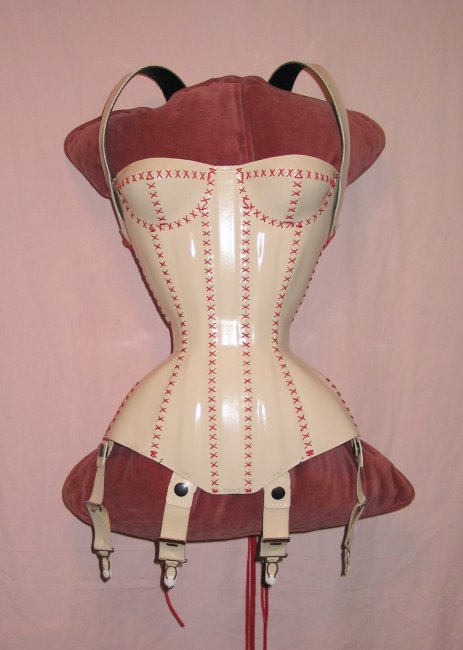
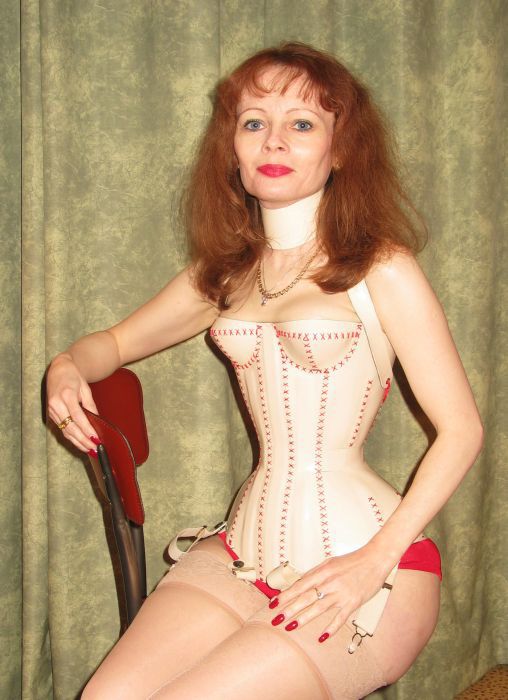
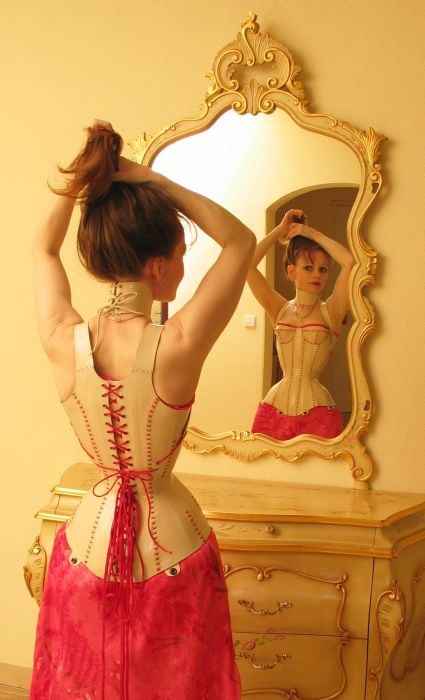
Warum Korsetts von TomTo aus Berlin?
Ganz einfach - weil ich in Berlin wohne und ich Frau Merz (die Inhaberin) auf einer Fetisch-Messe in Berlin kennen gelernt hatte
und ich ein weiteres etwas anderes Korsett haben wollte.
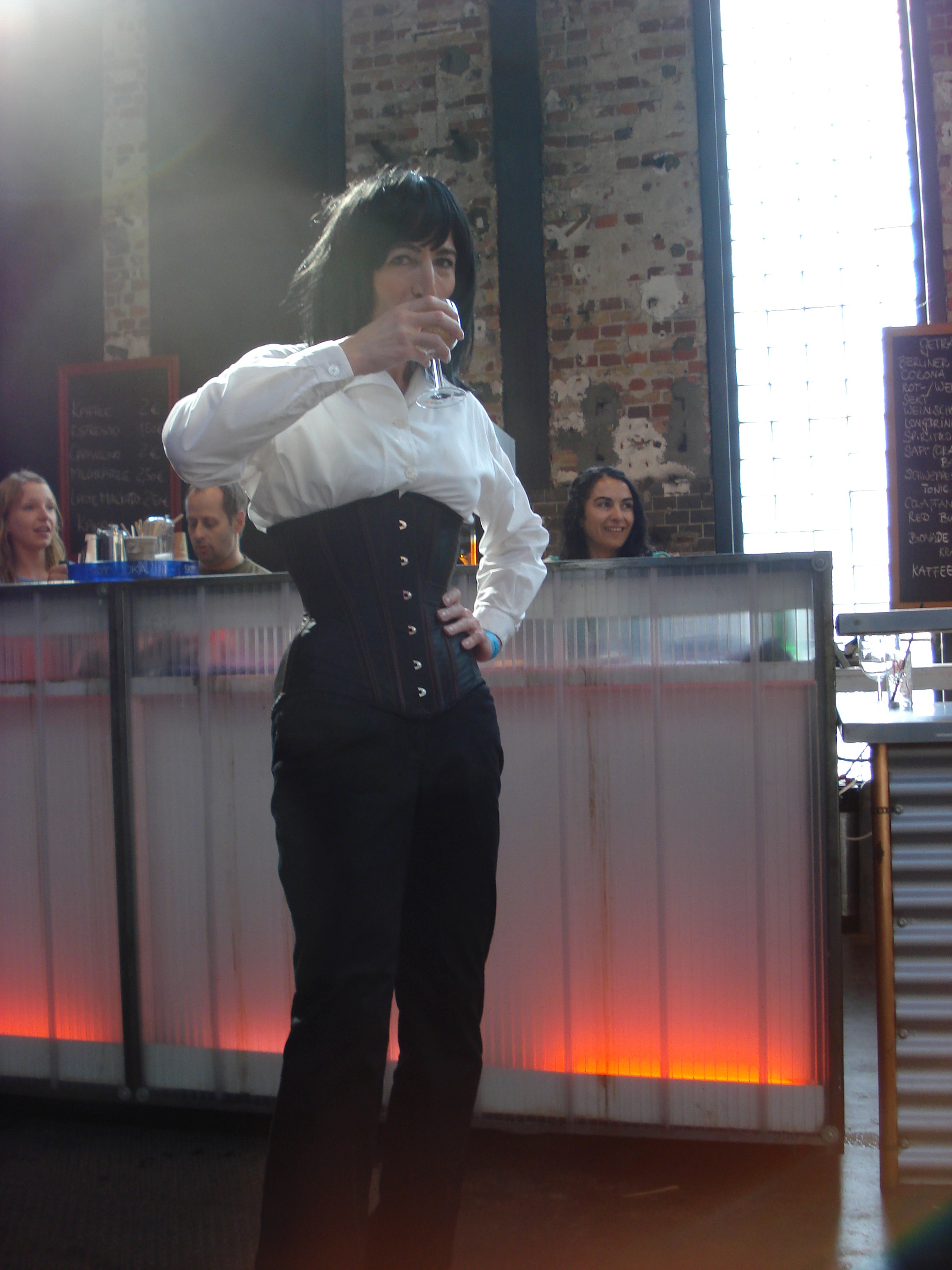
So kam ich in die hiesige Welt der Korsett-Herstellung und der Korsett-Träger...
..sie organisierte ein regelmässiges Treffen (Stammtisch wollte sie nicht dazu sagen) und ich lernte so andere Menschen mit dem gleichen Fable fürs Korsett kennen.
Warum ich die nachfolgende Seite verlinke?
Die da gezeigten Korsetts sollen als Inspitation fürs ganz ganz oben erwähnte Mod-Projekt dienen - mehr nicht
https://www.tomto.de/inspiration/
Übersetzung zu Teil 4
Part 4- How did I get my own corsets?
I first tried to buy corsets on the internet around the year 2000 and like any "beginner" I made the typical mistakes...
...among other things, I didn't notice that my own body didn't correspond to the usual clothing dimensions
In fact, even with trousers or shirts/blouses, only about 50% of those concerned fit the items made according to the ready-made specifications -
How can it work with a corset? Answer -> not at all!
So the bad buys increased - the corsets didn't fit - which was noticeable when wearing them, among other things, through pain
Buying a corset off the rack from one company was NOT a bad buy
https://www.vollers-corsets.com/
Yes - they have been making corsets for almost 130 years and yes, they are actually suitable for lacing
the model I bought is suitable for my long torso
(you will see it again later in another place...)
So for me as a "seat giant" (very long upper body and short legs) that ultimately meant only one thing -> a corset made to my individual measurements - called a "made-to-measure corset"
Around the year 2002 I found what I was looking for - in the USA and not in Europe! -> "waspcreation" - the owner -> "Amy Crowder"
Through her I got my first really fitting corset
and I experienced what other people describe wearing a really fitted corset -> it's great - it's addictive
Amy was so ingenious with her "invention" of her own measurement system (i.e. what measurements do I have to take from the customer so that my corset cut actually
fits right away without major changes) - that I did NOT have to travel to the USA and only needed a few test corsets (common for custom-made products!).
Amy's designs were developed for everyday wearing of corsets - it wasn't about super design but about practicality - e.g. that you could lace yourself up without help
yes - the scene from "Gone with the Wind" - where the nanny of the protagonist ("Scarlet") knees in the small of the back...
..manno - this is Hollywood bullshit at its finest!
but 99% of all women and men still believe that it takes immense strength to shoot a corset.
If there weren't lacing going through eyelets they would be right - but I always wonder why schools around the world teach anything more than simple "reading, writing and arithmetic" - if you're not even in a position to recognize it you have a PULLEY system in front of you when lacing the corset...
..and "force" is converted into "distance".
Amy perfected the "pulley" of the corset - by addressing a main problem that practical pulleys also have -> the friction at the deflection points.
In a "real" pulley system, the rope runs over MIT-rotating pulleys and the friction in the pulley bearings is relevant.
With a corset, the corset cord slides over FIXED eyelets and the friction between the cord and the edge of the eyelet (shape and surface) becomes a decisive factor.
That's why her eyelets are larger than those of all other corset manufacturers - but that's also why you can tighten the corset from the middle (the waist) without the cord "stopping".
(see the video - this is only possible with her and in the end I have corsets from 7 different manufacturers)
So there's no "blindly groping your arms behind your back" to grab the line like all other manufacturers do.
And with her, the distance between the eyelets in the middle of the waist is smaller than in the area outside - because the narrower the eyelets are, the higher the "pulley block" factor...
..so the less force is needed to pull the cord.
Since the reduction in the waist area is greatest and thus also the required force - the higher "factor" means that the force to be applied by the lacing end is smaller.
The side effect: Due to the increased friction between the eyelets and the corset cord, the fact occurs that the corset no longer pulls itself open at the waist when the bow is tied...
...which enables the wearer not only to pull the cords tighter without outside help, but also to finally "fix" the cord with a knot and loop
Other corset manufacturers have adopted this over time - some openly say today that they "copied", um "learned" from Amy - others still act as if they had come up with it on their own. It doesn't matter - the main thing is that the corset manufacturer does it that way.
Even this "monster corset" made by me - a tailor-made product by a Berlin corset manufacturer (TomTo) - I can lace myself without much effort - I can put it on and lace it myself without help - I just have to use "infinite" corset cords drag
and if you look at the waist area ... the eyelets are tighter - yes, they had my suggestion (she repaired one on my "waspcreation" corset Little thing and initially wondered about the arrangement of the eyelets - when I explained it "clicked") not only for my corsets.
The idea for this corset comes from a fetish story from the 1970s - but it was intended for a submissive wearer
Ms. Merz looked at the picture - listened to what I wanted and said:
"Miauzi - I understand what you want - I'll make you my own suggestion"
Back to Mrs. Amy Crowder
(I link this 20 year old article because it still contains a lot of things that are still valid today - that's why I use this text for various quotes)
https://www.thepitchkc.com/adventures-in-tight-lacing/
The picture in the article shows her being laced into a "discipline" corset (described above) by her husband without "straightening the knee."
Quote: "Crowder works on the second floor of a two-story artisan-style bungalow she and Cady share in Harrison, off 55th Street, creating specially designed corsets for clients around the world. For those who push their curves to the extreme want, the popular Hourglass corset is an "excellent choice for the casual tightlacer". There's the Numan corset, designed for "larger men". And for humid summer months, ventilated polyester and cotton twill corsets expel body heat. There's however, no release from the discipline corset - which stretches from the chest to mid-thigh and sometimes contains up to 50 feet of laces - until a merciful dominatrix decides to free the submissive corset.The truly penitent can ordain the sarcophagus, a disciplining corset that from chest to ankle."
It says something about "summer corsets" - what is that?
Well - since a corset leader was worn all day and in Europe and North America it is significantly warmer in summer than in winter - the "summer corset" was developed in the 19th century - which used different materials than the "normal" corsets .
Today's problem for all corset tailors -> you can't get these fabrics anymore - because they are simply NOT MANUFACTURED anymore.
The whole thing was high-strength silk fabrics - which made it possible to produce the summer corset from a single layer of fabric and still cause body compression
An underbust corset for summer weighs no more than 500 grams.
(Today's corset collectors still have some specimens - my Berlin seamstress got one of these from a collector to look at - it was also weighed there)
The "normal" corsets were two-layered and even with bones etc. such a corset at that time hardly weighed more than 1 kg.
Today there are neither the materials for "summer" nor for "normal" corsets - the tailors for today's lace-up corsets have to switch to fabric from the furniture industry - this often results in a three-layer structure - which also has an impact on the weight put it - for an underbust corset 1.5 to 2 kg.
The selection of the upper material also plays a role here - many decorative materials that are used for an open corset are not stable enough against the deformation forces - just like leather.
Amy was one of the first to try to counteract this and created her own summer model
I'm very proud to have bought one of the first models back then - it was a "ready-to-wear" corset, but the necessary changes for my body were so minor with the cut that they could be added to the cut and sew without any additional work
(which is a characteristic of this corset manufacture)
And, like everyone else who is seriously concerned with the subject, encountered various "urban legends" about the corset
Quote: Crowder flipped through musty books about the garment, which is often described as distressing. She read chilling stories of broken ribs and livers cut in half. She leafed through faded pictures of sadistic governesses who took the breath away of young protégés.
Die-hard tightlacers squeezed their waists down to 16 inches or less, writes Valerie Steele, chief curator and director of New York's Fashion Institute of Technology, in her book The Corset: A Cultural History. Nineteenth-century physicians reported cases of formerly corseted corpses with dislocated organs and shriveled intestines. Tight-lacing youths have been accused of indulging in the evils of masturbation.
At the same time, pro-tightlacing pamphlets and books sprang up along with underground magazines that contained Forum-style letters about tight lacing, piercing, lingerie, and bondage and dominance.
Steele writes that between 1867 and 1874 The Englishwoman's Domestic Magazine published more than 150 letters on corsetry. The letters (which many scholars believe were written by men and are based more on fantasy than reality) revealed a sadomasochistic subculture of people who gained sexual pleasure from corsets. The magazine received so many letters about the flogging of unwilling corset trainees that it had to publish a special flogging supplement.
Nineteenth-century physicians blamed corsets for causing uterine prolapse, inflamed livers, bladder hernias, kidney disease, bone dislocations, and the ancient propensity for female disease, "hysteria." They warned that wearing the constricting garments could lead to ugly children.
By the 1880s, the makers of "electric corsets" in London and New York were promising that their electromagnetic underwear could ward off and heal kidney and liver diseases, rheumatism and nervous disorders while sparing women the rigors of tight lacing.
This practice fell out of fashion towards the end of the 19th century. “Above all, every stout woman must stop thinking that she can wear a corset two or three sizes smaller than she needs,” asserted an article in Women's Home Companion in 1912. “What an earthly difference it makes whether it's a tall, well-built woman's waist is 26 or 30 inches? What matters is how she looks in her corset and how she feels in it.”
A lot of what is now considered to be exact historical reports about constriction or waist size or the hardships of the day or damage to health -> is BULLSHIT
and has absolutely nothing to do with the reality of the time.
Topic: How tight did women really lace themselves back then?
A few years ago, an orthopedic specialist in the USA asked herself this question.
Their (so-called) specialist literature reported incredibly tight waists and almost all women of the time had such super-small "wasp" waists.
If you look at fashion magazines from that time - yes, the figurines all look ultra laced.
But was that also the case in real life?
Photography already existed during the Civil War of 1861-65 - so from that time it was the new medium for portraits of people.
And many pictures from this period have been preserved - illustrated books of them are still published today.
What is striking? - Women look almost the same around the waist as today's women?
What please?
In order to clarify this discrepancy from medical literature, fashion journals and real photos, the doctor looked for order books from corset tailors that have survived from this period (2nd half of the 19th century).
Well - and what did she think -> the average waist reduction was 5-10 cm - NOT more
transferred to today's standard measurement of 90-60-90, the waist was reduced from 60 cm to 50-55 cm by wearing the corset!
(and not reduced by 15-20 cm like all this nonsense - to which medicine still refers today - claims)
Let's take the topic "organ relocation"
Yes - by "constantly wearing" a waist-reducing corset, the position of some internal organs shifts.
Does it die?
Of course not - because otherwise EVERY pregnancy means the death sentence for a woman!
Because even during pregnancy, internal organs are relocated massively - if the body's structure weren't prepared for it...
..but other activities also cause organ relocation -> for example diving
I've done scuba diving for years, both with and without scuba.
Especially when free diving you can feel with every additional meter of depth how the pressure on the abdominal cavity increases and the water pressure pushes the organs upwards - because the lungs shrink.
So if wearing a corset would lead to health problems due to organ relocation...
..why doesn't it do that when diving?
This is exactly the question I asked my longstanding specialist in orthopedics when I was sitting in front of her in the corset, and it left her speechless at first.
She began to question the technical relevance of her lectures in medical school.
To make it short - the knowledge about corsets and their consequences for the human body that is still taught today at medical universities dates back to the 1930s or even earlier - from a time when the corset was out of fashion - so it is neither manufacturer there were women who could be questioned and women who could be examined.
Since a piece of clothing from the underwear sector was treated a little more discreetly in a public discussion in the 19th century than it is today - there were hardly any reports from real women who reported wearing a corset.
What there was -> Fetish stories that were later thought to be real experience reports!
And what else there was -> anti-corset propaganda
The corset was chosen by the beginning of the women's emancipation movement (also known as the "reform movement") as a symbol for the oppression of the same and fought with a huge amount of half-truths and untruths. This also includes the fairy tale stories of broken ribs caused by lacing too tight.
Really now? - Ribs break due to constriction? - How does that work?
The lower ribs are pliable - they yield inward (albeit reluctantly).
Before you can compress your body to the point where you are on the verge of serious damage - the lacing eyelets tear out of the fabric of the corset!
(cheap corsets often tear out much faster)
Yes - there were also broken ribs in corset wearers - but not because of the corset, but in spite of it.
A corset is sometimes referred to as "armor" and it also protects the wearer like an "armor" - also from external mechanical influences.
If a wearer suffers a broken rib (e.g. due to a fall coupled with a collision on the edge of a table) despite wearing a corset - then this would definitely have happened without it.
By the way - what does the doctor do with the patient if he breaks a rib?
It used to put on a fixing tape or roof tile bandage - which is now avoided (because of the restricted breathing)
One still remembers the Empress "Sissi" - one of the fashion and corset icons of the 19th century.
how did she die By a knife attack!
Only the assassin had to do it MULTIPLE times - because the first time he hit the steel corset rods and his stiletto didn't penetrate!
Quote: "How can you breathe?" some people would ask. "Does it hurt?"
"I have to breathe differently," Crowder admits. "I can't do deep diaphragmatic breathing, so my breathing is much shallower when I'm wearing a corset."
Crowder wears a corset and dress around the house when she works - but no shoes to better control the pedals on her sewing machine. And she leaves the corset at home when she pursues her serious hobby: mountain biking. "I'm a tomboy," says Crowder.
Yes - wearing the corset all the time changes a few things
1) The breathing
as described, deep "diaphragmatic breathing" is no longer possible.
Is that bad in everyday life?
20 years ago, when the orthopedist at the time reproached me - I asked:
"And please tell me now when and how often you use this breathing yourself"
Then it "CLICK" for her - because almost all people breathe almost the entire day -> FLAT
Deep breathing is only used consciously for things such as heavy physical work or endurance sports (such as running or cycling).
or if you try to run after a tram that is moving away...
...in a corset you do this exactly once - after that you have understood that there is a limitation
2) Bending the upper body...
...is no longer possible and the eventual herniated disc is 100% excluded
Note: with a corset placed around the body you will not get a prolapse of the intervertebral disc in the area where the corset is - so the longer the corset in the back...
Then how do you bend down in the corset?
As the orthopaedist recommends anyway -> you bend your knees like a lady
3) wasting muscles
Yes - this is an existing problem for long-term wearers - but 90% of the population has a "weak" back anyway and would have to do special back exercises every day for 20-30 minutes to strengthen the muscles, even without wearing a corset.
do you do that? Think hard about it!
4) Strain on the skin
Something that even long-term wearers underestimate - the corset exerts its pressure/force over the skin to shape the body as desired
We know from nursing and intensive care that prolonged pressure can damage the skin.
So special attention must be paid to the care of the skin!
In general -> a corset is NOT worn on the bare skin - NEVER!
For 500 years, women have worn at least one shirt under their "lace-up breasts" or their corset - that was not without reason
If you put the corset on - then it is wide open at the lacing between 10 and 20 cm. By pulling the cord, it closes slowly
a) with the inner wall of the corset slides over the surface of the skin - ATTENTION FRICTION - with bare skin it is very large and the gliding effect is not even - the skin forms real "lacing bulges" - these can be removed with an "undergarment" - a tube ("corsett-liner") made of elastic fabric that is worn between the skin and the corset
b) the line itself slides not only over the eyelet surface but also over the bare skin -> burns are more common than you think
Either the "corsett-liner" and/or the additional "lace-protector" can help.
(see the pictures in the next chapter where I tie my darling into the S-Line corset)
5) The spine is fixed
Yes - that is even desired - see orthopedic corsets (yes, they actually exist)
Man masters the upright walk - in which the entire body is involved in the form of compensatory movements.
The corset limits this - but does not completely prevent this movement.
But what is important - by fixing the position of the individual vertebrae in the area of the worn corset, the posture in this section is also "frozen".
So if you want to wear high heels with your corset...
.. first put on the heels and only then the corset.
The position of the pelvis alone is completely different than without high heels
Most of the problems with "occasional wearers" comes precisely from (ignorant) disregard for this context
Quote: Another Crowder customer, Debra McNeill, who lives in the Berkshire Mountains of Massachusetts, ordered a corset after being involved in five car accidents in two years. Constant pain ran through her legs and her back was always sore. She bought a back brace from a pharmacy and felt a little better. Then a doctor suggested McNeill go to a pain clinic where they could teach her to meditate. Instead, she taught herself to meditate and ordered a corset from Wasp Creations.
"I'm probably the straightest lacer there is," jokes McNeill, a true white Anglo-Saxon Protestant who traced her ancestry to ancestors who left the Mayflower.
"I wear a corset 24/7 now," says McNeill, who could barely vacuum the house before seeking extra support. Now she bales hay and rides horses around her ranch—while wearing a corset that fits better than those of her Puritan ancestors. “The corset keeps my spine from compressing during the day and that stops the pain in my legs. I take [the corset] off once a week for a full 24 hours just to make sure everything is moving the way it's supposed to.”
She has to eat smaller meals, admits McNeill, whose 33-inch waist has shrunk to 27 inches. The smaller waist is just an unexpected benefit, she says.
"Isn't that a fetish thing?" People ask McNeill when she tells them she wears a corset. "A lot of people can't accept the idea that a normal person wears a corset."
Two important things that are generally not known
a) You are taller in the morning than in the evening - with a body height of approx. 170 cm, this makes up 2-3 cm
b) the intervertebral discs absorb water at night and "swell" in this way - they release it again during the course of the day
So if you tie yourself up in the morning - the intervertebral discs are "spared" by the pressure from body weight and the tensile effect of the ligaments - they retain their water.
This was my second reason for wanting to wear a corset - I didn't have a car accident like the lady in the article did - but I did suffer from it
Back pain that I suspected was caused by the intervertebral discs shrinking together.
And the corset actually put an end to that pain!
Do you lose weight if you wear a corset "permanently"?
Yes and no.
Yes - the corset reduces the air-filled cavities inside the body - the most important is the stomach.
As a result, the "Fölle" feeling sets in faster - if you adjust your eating habits accordingly - the amount of food consumed daily actually decreases.
For me, the first 2 years of "continuous wear" (i.e. 12-16 hours a day) resulted in a weight loss of 10-12 kg.
This has nothing to do with starving the pounds away - just using a "help".
No - the corset does not eliminate any "morbid gluttony addiction" - so if something in the brain is already on "addiction" it can't help here.
Quote: Cathie says she didn't want to break records. She and Bob say they are neither fetishists nor in the bondage scene. They are Victorian fashion enthusiasts who attend annual costume balls in Europe hosted by Les Gracieuses Modernes, an organization in Hamburg, Germany, for "persons who like the elegant and feminine figure of ladies". Ball-goers in Victorian dresses and lingerie pay $150 each to dine and dance, and the galas allow corseted women to show off their hourglass shapes. Cathie prepped her waist for the annual ball by wearing a corset most of the time. Before long, she was wearing a corset 24 hours a day, seven days a week to maintain her figure.
In 2008 she got to know the two people who organized this ball in Hamburg for many years - we (my wife and I) were invited to a photo shoot lasting several days.
When we weren't standing in front of the camera in "costumes" and corsets, we "chatted" a lot and that's how I learned a lot about Cathie Jung that isn't on websites or magazine articles - but not just about her, but also about other women and men with "extreme" waists.
Our hostess ("Britta") was Germany's smallest waist herself for many years - so the amateur lacemaker came to the queen to learn from her and there was quite a lot to learn!
(my darling - on the right - wears my S-Line corset - because of the optics and other things there will be a few more pictures of it later)
Quote: "Bob has been accused of ripping out my ribs on many occasions," says Cathie. When the couple appeared on a Japanese news show in Tokyo five years ago, producers X-rayed Cathie to make sure she still had all her ribs. She insists that the permanent incurvature of her lower, floating ribs isn't a problem.
The quote is about Cathie Jung's partner - who officially had the smallest waist in the world...
..bla bla bla - she didn't - but it doesn't matter that there were women with a smaller waist - she was the one who was known to the press and the media.
And of course the most absurd "urban legend" that exists on the subject of corsets was also dished up here -> the removal of the lower ribs in order to be able to lace tighter.
In a nutshell -> total bullshit
a stab with a stiletto in the chest of the lungs or a small bullet hole at the end of the 19th century meant death...
..because an operation in the upper chest area was not possible at that time.
It was only when SAUERBRUCH built and used a special vacuum chamber at the beginning of the 20th century that the conditions were met.
https://www.deutschlandfunk.de/ein-centurychirurg-100.html
In addition - have you ever heard of sepsis and surgical shock, dear journalists - even today, such an operation to remove the lower costal arches would not be a walk in the park like an appendix operation!!
R.I.P. Amy Crowder - unfortunately you died far too young in 2010 at the age of 39
Leather corsets without support are NOT suitable for waist reduction - they are pure "decorative corsets".
(oki - there is one exception - a special tanning technique makes leather resistant to warping - only then it is so stiff - then you can no longer process it with normal sewing machines (even those for leather are not sufficient))
The exception is Albert's
https://www.staylace.com/albertcst/index1.html
he has found a special processing technique that enables him to process extremely stiff leather in such a way that the cut makes it extremely supple around the wearer's body - even in the very critical narrow waist area
That's why it's the exception to the rule that there can't be a leather corset without a layer of fabric that absorbs tensile forces
Why corsets from TomTo from Berlin?
Quite simply - because I live in Berlin and I met Mrs. Merz (the owner) at a fetish fair in Berlin
and I wanted another slightly different corset.
That's how I got into the local world of corset making and corset wearers...
..she organized a regular meeting (she didn't want to mention the regulars' table) and I got to know other people with the same fable for corsets.
Why am I linking to the following page?
The corsets shown there should serve as an inspiration for the mod project mentioned above - nothing more
https://www.tomto.de/inspiration/
Teil 5 - eigene Vorschläge
Habe ich selbst einen eigenen Vorschlag wie das mögliche Korsett zu dem Catsuit aussehen könnte?
Auf jeden Fall ein Unterbrust-Korsett - aber wie weit es nach oben bzw. nach unten reicht - da gibt es recht viele Möglichkeiten.
Ja - ich selbst bin im Besitz eines S-Line-Korsetts - die besondere Schnitt-Form ermöglicht eine sehr interessante Optik einfach nur durch den Einsatz eines Materials in zwei Kontrast-Farben
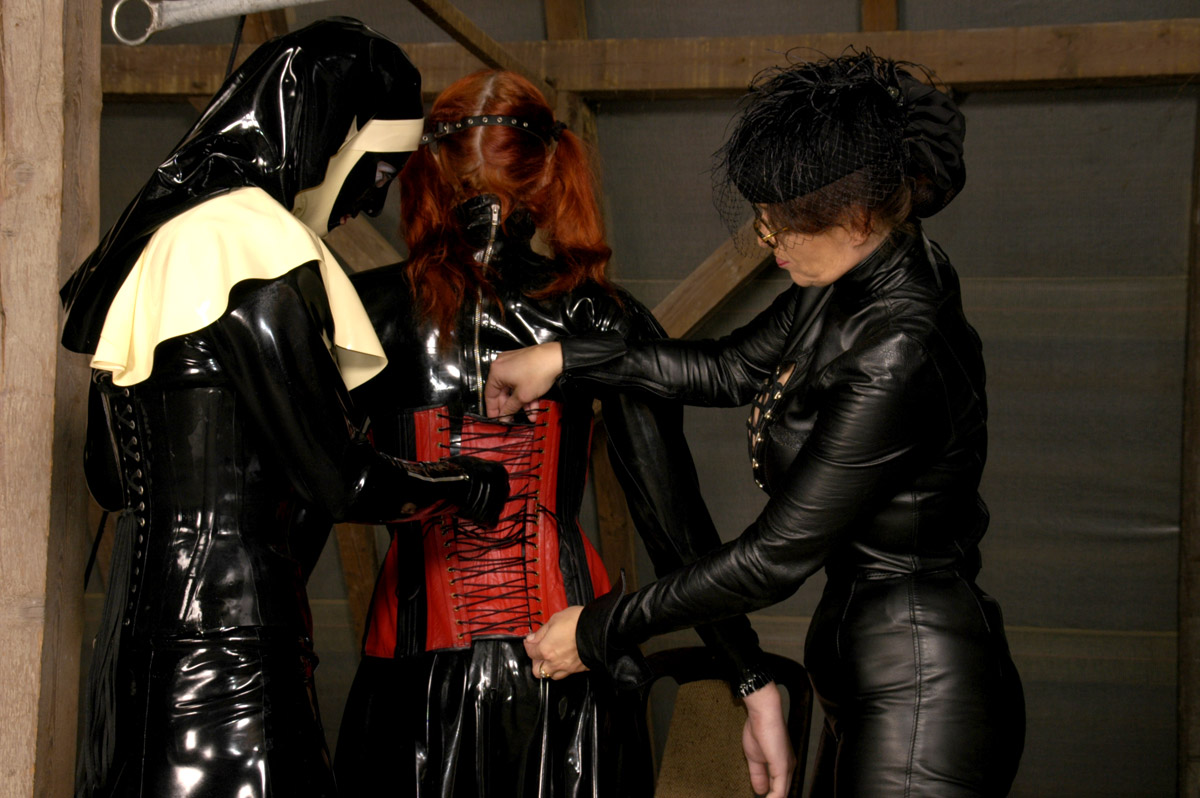
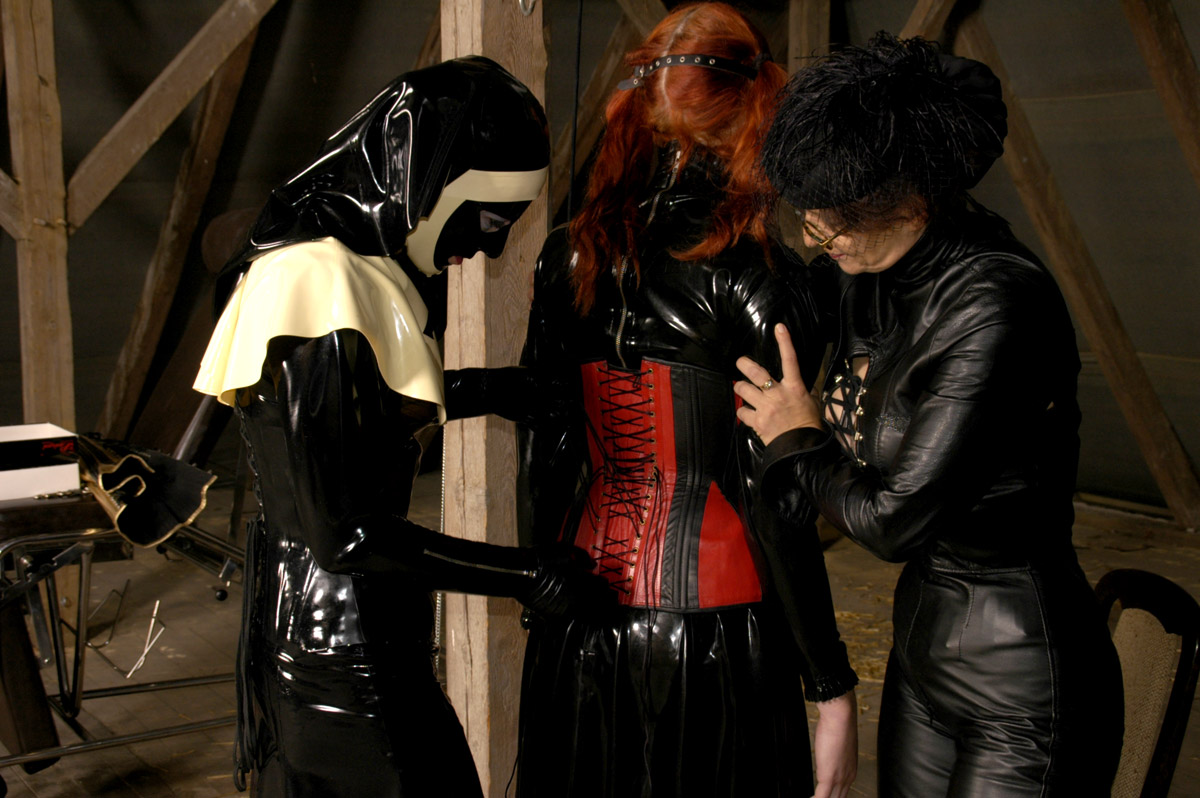
Man sieht wie weit das Korsett offen steht - die Korsett-Schnur berührt aber nicht die Haut bzw. das getragene Latex -> lace-protector
Der Schnürschutz ist eines der Merkmale was den Unterschied von einem guten Korsett (das hat einen) zu einem billigen Korsett ausmacht (das hat keinen)!
Er erleichtert auch deutlich das Schnüren - da beim Schliessen (Zuziehen des Korsetts) die der Protector unter die Ränder des Korsetts schiebt.
Ähm und das Knie im Kreuz ist die Fake-Referenz an den Film "Vom Winde verweht"
Wie vielfältig kann man ein Unterbrust-Korsett gestalten - es sind nur einige wenige von fantasmillionen Varianten
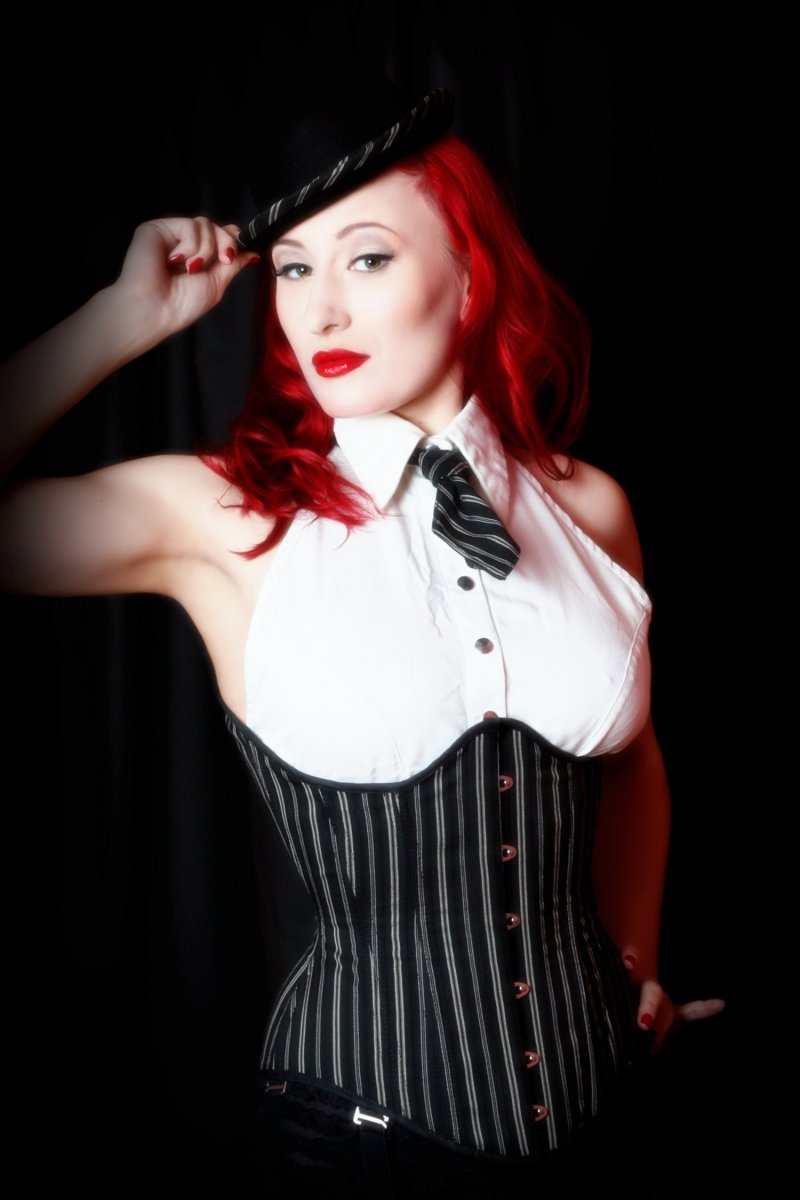
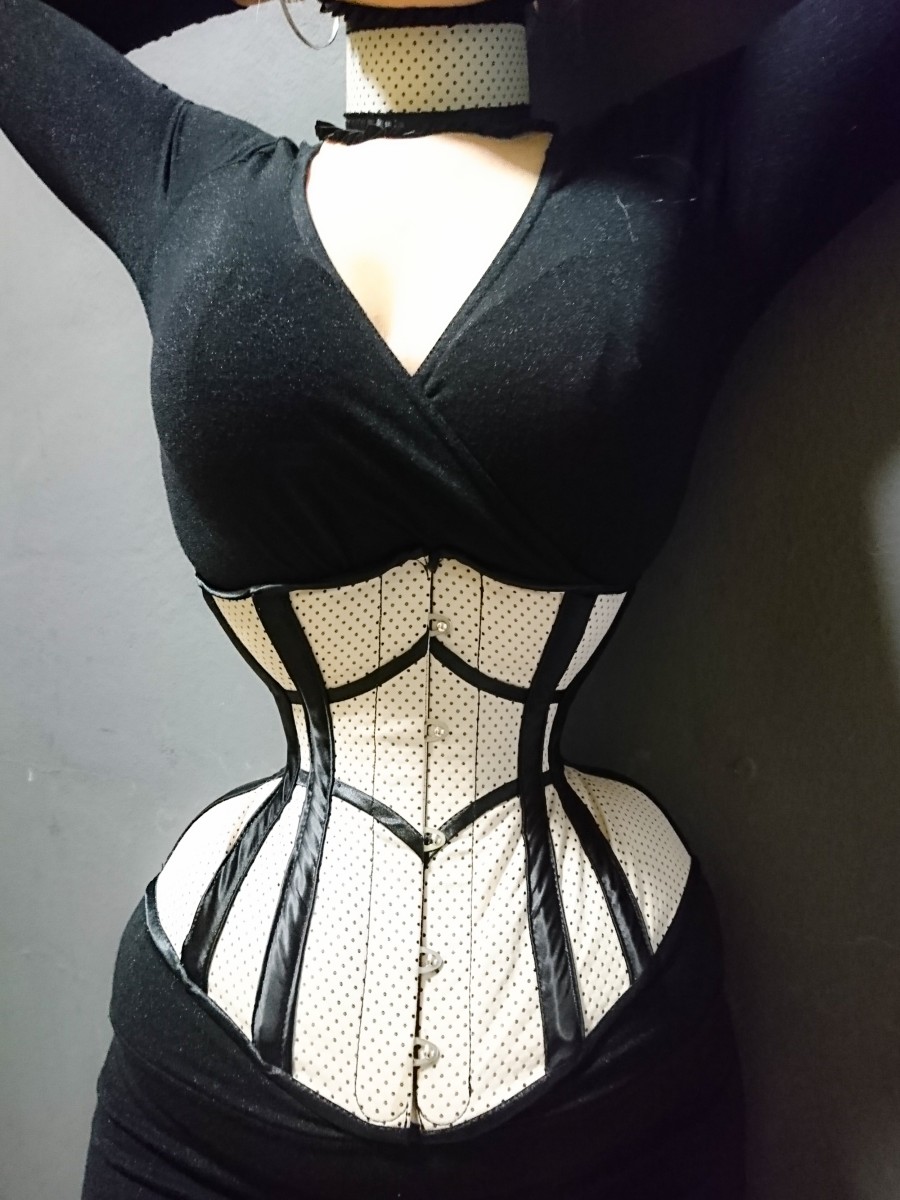
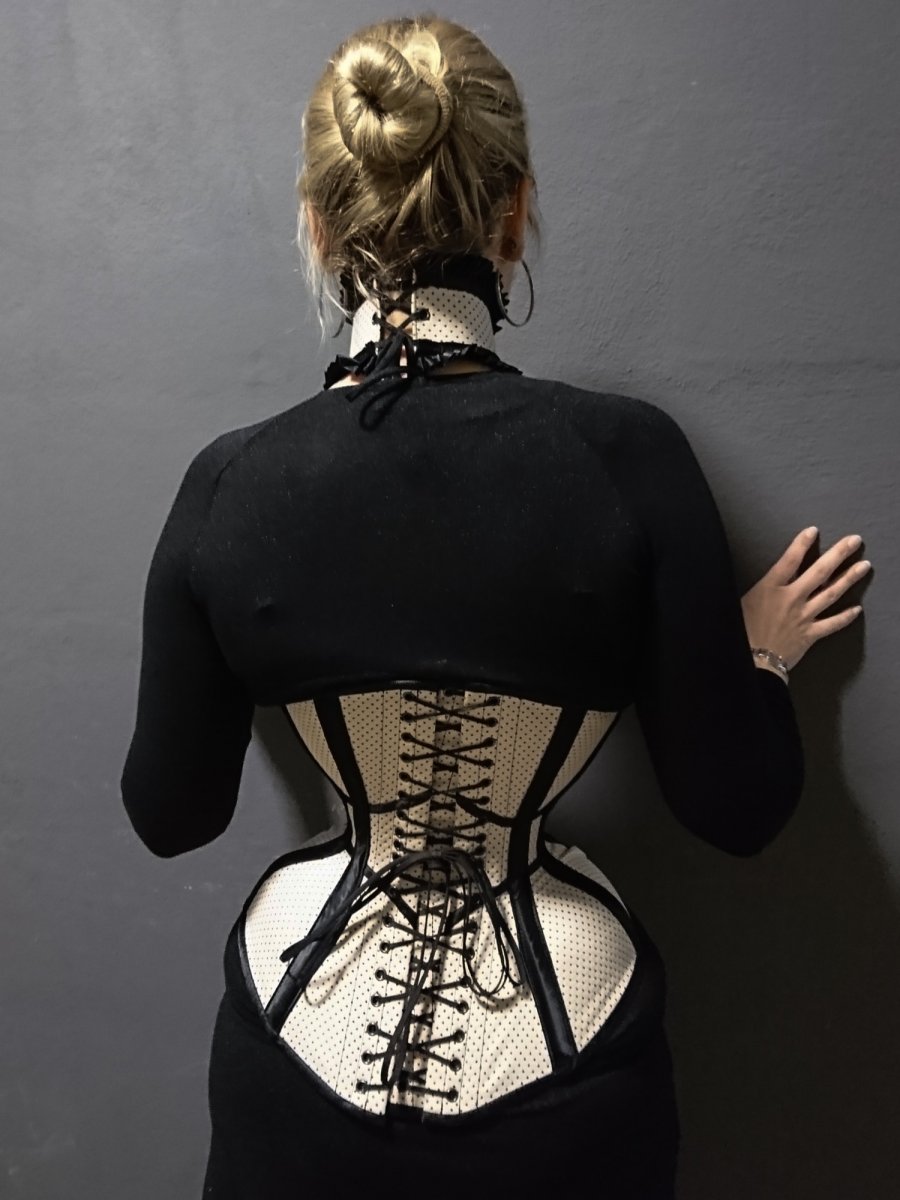
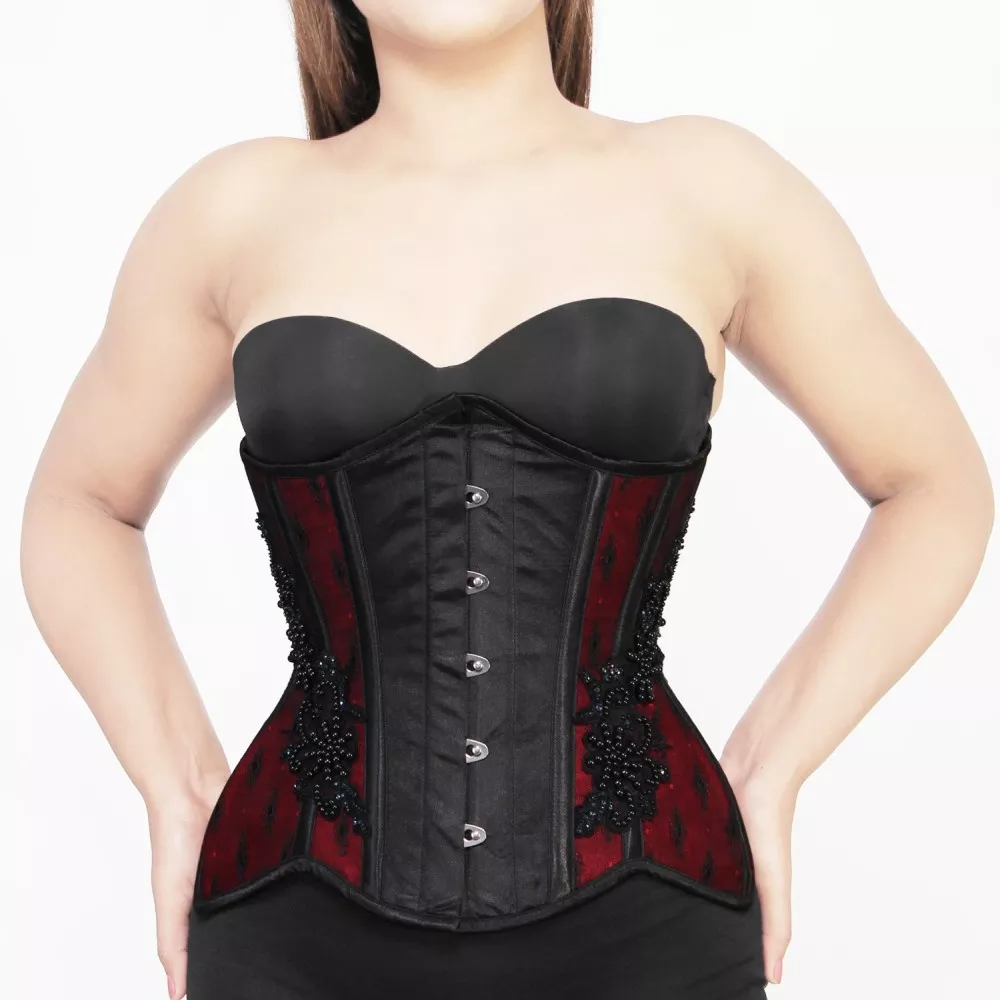
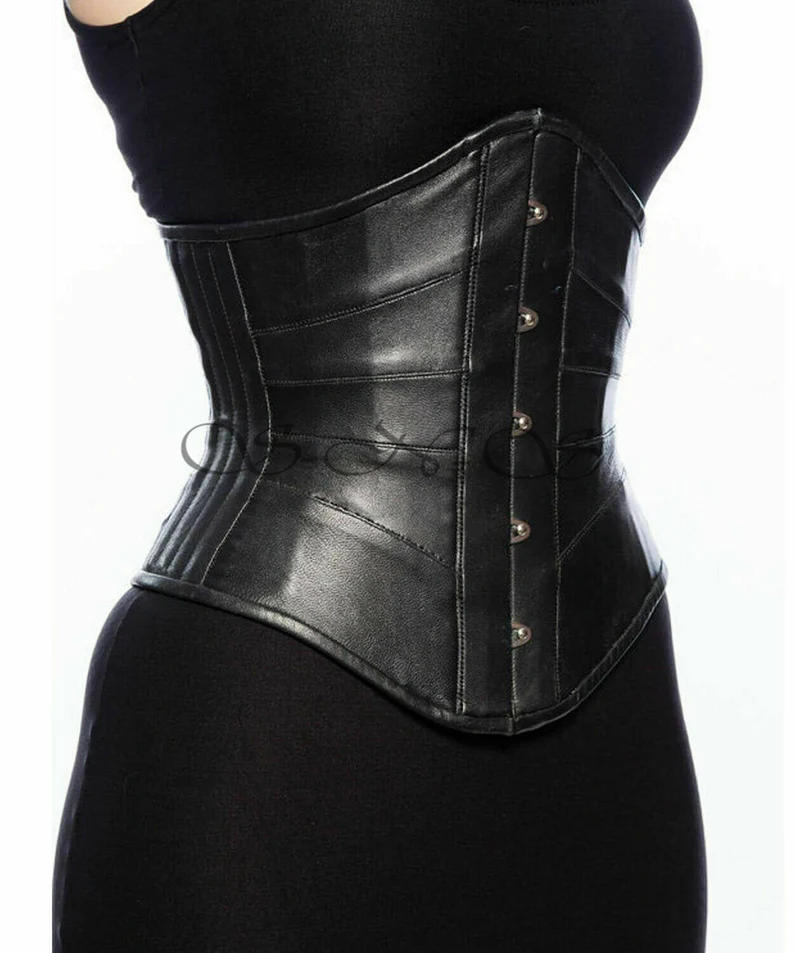
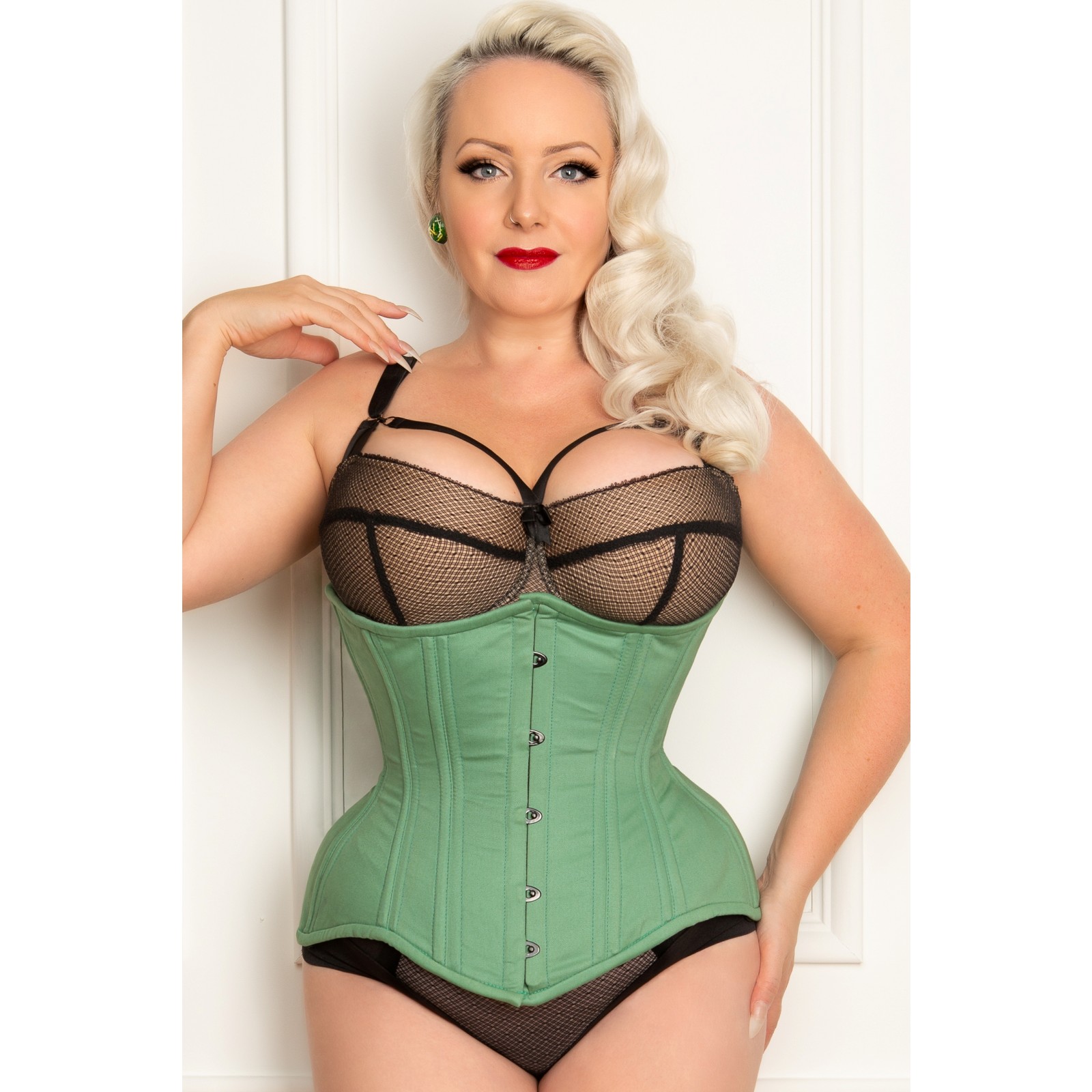
aus der gezeigten Liste ist dieses Korsett wegen seiner geschwungenem oberen wie unteren Rand mein persönlicher Favorit
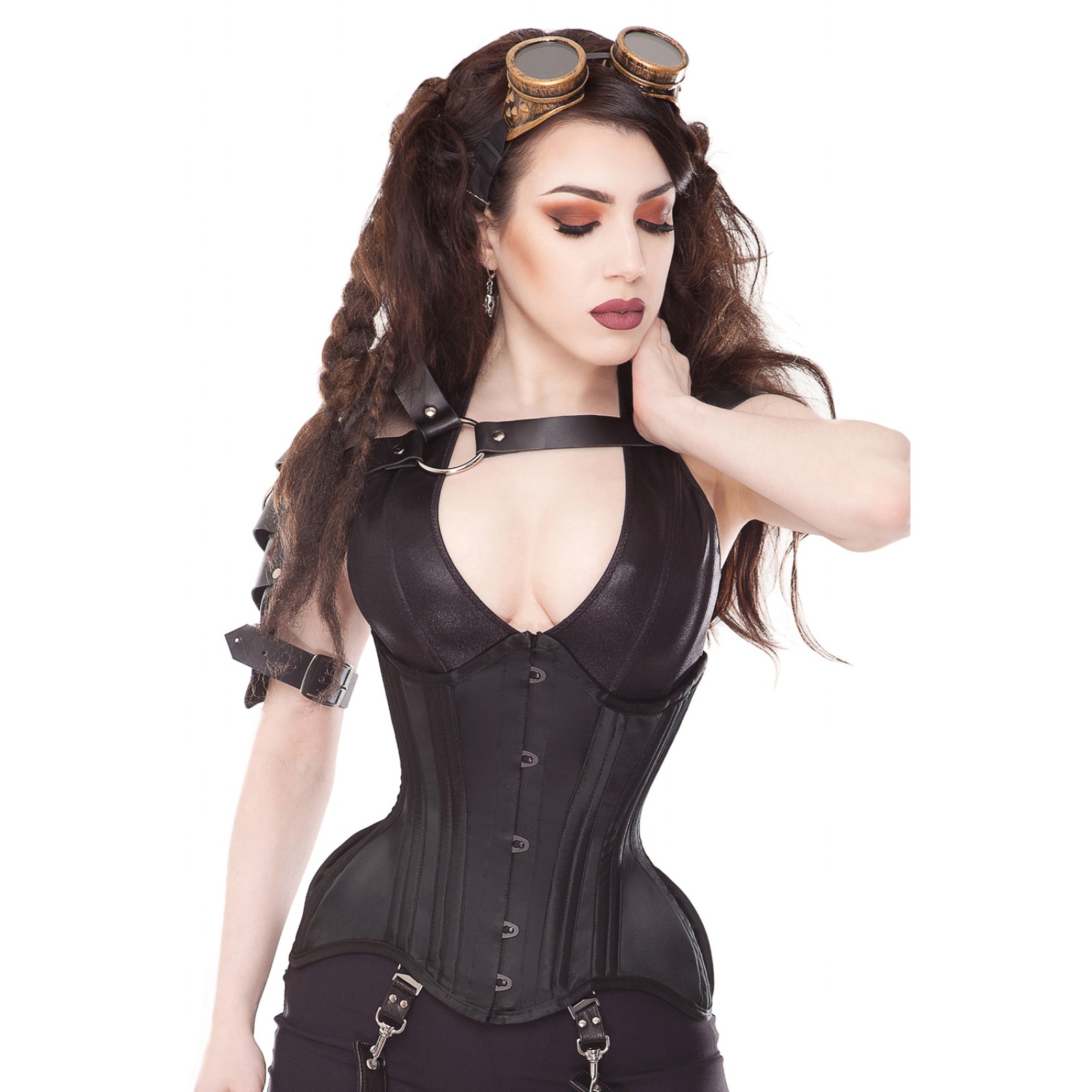
Übersetzung von Teil 5
Part 5 - own suggestions
Do I have my own suggestion of how the possible corset for the catsuit could look like?
Definitely an underbust corset - but how far it goes up or down - there are quite a few options.
Yes - I own an S-Line corset myself - the special cut enables a very interesting look simply by using a material in two contrasting colors
You can see how far the corset is open - but the corset cord does not touch the skin or the worn latex -> lace protector
The lace guard is one of the features that makes the difference between a good corset (it has one) and a cheap corset (it doesn't have one)!
It also makes lacing much easier - because when you close (tighten the corset), the protector pushes it under the edges of the corset.
Um and the crossed knee is the fake reference to the movie "Gone with the Wind"
How versatile can you design an underbust corset - there are only a few of fantasmillions of variants
Part 6 - Is waist reduction possible on a 3D model in Skyrim?
Yep - that's it - the author of the following mods implemented it
https://www.nexusmods.com/skyrimspecialedition/mods/20876
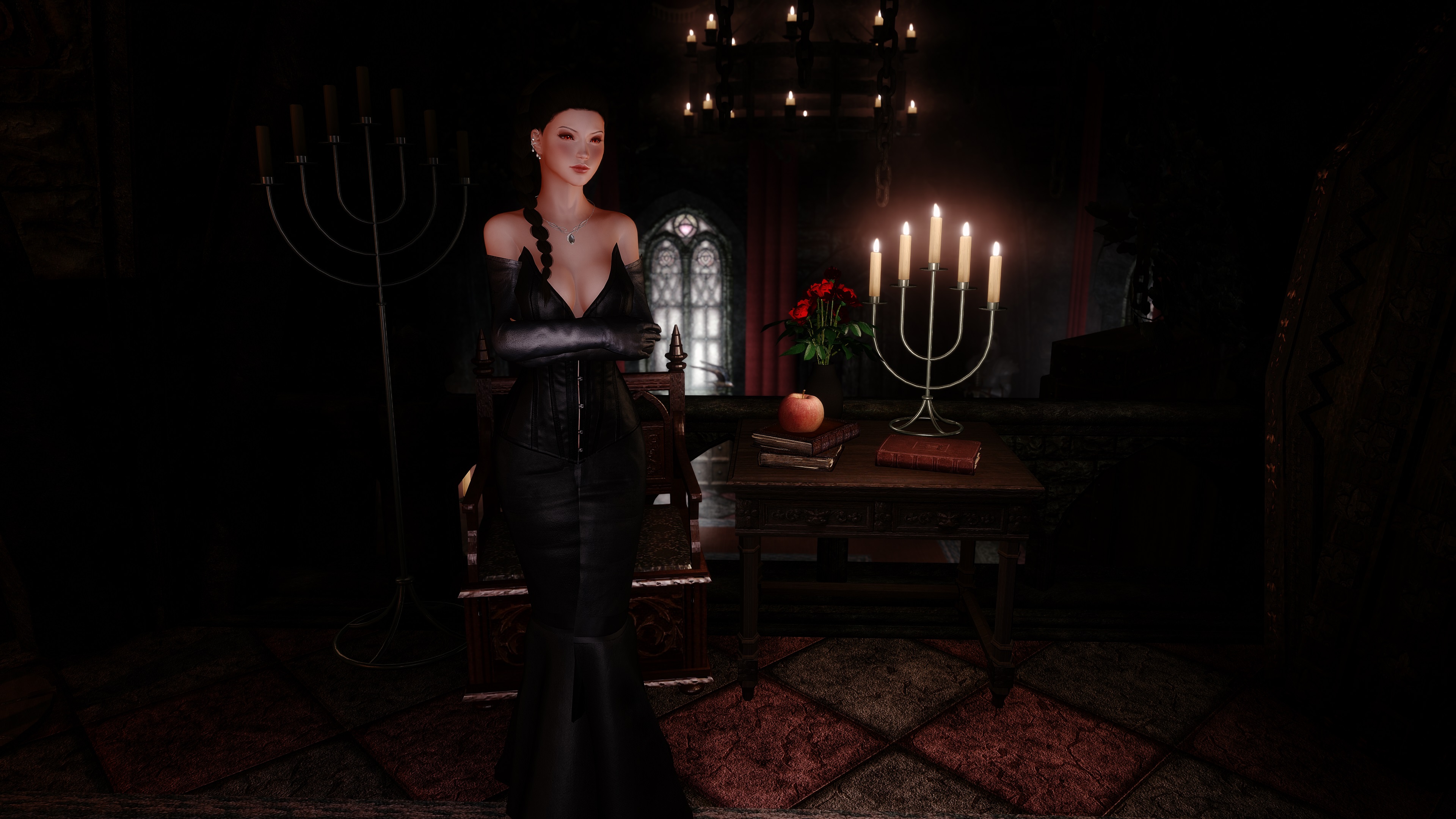
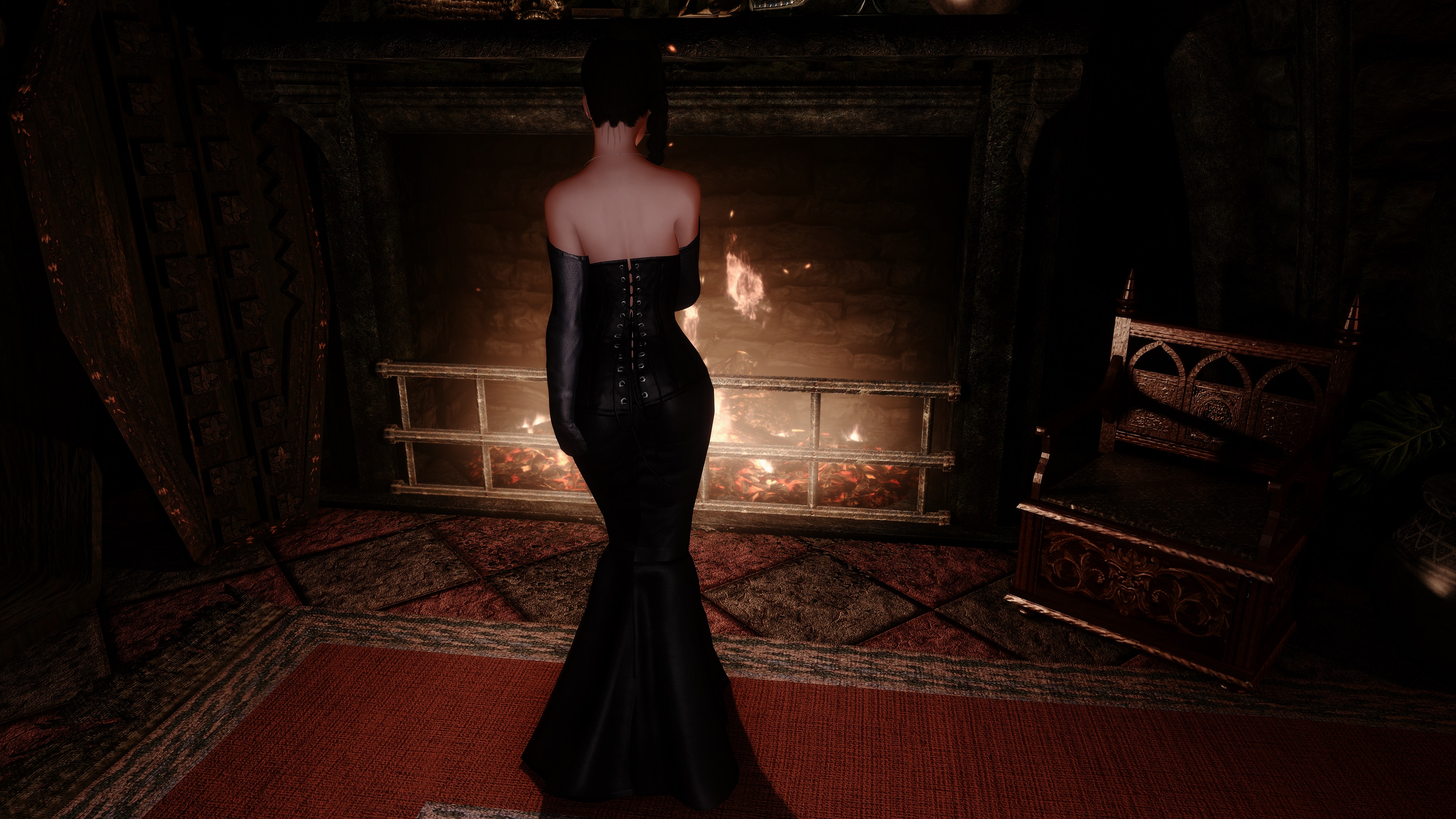
Do you still remember the black overbust corset made of leather by "Vollers" above - it looks very similar, doesn't it
and yes - with this corset - such a godet skirt and long black gloves I was already at "Party"
https://www.nexusmods.com/skyrimspecialedition/mods/20671
https://www.nexusmods.com/skyrimspecialedition/mods/81100
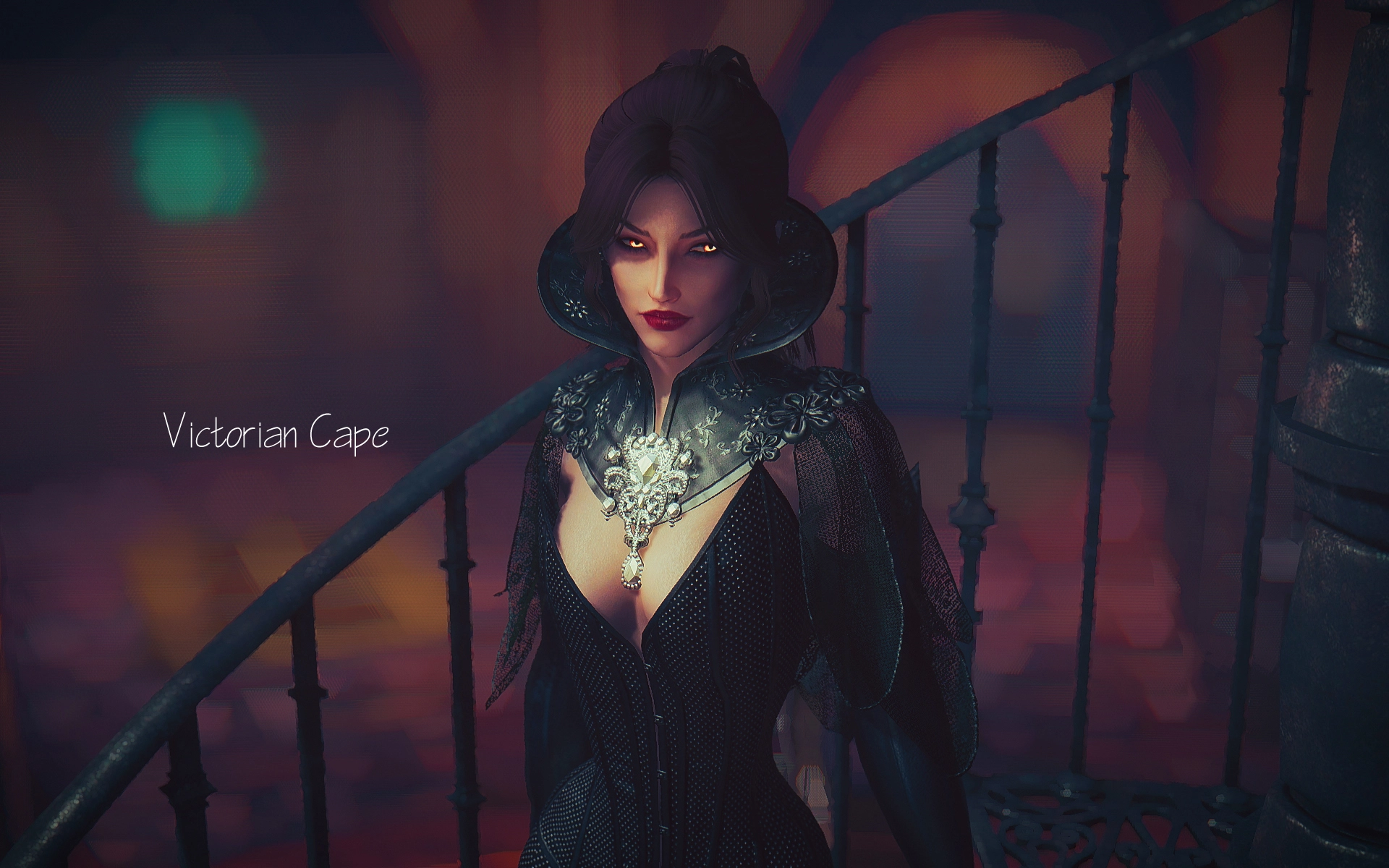
Teil 7 - Fazit
Ich hätte nicht gedacht das ich 3 lange Tage an diesem Blogeintrag sitzen würde...
...es war u.a. auch eine Reise für mich in meine eigene persönliche Vergangenheit - so manche schöne wie leider auch traurige Erinnerung kam wieder hoch
Das ganze begann Idee für eine Entscheidungsfindung wie man eventuell das noch fehlende Korsett zu dem Latex-Outfit-Set gestalten könnte
Ist das Thema damit abgeschlossen?
Nein - wenn es Rückfragen oder Anmerkungen geben sollte - würde ich mich freuen auf die antworten zu können.
Und das ist ja nur das Korsett für die "harmlose" Variante - für die "böse" Variante habe ich auch schon eine Idee
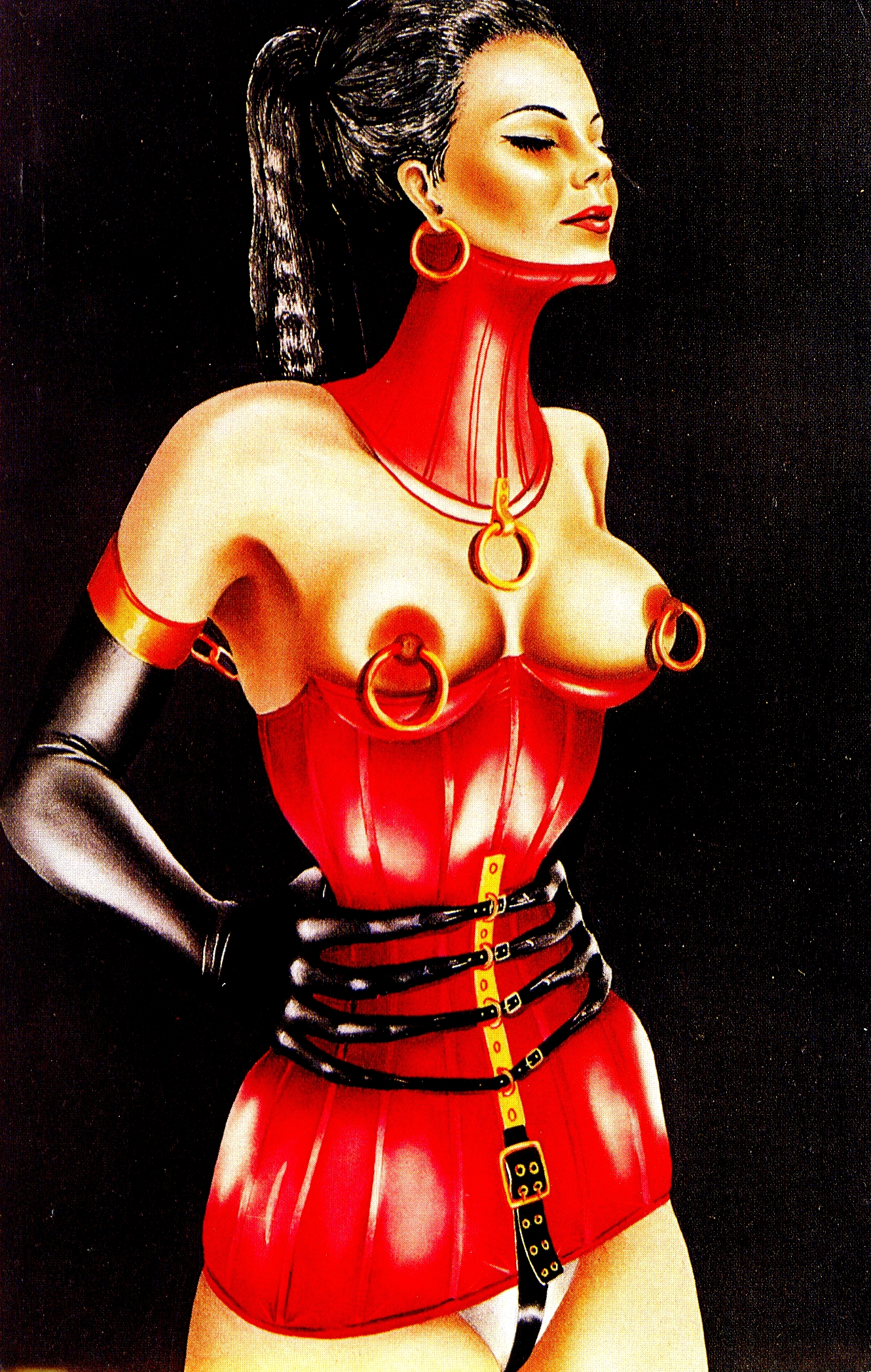
Übersetzung von Teil 7
Part 7 - Conclusion
I didn't think I would be sitting on this blog entry for 3 long days...
...among other things, it was also a journey for me into my own personal past - some beautiful as well as sad memories came up again
The whole thing started with the idea of making a decision about how to possibly design the missing corset for the latex outfit set
Is this the end of the matter?
No - if there are any questions or comments - I would be happy to answer them.
And that's just the corset for the "harmless" variant - I already have an idea for the "bad" variant
Nachtrag:
Ich habe etwas zur Geschichte meiner Großmutter väterlicherseits nach Rücksprache mit ihrer Tochter (meiner Tante) korrigiert - da war meine eigene Erinnerung ungenau.
Edited by Miauzi
Einfügen der Spoiler für die Übersetzung ins Englische
4 Comments
Recommended Comments